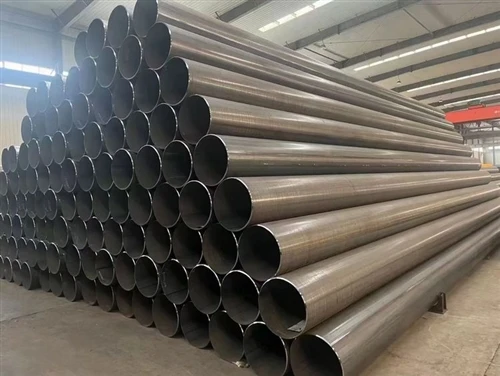
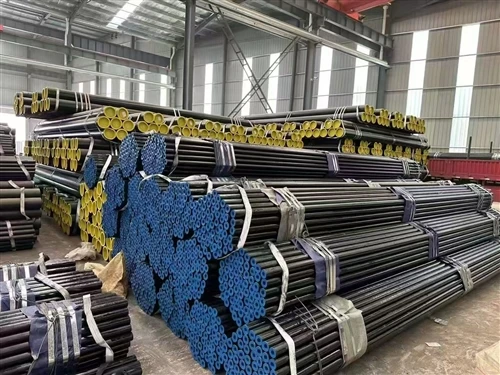
Quench hardening lifts the strength, wear resistance and fatigue life of a steel tube, but a square or rectangular tube is a harder part to quench than a bar. It has four corners, thin flat walls, an internal cavity and (on most sizes) a weld seam. Each of these changes how the tube heats and cools. A process that works on a solid bar can bow, twist or crack a hollow section.
This guide sets out the 14 practical points we follow and recommend, in the order you meet them on the shop floor, followed by a buying guide for anyone ordering tube that will be heat treated.

Which Square and Rectangular Tubes Can Actually Be Quenched?
Quench hardening depends on carbon and alloy content. Martensite forms only when the steel holds enough carbon, so the first buying decision is the steel grade, not the furnace.
| Steel type | Example grades | Response to quenching | Note |
|---|---|---|---|
| Low-carbon structural steel | S235JRH, S355J2H | Weak. Little real hardening | Made for welding and structural use, not for hardening |
| Thermomechanically rolled or normalized high strength steel | S460MH, S460NH | Not intended. Reheating removes rolled-in properties | Original certificate no longer describes the tube |
| Medium-carbon steel | C45 (45 steel) | Good. Hardens with water or polymer | Temper after quenching |
| Medium-carbon alloy steel | 40Cr, 42CrMo4 | Very good, with deeper hardening | Usually oil or polymer quench, then temper |
| High-carbon or high-alloy steel | Tool-type grades | High hardness, high cracking risk | Preheat and step quench |
Standard hollow sections made to EN 10219 or EN 10210 are delivered in a defined condition and guaranteed for that condition only. If you plan to quench, order a grade made for it.
What Should Be Prepared Before the Tubes Go into the Furnace?
Most quenching defects are set up before heating starts.
- Clean the surface. Oil, rust and scale cause uneven heating and soft spots.
- Keep the cavity open and dry. Trapped water or oil turns to steam in the bath and can throw liquid out of the tube. Both ends must be open, and any closed section needs a vent hole.
- Check straightness first. A tube that is bowed before heating will be worse after.
- Sort by section. Group tubes of similar size and wall together.
- Fix the hardness target and depth before you choose temperature and medium.
How Should Tubes Be Loaded and Heated?
- Hang slender tubes vertically. In a salt bath or pit furnace, long tubes hung vertically sag less under their own weight than tubes laid flat. This is the single most effective step against bowing.
- Separate small and large sections. If different sections share one furnace, place the small ones at the outer end of the chamber, time each group separately, and take the small ones out first. A thin-walled tube reaches temperature much sooner than a thick one.
- Match the charge to furnace power. An overloaded furnace loses temperature at each load, so heating time must be extended. Weigh the load against the furnace rating instead of judging by eye.
- Keep the load inside the effective heating zone. Load size, arrangement and stacking must give a uniform temperature and no distortion.
- Keep away from electrodes and walls in a salt furnace. Stay at least 50 mm from electrodes and furnace walls, and keep at least 50 mm below the liquid surface, so no part of the tube overheats locally.
- Set the charge temperature by steel type. Structural and carbon steels can go straight into a furnace held at the quench temperature, or 20-30 degC above it. High-carbon, high-alloy steels should be preheated to about 600 degC before going up to quench temperature, which reduces thermal shock and cracking.
- Protect the surface when it matters. If oxidation and decarburization are not allowed, heat in a calibrated salt bath or protective-atmosphere furnace. If you must use an air resistance furnace, add protection such as coatings or wrapping. A decarburized surface will not harden, and this is the defect that shows up last, at the hardness test.
How Do You Choose the Quenching Temperature and Medium?
- Adjust temperature to the medium. For water or brine quenching, use the lower end of the steel's quench range. For oil or molten-salt quenching, use the upper end. Water cools fast, so a lower temperature keeps thermal shock in check, while oil cools slowly and needs a higher starting point to harden through.
- Adjust temperature to the required depth. Where a deep hardened layer is needed, choose a somewhat higher quench temperature. Where a shallow layer is enough, choose a lower one.
- Keep the medium clean and cool. Cooling water must be free of oil, soap and other contamination. Water temperature should not exceed 40 degC, and oil should not exceed 80 degC. A hot or dirty bath cools unevenly and gives soft spots.
The table shows typical starting points only. Follow the steel's data sheet for your grade.
| Steel | Typical quench temperature (indicative) | Usual medium | Typical tempering range (indicative) |
|---|---|---|---|
| C45 | 820-860 degC | Water or polymer | 500-650 degC |
| 40Cr | 840-860 degC | Oil or polymer | 500-600 degC |
| 42CrMo4 | 840-880 degC | Oil or polymer | 550-650 degC |
How Should Tubes Be Immersed and Cooled?
- Immerse vertically and do not swing. A tube plunged vertically into the quench bath and moved gently up and down over a small distance cools evenly, and it helps steam and liquid move through the bore. Swinging or dragging it sideways creates uneven cooling and twist.
- Add spray cooling where the section cools too slowly. If a thick zone or a region with a high hardness requirement is not cooled quickly enough, immerse the whole tube and spray that zone at the same time to raise the local cooling rate.
- Keep the transfer time short in double-medium quenching. In a two-step quench (for example water first, then oil), time in the first medium is set by the tube wall and steel. The move to the second medium should take as little time as possible, ideally 0.5 to 2 seconds, because the tube is at its most brittle in that window.
- Use stepped quenching with care. In a stepped or martempering process, the tube is held in a hot bath above the martensite start temperature until the temperature equalizes, then cooled through the transformation. A slightly higher austenitizing temperature raises austenite stability and helps the tube reach the hold without decomposing into pearlite. This route gives much lower distortion on long or thin-walled tubes, at the price of a more demanding process.

Why Is Tempering Not Optional?
A quenched tube is hard, but it is also brittle and full of internal stress. Temper it soon after quenching, before the tube cools fully or sits for hours, since untempered martensite can crack in storage. Tempering sets the final balance between hardness and toughness, so decide the target first and work backwards.
What Defects Should You Look For After Quenching?
| Defect | Common cause | Prevention |
|---|---|---|
| Bow or twist | Horizontal heating, swinging in the bath, uneven flow | Hang vertically, plunge straight, use stepped quench |
| Corner cracks | Sharp corners, too-fast cooling, delay before tempering | Use an oil or polymer medium, temper promptly |
| Soft spots | Dirty or hot medium, steam pockets, decarburized surface | Keep to 40 degC water, vent the cavity, protect the surface |
| Uneven hardness along the seam | Weld zone differs from base metal | Normalize welded tube first, ask for a seam check |
| Quench liquid thrown from the bore | Trapped moisture in the cavity | Dry the tube, keep both ends open |
Check hardness on several points around the section, including a corner and the flat face, and sample every lot.
How Do You Buy Tube That Will Be Heat Treated? A Buyer's Checklist
Whether you quench in your own shop or send the tube out, agree these points with the supplier before you order:
- Steel grade and carbon range. Specify a grade made for quenching, such as C45, 40Cr or 42CrMo4, and ask for a tight carbon and alloy window so response is consistent from lot to lot.
- Delivery condition. Ask for normalized or annealed tube so your shop starts from a uniform structure.
- Tube type. Welded square and rectangular tube has a seam zone whose structure differs from the base steel. Seamless tube avoids this, at higher cost.
- Dimensional accuracy before treatment. Set limits for straightness, squareness, corner radius and wall thickness. Distortion is easier to control when the starting geometry is good.
- Surface condition. Limit surface decarburization on the tube you receive, since it cannot be repaired after quenching.
- Hardness and depth requirement. State the hardness range, the test position and the minimum case depth.
- Certificates and traceability. Ask for an EN 10204 3.1 certificate with heat number, chemistry and properties, and marking that links each tube to its heat.
- Trial pieces. Order a few extra tubes from the same heat to trial the process before the full batch.
- Length and cutting. Decide whether to quench at full length or after cutting, because long tubes are the ones that bow.
The most costly buying mistake is ordering a low-carbon structural grade and expecting it to harden. The second is ordering a grade that hardens but leaving the delivery condition open, so every lot reacts differently.