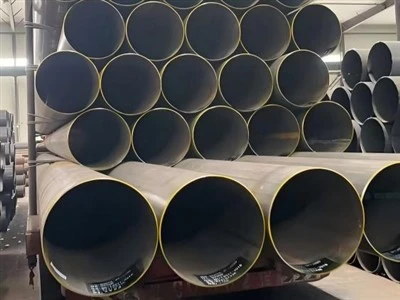
As a well - established ERW steel pipe supplier, I've witnessed firsthand the importance of certifications in the industry. ERW, or Electric Resistance Welded, steel pipes are widely used in various sectors such as construction, oil and gas, and automotive due to their cost - effectiveness, durability, and versatility. But what exactly are the certifications for ERW steel pipes?
ASTM Standards
One of the most recognized sets of standards for ERW steel pipes comes from the American Society for Testing and Materials (ASTM). The ASTM standards ensure that the pipes meet specific quality, performance, and safety requirements.
For instance, ASTM A672 EFW Pipes are designed for welded steel pipe for pressure applications at moderate temperatures. These pipes are produced using the electric - fusion - welded process. ASTM A672 has different grades and wall thicknesses, each suitable for different pressure and temperature conditions. The certification process for ASTM A672 pipes involves a series of tests. Chemical composition analysis is conducted to ensure that the steel has the right amount of elements such as carbon, manganese, sulfur, and phosphorus. Mechanical tests, including tensile tests, yield strength tests, and hardness tests, are performed to assess the pipe's ability to withstand stress and deformation.
Another important ASTM standard is ASTM A53. This standard covers both seamless and welded (ERW) steel pipes for general use. Pipes under this standard are used in a wide range of applications, from structural to mechanical. Similar to ASTM A672, ASTM A53 pipes also undergo strict quality control measures during the certification process. Visual inspections are carried out to check for surface defects such as cracks, pits, and seams. Non - destructive testing methods, like ultrasonic testing and magnetic particle testing, are used to detect internal and surface - near defects that may not be visible to the naked eye.
API Standards
In the oil and gas industry, the American Petroleum Institute (API) standards play a crucial role. API 5L GR.X42 ERW STEEL PIPE is a prime example. API 5L is a specification for line pipe, which is used to transport oil, gas, and other fluids over long distances.
The X42 grade in API 5L indicates the minimum yield strength of the pipe, which is 42,000 psi. To obtain API 5L certification, the pipes must meet a comprehensive set of requirements. Material traceability is of utmost importance. The supplier must be able to provide documentation that shows the origin of the steel used in the pipes. In addition to the standard mechanical and chemical tests, API 5L pipes also undergo tests related to corrosion resistance. Since these pipes are often used in harsh environments, they need to be able to resist corrosion to ensure long - term performance.
Galvanized Steel Pipe Certifications
Galvanized steel pipes are ERW pipes that have been coated with a layer of zinc to prevent corrosion. Galvanized Steel Pipe certifications focus on the quality of the galvanizing process.
The most common standard for galvanized pipes is ASTM A123. This standard specifies the requirements for the zinc coating on iron and steel products. The thickness of the zinc coating is a critical parameter. Thicker coatings generally provide better corrosion protection. The certification process for ASTM A123 galvanized pipes includes measuring the coating thickness using techniques such as magnetic induction or X - ray fluorescence. Adhesion tests are also conducted to ensure that the zinc coating adheres well to the steel surface. If the coating does not adhere properly, it may flake off over time, reducing the pipe's corrosion resistance.


ISO Standards
The International Organization for Standardization (ISO) also has standards related to ERW steel pipes. ISO 10790, for example, is a standard for seamless and welded (including ERW) steel tubes for the petrochemical industry.
ISO standards are known for their global acceptance. They focus on a holistic approach to quality management. In addition to the technical requirements for the pipes themselves, ISO standards also consider aspects such as environmental management and occupational health and safety in the manufacturing process. For ISO - certified ERW steel pipes, the supplier needs to have a well - documented quality management system in place. This system should cover all aspects of the production process, from raw material procurement to final product delivery.
Importance of Certifications for ERW Steel Pipe Suppliers
Certifications are not just pieces of paper; they are a testament to the quality and reliability of the ERW steel pipes. For us as a supplier, having certified products gives our customers confidence. When a construction company is building a high - rise building, they need to be sure that the ERW steel pipes they use for plumbing or structural support meet the required standards. Certifications also open up new markets. Many large - scale projects, especially those in the international market, require suppliers to provide certified products.
Moreover, certifications help in maintaining consistency in product quality. By following the strict requirements of the standards, we can ensure that each batch of ERW steel pipes we produce has the same high - level performance. This consistency is crucial for our customers, as it allows them to plan and execute their projects without worrying about variations in product quality.
How Certifications Benefit End - Users
End - users of ERW steel pipes also reap significant benefits from certified products. In the oil and gas industry, using API - certified pipes reduces the risk of pipeline failures. Pipeline failures can lead to environmental disasters, as well as significant financial losses. Certified pipes are more likely to withstand the high pressures and corrosive environments typical of oil and gas transportation.
In the construction industry, using ASTM - certified ERW steel pipes ensures the structural integrity of buildings. These pipes are less likely to develop defects over time, which can lead to safety hazards. For example, in a bridge construction project, using high - quality, certified pipes can extend the lifespan of the bridge and reduce maintenance costs.
Conclusion
In conclusion, certifications for ERW steel pipes are essential for both suppliers and end - users. Whether it's ASTM, API, ISO, or other standards, each certification provides a framework for ensuring the quality, performance, and safety of the pipes. As a reliable ERW steel pipe supplier, we are committed to providing products that meet the highest certification standards.
If you are in the market for high - quality ERW steel pipes, we invite you to reach out to us for procurement discussions. We can offer you a wide range of certified products to meet your specific needs.
References
- American Society for Testing and Materials (ASTM) standards documentation
- American Petroleum Institute (API) standards documentation
- International Organization for Standardization (ISO) standards documentation