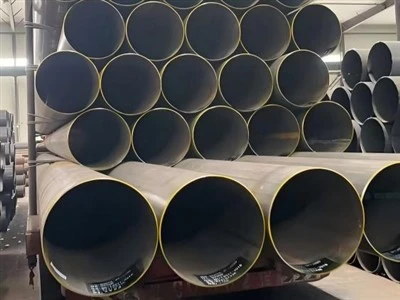
What is the Poisson's ratio of hollow sections?
As a supplier of hollow sections, I often encounter questions from clients regarding the various mechanical properties of our products. One such property that is frequently inquired about is the Poisson's ratio of hollow sections. In this blog post, I aim to provide a comprehensive understanding of what Poisson's ratio is, its significance in the context of hollow sections, and how it can impact the performance of these structural elements.
Understanding Poisson's Ratio
Poisson's ratio is a fundamental concept in the field of materials science and engineering. It is defined as the negative ratio of the transverse strain to the longitudinal strain when a material is subjected to an axial load. In simpler terms, when a material is stretched or compressed in one direction, it will also deform in the perpendicular directions. Poisson's ratio quantifies this relationship between the deformation in the axial direction and the deformation in the transverse directions.
Mathematically, Poisson's ratio (ν) is expressed as:
ν = - (ε_transverse / ε_longitudinal)
where ε_transverse is the transverse strain and ε_longitudinal is the longitudinal strain.
The value of Poisson's ratio typically ranges between -1 and 0.5 for most engineering materials. For isotropic materials, which have the same properties in all directions, the Poisson's ratio is usually around 0.3. However, the actual value can vary depending on the material's composition, microstructure, and loading conditions.
Poisson's Ratio in Hollow Sections
Hollow sections are widely used in various structural applications, such as building construction, bridge engineering, and automotive manufacturing. These sections offer several advantages, including high strength-to-weight ratio, excellent torsional resistance, and aesthetic appeal. Understanding the Poisson's ratio of hollow sections is crucial for accurately predicting their behavior under different loading conditions.
When a hollow section is subjected to an axial load, it will experience both longitudinal and transverse deformation. The Poisson's ratio of the material used to manufacture the hollow section determines the magnitude of the transverse deformation relative to the longitudinal deformation. This, in turn, affects the overall stiffness and stability of the section.
For example, in a steel hollow section, a higher Poisson's ratio means that the section will experience more significant transverse deformation when subjected to an axial load. This can lead to increased lateral deflection and reduced buckling resistance. On the other hand, a lower Poisson's ratio indicates less transverse deformation, resulting in a stiffer and more stable section.
Factors Affecting Poisson's Ratio in Hollow Sections
Several factors can influence the Poisson's ratio of hollow sections. These include:
- Material Properties: Different materials have different Poisson's ratios. For instance, steel typically has a Poisson's ratio of around 0.3, while aluminum has a slightly higher value of approximately 0.33. The choice of material for the hollow section will therefore have a direct impact on its Poisson's ratio.
- Section Geometry: The shape and dimensions of the hollow section can also affect its Poisson's ratio. For example, a square hollow section may have a different Poisson's ratio compared to a circular hollow section of the same material and wall thickness. Additionally, the ratio of the section's width to its height (aspect ratio) can influence the transverse deformation and, consequently, the Poisson's ratio.
- Loading Conditions: The type and magnitude of the load applied to the hollow section can also affect its Poisson's ratio. For example, a section subjected to a static load may have a different Poisson's ratio compared to a section subjected to a dynamic load. Similarly, the presence of additional constraints or support conditions can alter the deformation behavior of the section and, therefore, its Poisson's ratio.
Importance of Poisson's Ratio in Design
Accurately determining the Poisson's ratio of hollow sections is essential for the safe and efficient design of structural systems. Engineers rely on this property to calculate the stresses, strains, and deflections in the sections under different loading conditions. By considering the Poisson's ratio, designers can optimize the section's dimensions and material selection to ensure that it meets the required performance criteria.
For example, in the design of a building's structural frame, the Poisson's ratio of the hollow sections used for columns and beams must be taken into account to accurately predict the lateral displacement of the structure under wind or seismic loads. Similarly, in the design of a bridge, the Poisson's ratio of the hollow sections used for the girders and trusses is crucial for ensuring the bridge's stability and durability.
Our Hollow Section Products
As a leading supplier of hollow sections, we offer a wide range of products to meet the diverse needs of our customers. Our Hot Finished Square Hollow Sections are manufactured using high-quality steel and are available in various sizes and wall thicknesses. These sections are ideal for applications requiring high strength and excellent corrosion resistance.
We also supply S460NH STEEL HOLLOW SECTIONS, which are specifically designed for use in fire-resistant structures. These sections have a high yield strength and excellent fire resistance properties, making them suitable for applications in buildings, bridges, and industrial structures.
In addition, our As 1163 Hollow Sections comply with the Australian Standard AS 1163 and are available in a variety of shapes and sizes. These sections are widely used in the construction industry for applications such as framing, fencing, and handrails.
Conclusion
In conclusion, Poisson's ratio is an important mechanical property that plays a crucial role in the behavior and performance of hollow sections. By understanding the concept of Poisson's ratio and its significance in the context of hollow sections, engineers and designers can make informed decisions regarding material selection, section geometry, and loading conditions.


As a supplier of hollow sections, we are committed to providing our customers with high-quality products and technical support. If you have any questions or require further information about the Poisson's ratio of our hollow sections or any other aspect of our products, please do not hesitate to contact us. We would be happy to assist you with your procurement needs and help you find the right solution for your project.
References
- Calladine, C. R. (1983). Theory of Shell Structures. Cambridge University Press.
- Timoshenko, S. P., & Goodier, J. N. (1970). Theory of Elasticity. McGraw-Hill.
- Budynas, R. G., & Nisbett, J. K. (2011). Shigley's Mechanical Engineering Design. McGraw-Hill.