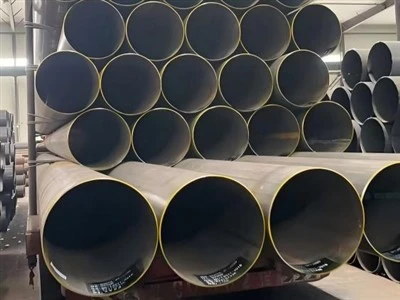
Ensuring the quality of EN 10219 hollow sections is of utmost importance for suppliers like me. As a provider of these high - quality hollow sections, I understand the significance of maintaining strict quality control throughout the production and supply process. In this blog, I will share some key strategies and practices that I follow to ensure the quality of EN 10219 hollow sections.
1. Raw Material Selection
The foundation of high - quality EN 10219 hollow sections lies in the selection of raw materials. We source our steel from reputable suppliers who adhere to strict quality standards. The steel used should have the appropriate chemical composition and mechanical properties as specified in the EN 10219 standard. For example, the carbon content, manganese, silicon, and other alloying elements need to be within the defined ranges. This ensures that the final product has the required strength, ductility, and corrosion resistance.
Before accepting any raw material, we conduct thorough inspections. We check for surface defects, such as cracks, scratches, and inclusions. Chemical analysis is also performed to verify the composition of the steel. Only when the raw materials meet our strict quality criteria do we proceed with the manufacturing process.
2. Manufacturing Process Control
The manufacturing process of EN 10219 hollow sections is a complex one that requires precise control. We use advanced manufacturing techniques and equipment to ensure that each step is carried out accurately.
Welding Process
Most EN 10219 hollow sections are welded products. The welding process is a critical step that can significantly affect the quality of the final product. We use automated welding machines that are calibrated to ensure consistent weld quality. The welding parameters, such as welding current, voltage, and welding speed, are carefully controlled. This helps to produce strong and reliable welds that meet the requirements of the EN 10219 standard.
Forming Process
The forming process is another crucial step. We use high - precision forming equipment to shape the steel into the desired hollow section profiles. The forming process should be carried out in a way that minimizes internal stresses and ensures uniform wall thickness. Any deformation or non - uniformity in the section can lead to structural weaknesses.
3. Quality Testing
Quality testing is an essential part of ensuring the quality of EN 10219 hollow sections. We conduct a series of tests at different stages of the production process.
Non - Destructive Testing (NDT)
Non - destructive testing methods, such as ultrasonic testing (UT), magnetic particle testing (MT), and radiographic testing (RT), are used to detect internal and surface defects without damaging the product. Ultrasonic testing can detect internal flaws, such as cracks and inclusions, while magnetic particle testing is effective for detecting surface - breaking defects. Radiographic testing provides detailed images of the internal structure of the hollow section.


Destructive Testing
Destructive testing is also carried out to evaluate the mechanical properties of the hollow sections. Tensile tests are performed to determine the yield strength, ultimate tensile strength, and elongation of the steel. Bend tests are used to assess the ductility of the material. Impact tests are conducted to evaluate the toughness of the hollow sections under dynamic loading conditions.
4. Traceability and Documentation
Traceability is crucial in ensuring the quality of EN 10219 hollow sections. We maintain detailed records of the raw materials, manufacturing processes, and quality testing results. Each batch of hollow sections is assigned a unique identification number, which allows us to track its origin, manufacturing history, and test results.
Documentation is also an important aspect. We provide our customers with comprehensive quality certificates that include information about the chemical composition, mechanical properties, and test results of the hollow sections. This documentation gives our customers confidence in the quality of our products.
5. Comparison with Other Products
It's also important to understand how EN 10219 hollow sections compare with other similar products in the market. For example, ASTM A500 Rectangular Steel Tube is a well - known product in the steel tube industry. While both EN 10219 and ASTM A500 are used for structural applications, they have different standards and requirements. EN 10219 is a European standard, which may have different chemical composition and mechanical property requirements compared to ASTM A500.
Another product is Spiral Submerged Arc Welded (SSAW) Steel Pipe. SSAW steel pipes are often used in large - diameter applications, such as oil and gas pipelines. EN 10219 hollow sections, on the other hand, are more commonly used in general structural applications. The manufacturing processes and quality control requirements for SSAW steel pipes are different from those of EN 10219 hollow sections.
API 5L PSL2 X52 Line Pipe is designed for use in the oil and gas industry. It has specific requirements for corrosion resistance, strength, and weldability. EN 10219 hollow sections may not have the same level of specialization for the oil and gas industry, but they are widely used in other structural applications.
6. Continuous Improvement
Quality is not a one - time achievement but an ongoing process. We are committed to continuous improvement in our quality management system. We regularly review our manufacturing processes, quality control methods, and customer feedback. By analyzing the data from quality testing and customer complaints, we can identify areas for improvement.
We also invest in research and development to explore new manufacturing techniques and materials that can further enhance the quality of our EN 10219 hollow sections. For example, we are constantly looking for ways to improve the corrosion resistance of our products without sacrificing strength and ductility.
Conclusion
Ensuring the quality of EN 10219 hollow sections requires a comprehensive approach that includes raw material selection, manufacturing process control, quality testing, traceability, and continuous improvement. By following these strategies, we can provide our customers with high - quality products that meet or exceed the requirements of the EN 10219 standard.
If you are in the market for high - quality EN 10219 hollow sections, I invite you to contact us for procurement and further discussion. We are dedicated to providing you with the best products and services.
References
- EN 10219:2006, Cold formed welded structural hollow sections of non - alloy and fine grain steels
- ASTM A500 Standard Specification for Cold - Formed Welded and Seamless Carbon Steel Structural Tubing in Rounds and Shapes
- API 5L Specification for Line Pipe