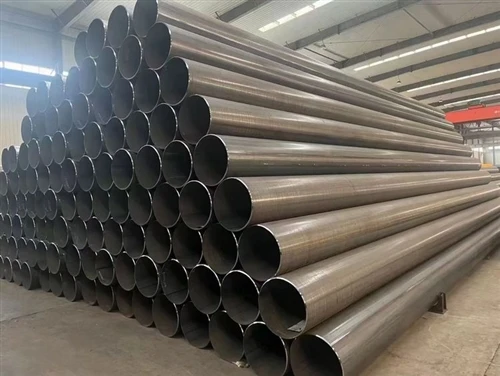
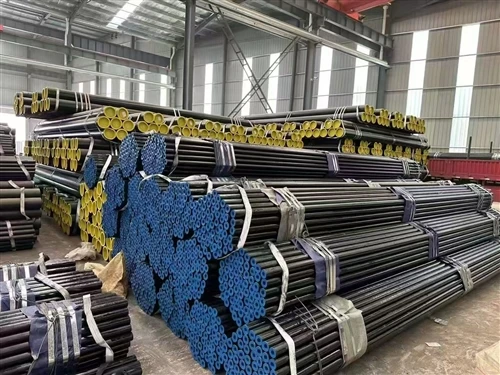
X70 grade steel is a high-strength, low-alloy (HSLA) steel primarily used in the oil and gas industry for pipeline applications. This grade is part of the API 5L specification, which covers line pipe for use in conveying gas, water, and oil in both the oil and natural gas industries. X70 steel offers an excellent balance of strength, toughness, and weldability, making it a popular choice for demanding pipeline projects around the world.
How does X70 grade compare to other API 5L grades?
The API 5L specification covers a wide range of steel grades, from lower strength grades like X42 to ultra-high strength grades like X120. X70 sits in the middle to upper range of this spectrum, offering significant advantages over lower grades while remaining more economical and easier to work with than the highest strength options.
Compared to lower grades like X52 or X60, X70 offers:
1. Higher yield strength: X70 has a minimum yield strength of 70,000 psi (483 MPa), which is significantly higher than X52 (52,000 psi) or X60 (60,000 psi). This allows for thinner pipe walls while maintaining the same pressure rating, reducing material costs and weight.
2. Improved toughness: X70 steel typically exhibits better low-temperature toughness than lower grades, making it suitable for use in harsh environments and reducing the risk of brittle fracture.
3. Enhanced weldability: Despite its higher strength, X70 maintains good weldability, which is crucial for pipeline construction and repair.
4. Better resistance to hydrogen-induced cracking (HIC): X70 steel can be manufactured with improved resistance to HIC, which is essential for sour service applications where hydrogen sulfide is present.
When compared to higher grades like X80 or X100, X70 offers:
1. Lower cost: While not as strong as X80 or X100, X70 is generally more cost-effective to produce and easier to work with in the field.
2. Wider availability: X70 is more commonly produced and readily available than the ultra-high strength grades.
3. More forgiving fabrication: X70 typically requires less precise heat treatment and welding procedures than higher grades, making it easier to work with in various construction scenarios.
4. Proven track record: With decades of use in major pipeline projects worldwide, X70 has a well-established performance history, giving engineers and operators confidence in its long-term reliability.
The choice between X70 and other grades ultimately depends on the specific project requirements, including operating pressure, environmental conditions, and cost considerations. For many modern pipeline projects, X70 represents an optimal balance of performance and practicality.
What are the key applications of X70 grade steel in pipelines?
X70 grade steel finds extensive use in pipeline applications, particularly in the oil and gas industry. Its combination of high strength, good toughness, and excellent weldability makes it suitable for a wide range of pipeline projects. Here are some key applications:
1. Long-distance transmission pipelines: X70 is frequently used in major cross-country and subsea pipeline projects for transporting oil and natural gas over long distances. Its high strength allows for larger diameter pipes and higher operating pressures, increasing the efficiency of fluid transport.
2. Arctic and sub-arctic pipelines: The enhanced low-temperature toughness of X70 steel makes it an excellent choice for pipelines in cold climates. It can maintain its mechanical properties and resist brittle fracture even in extreme cold, ensuring the safety and reliability of pipelines in harsh northern environments.
3. Deep-water offshore pipelines: X70 steel's combination of strength and toughness makes it suitable for deep-water applications where pipes must withstand high external pressures and installation stresses.
4. High-pressure gas transmission lines: The high yield strength of X70 allows for thinner pipe walls while maintaining the necessary pressure ratings, reducing material costs and making installation easier.
5. Sour service pipelines: When manufactured to appropriate specifications, X70 steel can be used in sour service applications where resistance to hydrogen-induced cracking is crucial.
6. Strain-based design pipelines: In areas prone to ground movement (e.g., permafrost regions or seismic zones), X70 steel can be used in strain-based design approaches, where the pipeline is designed to accommodate large deformations without failure.
7. Onshore gathering systems: X70 can be used in gathering systems that collect oil or gas from multiple wells and transport it to processing facilities or larger transmission pipelines.
8. Pipeline river crossings and horizontal directional drilling (HDD) applications: The high strength and good ductility of X70 make it suitable for challenging installation methods like HDD, where the pipe must withstand significant pulling forces.
9. Compressed Natural Gas (CNG) and Hydrogen transportation: As the world moves towards cleaner energy sources, X70 steel is being considered for high-pressure transportation of CNG and hydrogen, leveraging its high strength and potential for crack resistance.
10. Retrofit and upgrade projects: When upgrading existing pipeline systems to handle higher pressures or more demanding operating conditions, X70 steel can be used to replace older, lower-grade pipes while maintaining compatibility with existing infrastructure.
The versatility of X70 grade steel has made it a go-to material for pipeline engineers and operators worldwide. Its use has enabled the construction of increasingly efficient and reliable pipeline networks, supporting the global energy infrastructure and facilitating the transport of vital resources across vast distances and challenging terrains.
What are the manufacturing processes for X70 grade steel?
The production of X70 grade steel involves a sophisticated manufacturing process that combines careful control of chemical composition with advanced thermomechanical treatments. This process is designed to achieve the desired microstructure and mechanical properties that define X70 grade steel. Here's an overview of the key steps involved:
1. Steelmaking:
The process begins in the steel mill with the selection of high-quality raw materials, including iron ore, recycled steel (scrap), and alloying elements.
These materials are melted in either a Basic Oxygen Furnace (BOF) or an Electric Arc Furnace (EAF), depending on the mill's setup.
During this stage, the chemical composition is carefully controlled to achieve the desired alloy content. X70 typically contains low carbon content (usually less than 0.12%) and small amounts of alloying elements such as manganese, silicon, niobium, vanadium, and titanium.
2. Secondary Steelmaking:
After initial melting, the steel undergoes secondary steelmaking processes to refine its composition and remove impurities.
This may include ladle metallurgy treatments, vacuum degassing to remove dissolved gases, and fine-tuning of the alloy composition.
3. Continuous Casting:
The molten steel is then cast into slabs using a continuous casting process.
The dimensions of these slabs are carefully controlled to suit the final pipe dimensions.
4. Reheating:
The cast slabs are reheated to temperatures typically around 1200°C (2192°F) in preparation for rolling.
5. Thermomechanical Controlled Processing (TMCP):
This is a crucial step in the production of X70 steel. TMCP combines controlled rolling with controlled cooling to achieve the desired microstructure and properties.
The reheated slab is passed through a series of rolling stands, with each pass reducing the thickness and increasing the length of the steel.
The rolling temperature, reduction per pass, and inter-pass times are all carefully controlled to influence the steel's grain structure.
6. Accelerated Cooling:
After the final rolling pass, the steel undergoes accelerated cooling.
The cooling rate is precisely controlled to achieve the optimal balance of strength and toughness.
This process helps to form a fine-grained microstructure, typically consisting of ferrite and bainite.
7. Leveling and Sizing:
The cooled steel is then leveled to ensure flatness and cut to the required dimensions.
8. Heat Treatment (if required):
Some X70 steels may undergo additional heat treatment processes such as normalizing or quenching and tempering to further refine the microstructure and properties.
9. Pipe Forming:
The steel plate is then formed into pipe using either the UOE (U-ing, O-ing, Expansion) process for large diameter pipes or high-frequency welding for smaller diameters.
The longitudinal or helical seam is welded using submerged arc welding (SAW) or other high-quality welding processes.
10. Final Processing:
The formed pipe undergoes final processing steps, which may include hydrostatic testing, non-destructive testing (NDT), and the application of protective coatings.
Throughout this manufacturing process, strict quality control measures are implemented to ensure that the X70 steel meets all the required specifications. This includes regular sampling and testing of mechanical properties, microstructure analysis, and chemical composition verification.
The precise control of each step in this manufacturing process is what allows X70 steel to achieve its characteristic combination of high strength, good toughness, and excellent weldability. These properties have made X70 a preferred choice for demanding pipeline applications worldwide, contributing to the safety and efficiency of global oil and gas transportation infrastructure.