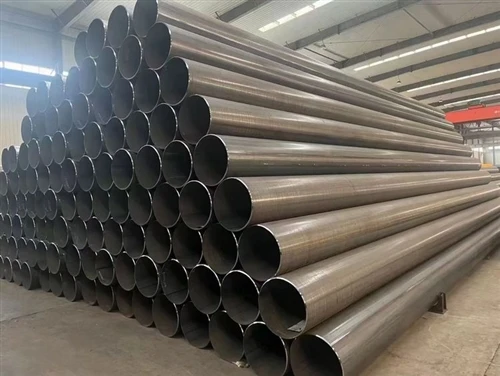
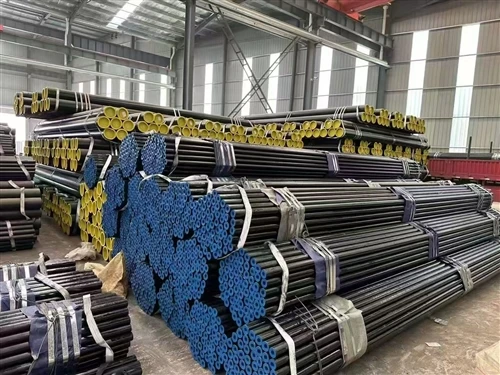
In the world of steel construction and manufacturing, acronyms and specialized terms are commonplace. One such term that frequently appears is SHS, which stands for Square Hollow Section. SHS is a crucial component in various steel structures, known for its versatility and strength. This blog post will delve into the meaning of SHS in steel, its applications, and why it's an essential element in modern construction and engineering.
What are the main applications of AS1163 pipe SHS in construction?
Square Hollow Section (SHS) pipes, specifically those conforming to the AS1163 standard, find extensive use in various construction applications due to their unique properties and structural advantages. AS1163 is an Australian Standard that specifies the requirements for steel hollow sections in structural applications, ensuring consistent quality and performance across different manufacturers.
One of the primary applications of AS1163 pipe SHS is in building frameworks. These square-shaped steel tubes are excellent for creating strong, lightweight structures that can withstand significant loads. In commercial and industrial buildings, SHS is often used for columns, beams, and trusses. The square shape provides superior resistance to torsional forces compared to circular hollow sections, making them ideal for structures that need to withstand complex loading conditions.
In residential construction, AS1163 pipe SHS is frequently employed for pergolas, carports, and verandahs. The clean, modern look of square sections appeals to architects and homeowners alike, while the inherent strength of the material ensures long-lasting structures. SHS can be easily welded or bolted together, allowing for quick and efficient assembly on-site.
Infrastructure projects also benefit greatly from the use of AS1163 pipe SHS. In bridge construction, these sections are used for support structures, railings, and even as main load-bearing elements in smaller pedestrian bridges. The corrosion resistance of properly treated SHS makes it suitable for outdoor applications, reducing maintenance costs over the lifecycle of the structure.
Agricultural buildings and structures represent another significant application area for AS1163 pipe SHS. Farm sheds, barns, and equipment storage facilities often utilize SHS for their frames due to the material's durability and resistance to environmental factors. The ability to span long distances without intermediate supports makes SHS an economical choice for large agricultural structures.
In the industrial sector, AS1163 pipe SHS is widely used in the construction of factory frameworks, warehouse racking systems, and heavy machinery supports. The high strength-to-weight ratio of SHS allows for the creation of robust structures that can support heavy loads without excessive material use, leading to cost savings and improved space utilization.
The versatility of AS1163 pipe SHS extends to the realm of urban furniture and public installations. Park benches, bus shelters, signage supports, and playground equipment often incorporate SHS due to its durability and aesthetic appeal. The ability to easily paint or coat SHS allows for customization to match specific design requirements or blend with surrounding architecture.
How does SHS compare to other steel profiles in terms of strength and weight?
When it comes to structural engineering and design, the choice of steel profile can significantly impact the overall performance, efficiency, and cost-effectiveness of a project. Square Hollow Sections (SHS) have gained popularity in recent years, but how do they stack up against other steel profiles in terms of strength and weight? This comparison will shed light on the advantages and potential limitations of SHS relative to other common steel sections.
One of the primary competitors to SHS is the I-beam or H-beam profile. I-beams are known for their excellent performance under bending loads, making them a go-to choice for horizontal spanning elements like floor joists and bridge girders. However, when it comes to compressive strength, SHS often outperforms I-beams of similar weight. The closed shape of SHS provides superior resistance to buckling in all directions, whereas I-beams are strongest along their major axis but relatively weak in the perpendicular direction.
In terms of weight efficiency, SHS generally offers a better strength-to-weight ratio compared to solid sections like flat bars or round bars. This is due to the hollow nature of SHS, which distributes material away from the neutral axis, increasing the section's moment of inertia without adding unnecessary weight to the center. This efficient use of material makes SHS an attractive option for applications where weight savings are crucial, such as in long-span structures or high-rise buildings.
Circular Hollow Sections (CHS) are another close competitor to SHS. Both profiles share the advantage of being closed sections, which provides excellent torsional resistance. However, SHS has an edge over CHS in certain aspects. The flat sides of SHS make it easier to create connections and joints, simplifying fabrication and assembly processes. Additionally, the square shape of SHS allows for easier alignment and fitting with other structural elements, particularly in rectilinear designs.
When comparing SHS to open sections like angles or channels, the closed nature of SHS again proves advantageous. Open sections are more susceptible to torsional deformation and lateral-torsional buckling, especially when used as compression members. SHS, with its closed form, provides greater stability and resistance to these types of deformations, allowing for the use of longer unsupported lengths in many applications.
In terms of overall strength, SHS performs exceptionally well under combined loading conditions. Its symmetrical cross-section means that it has consistent properties in all directions, making it ideal for members subjected to complex stress states. This is particularly beneficial in space frame structures or in columns that may experience multi-directional loading.
The weight comparison between SHS and other profiles can vary depending on the specific application and loading conditions. However, in many cases, SHS can achieve the same structural performance as other profiles while using less material. This weight saving not only reduces the cost of the steel itself but can also lead to savings in foundation design and transportation costs.
What are the key differences between SHS and RHS in steel construction?
In the realm of steel construction, both Square Hollow Sections (SHS) and Rectangular Hollow Sections (RHS) play crucial roles. While they share many similarities, understanding the key differences between these two profiles is essential for engineers, architects, and contractors to make informed decisions in their projects. Let's explore the distinct characteristics of SHS and RHS, and how these differences impact their applications in steel construction.
The most obvious difference between SHS and RHS lies in their geometry. As the names suggest, SHS has equal sides forming a square cross-section, while RHS has a rectangular cross-section with two pairs of parallel sides of unequal length. This fundamental difference in shape leads to several important distinctions in their structural properties and applications.
One of the primary advantages of AS1163 pipe SHS is its uniform cross-section. This symmetry results in consistent strength and stiffness properties in all directions perpendicular to the length of the section. For applications where loads may come from multiple directions or where torsional resistance is critical, SHS provides a balanced and predictable performance. This makes SHS particularly suitable for columns, especially in multi-story buildings or structures subject to wind and seismic loads.
RHS, on the other hand, offers more flexibility in design due to its rectangular shape. The different dimensions of its sides allow engineers to optimize the section for specific loading conditions. For instance, in beam applications where the primary bending occurs around one axis, RHS can be oriented with its longer side vertical, providing greater stiffness and strength in that direction while potentially using less material than an equivalent SHS.
In terms of connection design, SHS often has an advantage. The equal sides of SHS simplify the process of creating joints and connections, as there's no need to account for orientation. This can lead to more standardized connection details and potentially reduce fabrication time and costs. RHS connections, while still straightforward, may require more consideration to ensure the orientation is correct for the intended load path.
Weight efficiency is another area where SHS and RHS may differ. In some cases, RHS can offer a more efficient use of material for a given strength requirement. By adjusting the aspect ratio of the rectangle, designers can fine-tune the section properties to match the specific loading conditions more closely than might be possible with SHS. However, this advantage is highly dependent on the particular application and loading scenario.
Aesthetically, SHS and RHS each have their merits. The clean, uniform look of SHS can be desirable in exposed structural elements where a modern, minimalist appearance is sought. RHS, with its varied proportions, can offer more dynamic visual options and may be preferred in designs where the structural elements are intended to create a specific architectural effect.
In terms of availability and cost, both SHS and RHS are widely produced and generally readily available. However, the range of sizes for SHS might be more limited compared to RHS, as the latter's rectangular shape allows for a greater variety of dimension combinations. This can sometimes influence the choice between the two, especially in projects with unique size requirements.
When it comes to fabrication, both SHS and RHS are relatively easy to work with. They can be cut, welded, and drilled without significant difficulty. However, SHS may have a slight edge in some fabrication processes due to its uniform shape, which can simplify setup and handling in automated manufacturing environments.
The choice between AS1163 pipe SHS and RHS also impacts the design of protective coatings and finishes. The flat surfaces of both profiles are generally easy to paint or galvanize. However, RHS may require more attention to ensure even coverage on its different-sized faces, particularly in processes like hot-dip galvanizing where the flow of molten zinc can be affected by the section's geometry.
In conclusion, while SHS and RHS are both valuable tools in steel construction, their distinct characteristics make them suited to different applications. SHS excels in scenarios requiring uniform strength and simplicity of connections, while RHS offers greater flexibility in optimizing section properties for specific load cases. Understanding these differences allows for more informed decision-making in structural design, potentially leading to more efficient, cost-effective, and aesthetically pleasing steel structures.
References
1. Standards Australia. (2016). AS/NZS 1163:2016 Cold-formed structural steel hollow sections.
2. American Institute of Steel Construction. (2017). Steel Construction Manual, 15th Edition.
3. European Committee for Standardization. (2005). Eurocode 3: Design of steel structures.
4. Wardenier, J., Packer, J. A., Zhao, X. L., & van der Vegte, G. J. (2010). Hollow sections in structural applications.
5. Tata Steel. (2021). Steel Sections: Product Range and Design Information.
6. Ongelin, P., & Valkonen, I. (2016). Structural hollow sections: Design guide for rectangular and square hollow sections.
7. Gardner, L., & Nethercot, D. A. (2011). Designers' Guide to Eurocode 3: Design of Steel Buildings.
8. Packer, J. A., Wardenier, J., Zhao, X. L., van der Vegte, G. J., & Kurobane, Y. (2009). Design guide for rectangular hollow section (RHS) joints under predominantly static loading.
9. Zhao, X. L., Hancock, G. J., & Trahair, N. S. (2002). Lateral-torsional buckling of hollow flange beams.
10. Lawson, R. M., & Hicks, S. J. (2011). Design of composite beams with large web openings: In accordance with Eurocodes and the UK National Annexes.