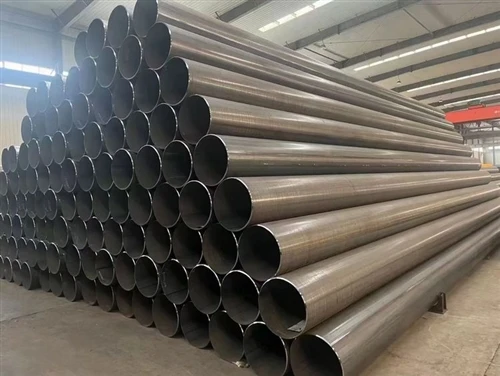
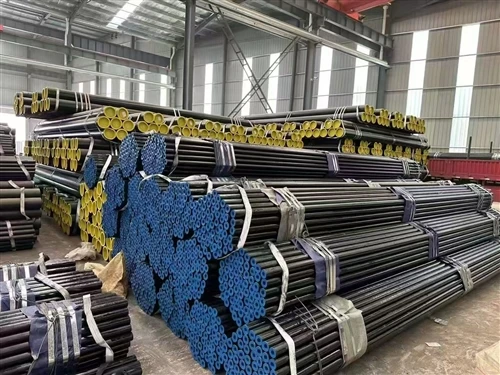
In the international oil, gas, and petrochemical sectors, the transportation of hazardous fluids under extreme pressure requires piping materials with infallible structural integrity. The American Petroleum Institute (API) establishes the API 5L specification to regulate the manufacturing, chemical composition, and mechanical limits of line pipes.
For B2B procurement managers, structural engineers, and project estimators, understanding the mechanical properties of these pipes is the foundation of pipeline safety. These properties dictate how a pipeline will react when subjected to internal fluid pressure, external soil loading, environmental shifting, and thermal expansion. This industry guide breaks down the core mechanical properties of API 5L seamless line pipes and highlights how Brisk Steel optimizes these metrics to deliver premium-grade solutions to the global market.


How Do Yield Strength and Tensile Strength Prevent Pipe Deformation and Rupture?
Yield strength and tensile strength are the primary mechanical metrics used by engineers to calculate the Maximum Allowable Operating Pressure (MAOP) of a pipeline network.
- Yield Strength : This represents the maximum stress a steel pipe can withstand before it begins to undergo permanent, plastic deformation. Once the stress exceeds this threshold, the pipe will not return to its original shape. For instance, an API 5L Grade B pipe possesses a minimum yield strength of 245 MPa (35,500 psi), while a high-strength grade like X70 increases this threshold to 485 MPa (70,300 psi).
- Ultimate Tensile Strength (UTS): This is the maximum stress the steel can withstand while being pulled or stretched before fracturing or necking occurs. For Grade B, the minimum tensile strength is 415 MPa (60,200psi), whereas X70 demands a minimum of 570 MPa (82,700 psi).
By optimizing the ratio between yield and tensile strength (known as the yield-to-tensile ratio, which is strictly limited to a maximum of 0.93 in PSL2 specifications), engineers ensure that the pipeline possesses a built-in safety cushion between initial deformation and catastrophic rupture.
Why Is Elongation Critical for Surviving Structural Shifting and Earth Movement?
Ductility is the ability of the steel pipe to deform plastically without cracking or fracturing under sudden stress. It is measured primarily through Elongation Percentage during standard tensile testing.
In real-world pipeline layouts, line pipes are subjected to unexpected external loads caused by soil settlement, seismic activity, thermal contraction, and bending during installation. A line pipe with high elongation properties will bend and absorb the strain rather than snapping or cracking open. API 5L dictates strict minimum elongation percentages calculated based on the cross-sectional area of the test specimen to guarantee that even the highest strength grades maintain adequate elasticity.
How Does the Charpy V-Notch Test Guarantee Safety Against Low-Temperature Brittle Failure?
One of the most dangerous phenomena in high-pressure gas pipelines is rapid crack propagation. If a line pipe lacks sufficient toughness, a minor crack can instantly travel through miles of pipeline at supersonic speeds, splitting the infrastructure in two.
To combat this, API 5L Product Specification Level 2 (PSL2) mandates Charpy V-notch (CVN) impact testing. This test measures the amount of energy (expressed in Joules or Foot-pounds) the steel absorbs during a fracture at specific operating temperatures (e.g., 0℃, -10℃, or -46℃ for arctic deployment). High impact energy values prove that the seamless pipe retains excellent fracture toughness, preventing minor external scratches or localized stresses from turning into catastrophic brittle failures.


What Role Do Hardness Limits Play in Preventing Internal Corrosion and Pressure Leaks?
Hardness indicates the steel's resistance to localized plastic deformation, indentation, or scratching. In the context of API 5L line pipes, controlling the maximum hardness is just as crucial as ensuring minimum strength.
- Hardness Limitations: For pipelines transporting "sour" oil or gas containing toxic hydrogen sulfide (H2S), high hardness zones within the steel are incredibly vulnerable to Hydrogen-Induced Cracking (HIC) and Sulfide Stress Cracking (SSC). API 5L Annex H limits the maximum hardness of sour service line pipes to 22 HRC (Rockwell C) or 250 HV (Vickers) to preserve resistance to chemical embrittlement.
- Hydrostatic Proofing: Although not a purely mechanical property, hydrostatic testing serves as the ultimate physical proof of a pipe's strength. Every seamless pipe must withstand internal water pressures that stress the steel up to 90% of its minimum yield strength without showing signs of leakage, sweating, or structural distortion.
Technical Baseline: Mechanical Properties of Common API 5L Grades (PSL2)
| API 5L Grade | Min Yield Strength (MPa / psi) | Max Yield Strength (MPa / psi) | Min Tensile Strength (MPa / psi) | Max Tensile Strength (MPa / psi) |
| Grade B | 245 / 35,500 | 450 / 65,300 | 415 / 60,200 | 760 / 110,200 |
| X42 | 290 / 42,100 | 495 / 71,800 | 415 / 60,200 | 760 / 110,200 |
| X52 | 360 / 52,200 | 530 / 76,900 | 460 / 66,700 | 760 / 110,200 |
| X60 | 415 / 60,200 | 565 / 81,900 | 520 / 75,400 | 760 / 110,200 |
| X65 | 450 / 65,300 | 600 / 87,000 | 535 / 77,600 | 760 / 110,200 |
| X70 | 485 / 70,300 | 635 / 92,100 | 570 / 82,700 | 760 / 110,200 |
How Does Brisk Steel Control Production to Guarantee Perfect Mechanical Consistency?
Achieving the exact mechanical property balance required by international engineering standards demands a manufacturer with advanced metallurgical mastery. Brisk Steel stands out as a premier global manufacturer and exporter of API 5L seamless line pipes, engineered specifically to satisfy strict mechanical criteria under real-world operating conditions.
| BRISK STEEL MECHANICAL INTEGRITY | |
|
Premium Billet Sourcing
|
Multi-Stage Heat Treatment
|
|
Advanced Lab Verification
|
Complete Traceability
|
When global procurement teams source from Brisk Steel, they integrate clear mechanical safeguards into their supply chain:
- Homogeneous Microstructure via Premium Billets: Mechanical properties are directly inherited from raw materials. Brisk Steel utilizes exceptionally clean, vacuum-degassed solid steel billets. This pure foundation prevents structural laminations, internal voids, or inconsistent grain boundaries, ensuring that yield and tensile strengths remain completely uniform from one end of the pipe to the other.
- Controlled Heat Treatment Processes: To attain the optimal balance between high yield strength and excellent ductility, Brisk Steel subjects its seamless pipes to strict heat treatment cycles, including Normalizing, Quenching, and Tempering (Q&T). This thermal refinement relieves residual manufacturing stresses, stabilizes the crystal structure of the steel, and ensures that elongation percentages consistently surpass the bare minimums set by API 5L.
- Exhaustive Mechanical Testing Protocol: Brisk Steel operates state-of-the-art testing laboratories. Every production heat undergoes destructive testing including tensile testing, flattening tests, bending tests, and low-temperature Charpy impact testing. Hydrostatic test benches verify structural retention across 100% of the production lot before packaging.
- Complete Transparency and Certification: Procurement transparency is non-negotiable. Every line pipe delivered by Brisk Steel comes with a fully descriptive Material Test Report (MTR) matching EN 10204 3.1, detailing the exact chemical composition, verified yield/tensile values, elongation results, and Charpy impact data.
What Checklist Should Sourcing Officers Use to Verify Mechanical Soundness?
To secure an uncompromised supply line and avoid material rejections on-site, purchasing teams should verify the following points prior to delivery:
- Check the Yield-to-Tensile (Y/T) Ratio: For high-pressure gas networks, ensure the MTR confirms a Y/T ratio ≤0.93. A low Y/T ratio guarantees that the pipe will undergo significant visible elongation before structural failure, allowing monitoring sensors to detect drops in pressure.
- Confirm the Impact Testing Temperature: Ensure that the Charpy V-notch test executed by the mill matches your regional environment. If a pipeline is being laid in a region experiencing sub-zero winters, the impact energy must be verified at or below those specific operational temperatures.
- Validate Wall Thickness Uniformity: Localized thinning reduces structural strength and creates localized high-stress spots. Seamless pipes from precision mills like Brisk Steel offer tight dimensional tolerances, protecting the calculated mechanical capacity of the overall line.


Conclusion
The mechanical properties of API 5L seamless line pipes-ranging from yield and tensile strength to elongation, hardness, and fracture toughness-are the core pillars of modern pipeline engineering. Selecting the correct grade and product specification level is an intentional balancing act between transport pressure capacity, structural flexibility, and environmental protection.
By collaborating with an advanced, international manufacturer like Brisk Steel, you anchor your project to exceptional metallurgical stability. Brisk Steel's combination of premium raw materials, precise heat treatments, and exhaustive laboratory proofing guarantees that every seamless line pipe delivered is fully optimized to withstand the intense physical demands of the global energy grid.