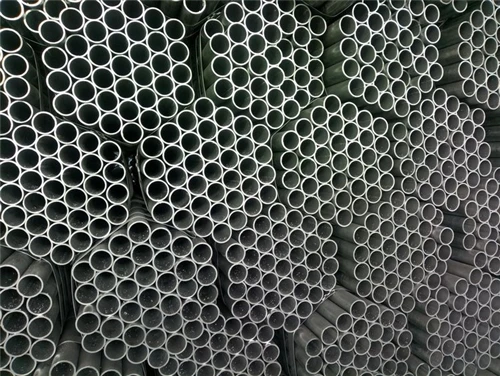
In the global construction and structural engineering industries, choosing the right material is the definitive line between a project's long-term success and catastrophic structural failure. Among the most widely specified carbon structural steels in international markets-especially across North America, the Middle East, and Southeast Asia-is ASTM A36.
While ASTM A36 is traditionally recognized in plates and channels, its application in Hollow Structural Sections (HSS)-including square, rectangular, and round hollow profiles-has surged. Understanding the exact load-bearing capacity of these components is crucial for engineers, procurement managers, and steel distributors alike.
As a leading global steel manufacturer, Brisk Steel specializes in fabricating high-performance hollow sections that meet and exceed rigorous international standards. This comprehensive guide breaks down everything you need to know about the load-bearing capabilities of ASTM A36 hollow sections, how they are calculated, and how our advanced manufacturing processes ensure maximum structural integrity.


What is ASTM A36 Steel and Why is it Widely Used?
Before diving into structural math, it is vital to understand what makes ASTM A36 the backbone of modern infrastructure. Governed by the American Society for Testing and Materials, ASTM A36 is a low-carbon steel. The "36" stands for its minimum yield strength: 36,000 pounds per square inch (psi), which translates to approximately 250 Megapascals (MPa).
Key Material Properties of ASTM A36
To calculate load capacity, engineers rely heavily on the mechanical properties of the material. For ASTM A36, these standard values include:
| Property | Value (Imperial) | Value (Metric) |
| Minimum Yield Strength | 36,000 psi | 250 MPa |
| Ultimate Tensile Strength | 58,000 – 80,000 psi | 400 – 550 MPa |
| Modulus of Elasticity (E) | 29,000ksi | 200,000 MPa |
| Elongation in 2 inches (min) | 20% | 20% |
The Advantages of A36 for Hollow Sections
- Exceptional Weldability: Due to its low carbon content, A36 can be easily welded using standard commercial methods without the risk of cracking or requiring intensive pre-heating.
- Cost-Efficiency: It provides an excellent strength-to-weight ratio at a highly competitive price point, optimizing budget allocations for large-scale structural frames.
- Formability and Machinability: It can be easily cut, drilled, and cold-formed into various hollow geometries without sacrificing its baseline mechanical strengths.
At Brisk Steel, we source premium raw steel coils with highly controlled chemical compositions to guarantee that every batch of A36 hollow sections delivers uniform mechanical properties, giving engineers absolute predictability in their load designs.
What are Hollow Structural Sections (HSS) and Their Typologies?
Hollow Structural Sections are metal profiles with a hollow tubular cross-section. When manufactured using ASTM A36 parameters, these sections are highly efficient at resisting multi-directional forces.
Depending on the architectural and mechanical demands of your project, Brisk Steel offers three primary geometries:
1. Square Hollow Sections (SHS)
SHS features flat, symmetrical sides. This symmetry makes it incredibly effective for column applications where axial loads are applied from multiple directions. The equal radius of gyration along both axes prevents premature buckling under compression.
2. Rectangular Hollow Sections (RHS)
RHS possesses asymmetrical cross-sections, creating a strong axis and a weak axis. These are the preferred choice for mechanical beams, joists, and purlins where loading forces occur primarily in a single direction (usually downwards).
3. Circular/Round Hollow Sections (CHS)
CHS profiles lack corners, providing exceptional torsional (twisting) resistance. They are widely used in offshore structures, space frames, and aesthetic architectural pillars because wind and water forces glide around their curved profiles smoothly.


How is the Load-Bearing Capacity of ASTM A36 Hollow Sections Calculated?
The load-bearing capacity of an ASTM A36 hollow section is not a static number written on a datasheet. It is a variable dynamic that depends heavily on geometry, dimensions, length, and the type of force applied.
Engineers typically separate load-bearing capacities into two primary categories: Axial Compression Capacity (Columns) and Flexural/Bending Capacity (Beams).
1. Calculation for Axial Compression (Column Load)
When an A36 hollow section is used vertically as a column, it experiences compressive forces. Its capacity is limited either by material yielding (for short, thick columns) or by structural buckling (for long, slender columns).
The foundational formula for allowable axial stress (Fa) is guided by the American Institute of Steel Construction (AISC) framework. For short columns, the load capacity (P) is calculated using the cross-sectional area (A) and the design stress:
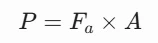
For long columns subject to elastic buckling, Euler's Buckling Formula plays a pivotal role:
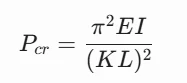
Where:
- Pcr = Critical buckling load
- E = Modulus of Elasticity (29,000 ksi for A36)
- I = Moment of Inertia of the hollow section profile
- K = Column effective length factor (dependent on end-connection fixes)
- L = Unsupported length of the column
2. Calculation for Bending Moment (Beam Load)
When used horizontally as a beam, the hollow section must resist bending moments. The nominal flexural strength (Mn) for a compact A36 hollow section is determined by its plastic section modulus (Z) and its yield strength (Fy):
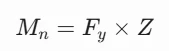
Because A36 steel has a yield strength (Fy) of 36 ksi, the formula simplifies to:
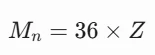
Technical Note: If the section walls are too thin relative to their width, the section may experience local buckling before reaching its full plastic yield. Brisk Steel's engineering catalog provides detailed geometric properties (I, Z, and radius of gyration r) for every wall thickness size we produce, simplifying these mathematical validations for your design team.
What Factors Influence the Load-Bearing Capacity of A36 Hollow Sections?
When designing a structure, changing a single variable can drastically alter how much weight an ASTM A36 hollow section can safely support.
1. The Slenderness Ratio (KL/r)
The longer an unbraced column is, the lower its capacity becomes. The slenderness ratio compares a column's effective length (KL) to its radius of gyration (r). If this ratio exceeds critical thresholds, the column will buckle long before the A36 steel ever reaches its 36 ksi yield limit.
2. Wall Thickness (Gauge Size)
Two hollow sections can share the exact same external dimensions (e.g., 100mmX100mm), but a 6 mm wall thickness will hold significantly more weight than a 3 mm wall thickness. Thicker walls add more cross-sectional area (A) and drastically boost the moment of inertia (I).
3. Load Eccentricity
If a heavy weight is applied perfectly dead-center on a square hollow section, it experiences pure axial compression. If that same weight is bolted to the side of the profile via a bracket, it introduces an eccentric load. This creates a combined force of compression and bending (torsion), reducing the maximum safe load capacity of the section.
How Does Brisk Steel Ensure the Premium Quality and Load Performance of A36 Hollow Sections?
At Brisk Steel, we understand that our products are structural elements holding up buildings, bridges, and industrial plants. We do not cut corners. Our manufacturing facility utilizes state-of-the-art cold-forming and High-Frequency Electric Resistance Welding (ERW) to ensure our ASTM A36 hollow sections consistently achieve their theoretical load-bearing ceilings.
Precision Tolerances and Wall Uniformity
Standard steel manufacturing can suffer from variations in wall thickness. A section that is thinner on one side creates a weak point vulnerable to premature local buckling. Brisk Steel maintains tight structural tolerances that exceed standard ASTM requirements, ensuring uniform wall distribution throughout the entire length of the tube.
Advanced Destructive and Non-Destructive Testing (NDT)
To verify that our products will handle high-stress applications safely, every batch of hollow sections from our factory undergoes rigorous quality inspection protocols:
- Ultrasonic Weld Testing: Continuous NDT testing ensures the longitudinal ERW weld seam is completely integrated and holds the same mechanical strength as the rest of the steel profile.
- Tensile & Yield Testing: Physical samples are pulled to destruction in our laboratory to confirm that the yield strength safely clears the 36,000 psi benchmark.
- Flattening and Crushing Tests: Ensures the ductility of our cold-formed shapes, validating that the material will bend under extreme duress rather than suffering sudden brittle fractures.
How Do You Choose the Right A36 Hollow Section Size for Your Project?
Selecting the exact profile for your foreign trade procurement requires matching architectural drawings with proper engineering metrics.
Step 1: Define Your True Load Vectors
Identify whether your hollow structural sections will act purely as columns (vertical compression), beams (horizontal bending), or trusses (tension/compression combinations).
Step 2: Use Certified Structural Load Tables
Instead of calculating complex differential formulas from scratch for every beam, refer to the official structural load capacity tables provided by Brisk Steel. Our tables cross-reference unbraced lengths with allowable uniform loads and axial limit states across standard international units.
Step 3: Consult with Brisk Steel's Technical Engineers
If your project operates in demanding environments-such as high-wind coastal zones, seismic fault lines, or high-vibration industrial manufacturing zones-standard sizing might not suffice.
Our in-house technical team works side-by-side with international buyers to recommend optimal wall thicknesses, custom cross-sectional profiles, or alternative dual-certified steel grades (like ASTM A500 Grade B/C or EN 10219 S355) if your load profiles demand enhanced performance metrics.


Conclusion
The load-bearing capacity of an ASTM A36 hollow section is an ideal balance of material strength (36 ksi yield) combined with geometric engineering. Thanks to their hollow centers, these sections distribute stress uniformly, resisting torsional, axial, and bending forces better than almost any alternative structural profile on the market today.
When sourcing steel for your next global infrastructure or commercial distribution project, partnering with a dependable manufacturer is paramount. Brisk Steel combines top-grade raw materials, precision fabrication, and elite quality control to deliver ASTM A36 square, rectangular, and round hollow sections you can trust implicitly.
Ready to elevate your structural procurement? Contact the Brisk Steel global sales team today to request a quote, download our complete geometric load tables, or schedule a technical consultation for your customized project needs. Let us build a safer, stronger future together!