Introduction
Rectangular Hollow Section (RHS) steel tubes are widely adopted in global construction, architectural engineering and mechanical manufacturing for their unique geometric advantages. Manufactured in full compliance with EN 10210, EN 10219 and ASTM A500 international standards, Brisk Steel RHS tubes feature flat surfaces, precise orthogonal geometry and excellent unidirectional bending strength, making them the preferred choice for structural frames, support trusses, building facades and general engineering supports.
Despite their outstanding performance in planar framing and linear load-bearing systems, rectangular tubes have inherent structural, mechanical and processing limitations that restrict their use in extreme and complex engineering scenarios. As a professional manufacturer and exporter of premium MS rectangular tubes, Brisk Steel systematically analyzes the core limitations of RHS in practical applications. This guide helps global engineers, contractors and buyers avoid common design pitfalls and select the most cost-effective and safe hollow section solutions for their projects.
Poor Torsional Resistance & Directional Structural Weakness
Compared with Circular Hollow Sections (CHS), the most prominent drawback of RHS is its weak torsional resistance, caused by its asymmetric cross-sectional geometry.
RHS features inconsistent moment of inertia across horizontal and vertical axes. It performs reliably under unidirectional bending loads but struggles to withstand torsion and multi-directional shear forces. Under twisting stress, the 90° corners of rectangular tubes become critical stress concentration points, easily triggering local buckling, micro-cracks and irreversible structural deformation.
Limitation Scenarios: Rotating mechanical parts, vehicle chassis under complex torsion, offshore floating structures, and equipment subject to random multi-directional vibration.
Brisk Steel Professional Tip: For applications involving torsional load and alternating twisting force, we recommend replacing RHS with high-toughness CHS tubes to eliminate structural risks. Our full-range hollow section inventory supports one-to-one product replacement and customized engineering scheme optimization.
Risk of Local Buckling Under Complex Pressure
The flat wide faces of rectangular tubes are structurally weak under complex loading conditions. When subjected to axial compression, biaxial bending or uneven external pressure, RHS flat walls are prone to local buckling before reaching the steel's rated yield strength, greatly compromising structural safety.
RHS with a large aspect ratio (significant difference between long and short sides) delivers lower overall stability compared with square hollow sections (SHS) and circular tubes. Thin-wall rectangular tubes are especially sensitive to concentrated impact loads, which can cause surface depression and section distortion, reducing the overall load-bearing safety factor of the entire structure.
Limitation Scenarios: High-pressure load-bearing columns, heavy-duty mechanical supports, and long-span overhead bearing structures.
Difficult Fabrication & Complex Welding Joint Treatment
Although flat surfaces seem to simplify basic cutting and fitting, rectangular tubes present notable challenges in precision fabrication and structural connection:
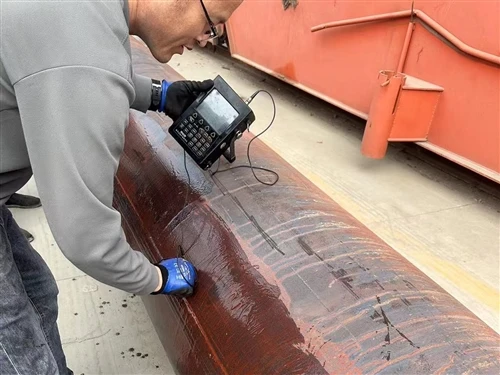
- Difficult corner welding: The rigid 90° corner structure leads to uneven weld penetration. Defects such as incomplete fusion and slag inclusions frequently occur at corners, requiring skilled welding labor and repeated non-destructive testing (NDT).
- Limited connection flexibility: Unlike CHS tubes that support multi-angle docking, RHS is only suitable for orthogonal connections. Complex 3D cross connections require customized cutting and additional gusset plate reinforcement, increasing construction complexity.
- High processing scrap rate: Secondary processes such as tight bending and arc opening easily cause corner cracking and local wall thinning. RHS yields lower finished product rates than CHS in customized shaping projects.
Limitation Scenarios: Complex 3D space structures, curved facade engineering, and high-precision mechanical equipment frames.
Hidden Internal Corrosion & Difficult Maintenance
RHS forms a fully enclosed hollow cavity after cutting and welding. Once humid air, rainwater or corrosive media enter the tube during production, transportation or on-site construction, moisture becomes trapped inside with no natural drainage channel.
Internal corrosion develops silently inside the tube without visible external signs. Users cannot conduct regular inspection, cleaning or anti-rust maintenance on inner walls. Long-term hidden corrosion gradually thins the tube wall and ultimately leads to premature structural failure from the inside out.
Limitation Scenarios: Outdoor open-air engineering, coastal high-humidity and salt-fog environments, and long-term buried pipeline structures.
Uneven Surface Stress After Bending & Forming
During cold and hot forming processes, rectangular tubes suffer from unbalanced stress distribution. The 90° corners feature high hardness and low ductility, while flat surfaces bear excessive tensile force, creating inconsistent mechanical performance across the section.
After bending, grooving and roll forming, RHS is prone to uneven springback, corner cracking and surface wrinkling. It cannot achieve the smooth, symmetrical arc effects of circular tubes, making it unsuitable for high-end curved architectural and decorative structures.
Limitation Scenarios: Curved canopy frames, arc stair handrails, streamlined decorative modeling structures.
Higher Cost for Custom & Special-Size Projects
RHS with unequal side dimensions requires more complex rolling and welding processes compared with standard SHS and CHS tubes. Non-standard aspect ratios and special wall thickness specifications demand custom mold development, significantly raising production and tooling costs.
Additionally, RHS generates higher material waste during cutting and splicing. For large-scale, low-budget conventional projects with no special section requirements, SHS and CHS tubes deliver better cost performance than rectangular tubes.
Brisk Steel's Solution to RHS Limitations & Product Advantages
As a professional and reliable global RHS manufacturer, Brisk Steel mitigates the inherent limitations of rectangular tubes through strict quality control, optimized production processes and value-added customized services, helping clients minimize application risks and maximize project benefits:
- Stable Grade Material Selection: We adopt premium S235JR, S275JR and S355J0 low-carbon structural steel with uniform ductility and stable metallographic structure, effectively reducing the risks of bending cracking and local buckling.
- Precision Section Tolerance Control: Strict production standards for wall thickness, straightness and flatness eliminate uneven section stress, greatly improving the overall structural stability of finished RHS tubes.
- One-Stop Pre-Processing Service: We provide factory pre-welding, precision pre-bending, shot blasting and internal anti-corrosion sealing treatments, solving on-site construction difficulties and hidden internal corrosion issues fundamentally.
- Professional Engineering Guidance: Our technical team provides free product selection consulting. We recommend RHS for conventional unidirectional load-bearing frames and substitute CHS/SHS for complex torsion and multi-stress scenarios to balance safety and cost.
- Full International Certification: All Brisk Steel RHS tubes comply with EN and ASTM standards, equipped with official 3.1 MTR test reports and certification documents, ensuring long-term reliability for global formal engineering projects.
Clear Application Boundary: When to Avoid Rectangular Tubes
To help global customers achieve accurate product selection, Brisk Steel clearly defines the application boundaries and summarizes scenarios where RHS is not recommended:
- Structures subject to torsion, alternating vibration, and multi-directional complex shear force
- Ultra-long-span, heavy-load compression columns susceptible to local buckling
- High-end curved architectural and streamlined decorative components
- Coastal, marine, and buried projects requiring long-term internal anti-corrosion monitoring
- Low-budget large-scale conventional projects with no special requirements for section shape
Conclusion
Rectangular tubes are cost-effective and efficient for unidirectional load-bearing frames and linear support structures. However, their weaknesses in torsional resistance, anti-buckling performance, curved forming and internal corrosion maintenance make them unsuitable for complex extreme engineering scenarios.
Beyond supplying high-quality standard RHS hollow sections, Brisk Steel provides professional material selection consulting and customized processing solutions. We assist global clients in giving full play to RHS's advantages while avoiding application limitations, achieving an optimal balance between structural safety, construction efficiency and project cost control.
Feel free to contact the Brisk Steel technical team to obtain tailored hollow section selection solutions for your specific project requirements.