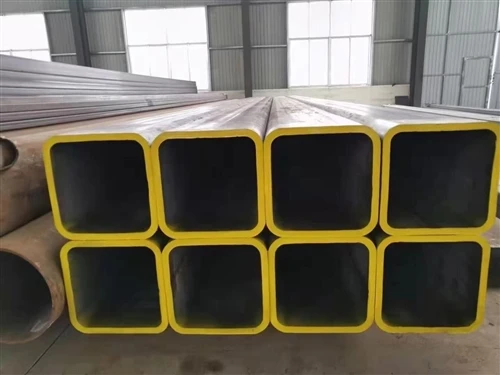
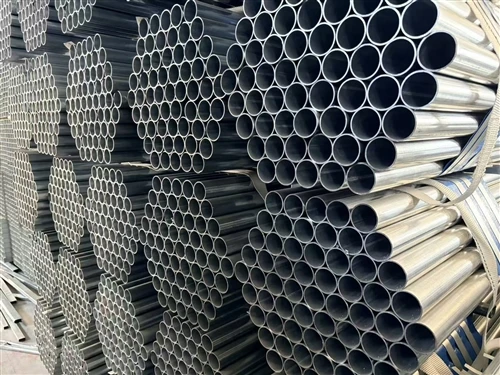
Walk through any steel workshop, warehouse or greenhouse and you will see the same profile again and again: a clean, four-sided hollow tube. Square hollow sections (SHS) and rectangular hollow sections (RHS) are among the most widely used products in steel construction. They are thin-walled, closed-section steel tubes that combine good strength, flat faces and easy assembly at a sensible price.
This guide covers what square and rectangular tubes are, how they are made, what makes them useful, where they are used, and, most importantly, how to buy them without costly mistakes.

What Are Square and Rectangular Hollow Sections?
"Square tube" and "rectangular tube" are the everyday names for two closely related products:
- SHS (square hollow section): four equal sides, such as 100 x 100 mm.
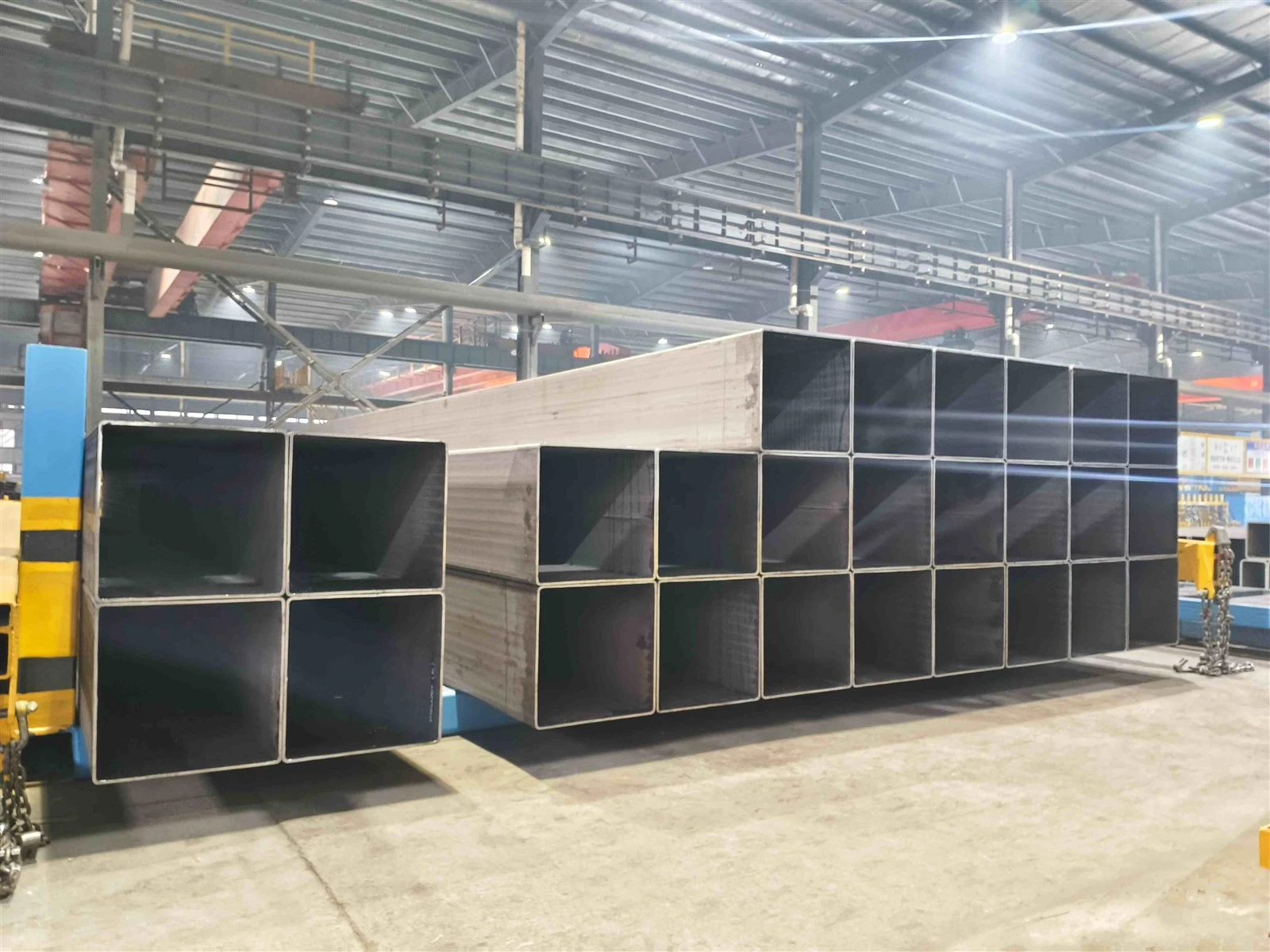
- RHS (rectangular hollow section): two longer and two shorter sides, such as 200 x 100 mm.
Both are hollow, thin-walled structural profiles with a uniform wall running around the section. Typical raw material is hot-rolled strip, cold-rolled strip or steel plate, depending on the wall thickness and the quality required. In standards and in the trade you may also see them called hollow structural sections (HSS), box section or steel box tube.
How Are Square and Rectangular Tubes Made?
Most square and rectangular tubes on the market are welded tubes made from coil. A modern line works in stages:
- Uncoiling and slitting: the coil is cut to the strip width needed for the section's perimeter.
- Forming: rolls bend the strip progressively into a round tube.
- Welding: the open edges are joined by high-frequency electric resistance welding (ERW). The outside weld bead is trimmed flush.
- Sizing and shaping: the round tube passes through further roll stands and is formed into a square or rectangle.
- Straightening: rolls and a straightening unit control straightness and twist.
- Cutting to length: a flying saw cuts the tube to the ordered length, then ends are checked and the tubes are bundled.
This is cold-formed welded production, covered by standards such as EN 10219, ASTM A500, AS/NZS 1163 and JIS G 3466. For thicker walls and more demanding service, hot-finished sections to EN 10210 (and hot-formed ASTM A501) are also produced.
One point deserves clarity. You may see "seamless square tube" listed in some catalogues. Seamless SHS and RHS are uncommon, because seamless mills mainly roll round tubes. In practice, nearly all structural square and rectangular tubes are welded. If your project truly requires a seamless route, ask your supplier what is realistically available for your size and wall.

Key Features of Square and Rectangular Tube
1. A Regular, Easy-to-Use Section
The flat faces make cutting, welding, bolting and fixing straightforward. Flat faces meet at square joints with simple end cuts, unlike round tube, which needs saddle (fish-mouth) cuts at connections. This saves fabrication time on frames with many joints.
2. Good Bending Strength and Stiffness
A closed box section resists bending and twisting well. SHS gives equal stiffness in both directions, which suits columns and posts. RHS puts more steel along the long axis, so a 200 x 100 mm tube standing on its long side is far stiffer in bending than a 100 x 100 mm tube of similar weight. A fair comparison with round tube: circular hollow sections are stronger in torsion and shed wind better, while square and rectangular sections are easier to connect and fit against flat surfaces.
3. Favorable Strength-to-Weight Ratio
Because the material sits away from the centre of the section, the tube gives high stiffness for its weight. For a given load, a hollow section often uses less steel than a solid bar or an open channel, which can lower both material cost and the self-weight of the structure.
4. Controlled Dimensions and Wall Thickness
Welded tube is formed from strip of controlled gauge, so wall thickness, outside dimensions, straightness and squareness are consistent from piece to piece when the mill is well run. That consistency helps fabricators who cut hundreds of identical parts.
5. Flexible Surface Treatment
Square and rectangular tubes can be supplied black (uncoated), oiled, painted, pre-galvanized or hot-dip galvanized, and can be shot blasted before coating. This lets you match the finish to the environment (see the coating section below).
6. Fast, Clean Assembly
Flat sides make bolted brackets, end plates, cladding rails and glazing fixings easy to attach. The tube also presents a tidy, modern look in exposed architecture.
Common Applications
Construction and building
- Factory and warehouse steel structures
- Frame columns and secondary beams
- Curtain wall mullions and keels
- Stair balustrades and handrails
- Support frames for roofs, signage and plant
Municipal and public works
- Road and pedestrian guardrails
- Landscape and park steel structures
- Traffic facilities and sign supports
Manufacturing and industry
- Machinery bases and equipment frames
- Construction machinery parts
- Storage racking and shelving
- Agricultural greenhouse frames and livestock equipment
Many of these uses are described on our product pages: Structural Hollow Section for Buildings and Structural Hollow Section for Steel Frames.
Practical Buying Guide: What to Specify Before You Order
A clear specification avoids wrong deliveries, rework and disputes. Check each item below before requesting a quotation.
Step 1: Size and Wall Thickness
State the size as outside width x outside height x wall thickness, for example 150 x 100 x 5 mm, and the order of the numbers. Many errors come from mixing up width and height on RHS. Choose the wall for the load and the connection details, not just to cut cost. Very thin walls dent easily and may distort during galvanizing.
You can estimate weight per metre quickly with a simple formula:
Mass (kg/m) is approximately 0.0157 x t x (B + H - 2t), with all dimensions in mm.
For 100 x 100 x 5 mm this gives about 14.9 kg/m. Published section tables are slightly lower, because the rounded corners remove a little steel. Use the standard's table for final tonnage.
Step 2: Standard
The standard sets chemistry, strength, tolerances and testing. Match it to your design code:
| Region or practice | Common standard |
|---|---|
| Europe and many export markets | EN 10219 (cold formed), EN 10210 (hot finished) |
| North America and related markets | ASTM A500 (Gr. B, C), A501, A1085 |
| Australia and New Zealand | AS/NZS 1163 (C250, C350, C450) |
| Japan | JIS G 3466 (STKR400, STKR490) |
Step 3: Steel Grade
The grade is the strength level. Under EN standards the number in the name is the minimum yield strength in MPa (for wall up to 16 mm). S235 suits general and secondary members. S275 and S355 are the usual choices for building structures, with S355 common for primary frames. Chinese specifications use Q235 and Q355 in a similar way, and your engineer should confirm any cross-reference to an EN or ASTM grade.
Check the impact suffix too. J0 is tested at 0 degrees C, J2 at -20 degrees C and K2 at a higher energy level at -20 degrees C. Cold climates and dynamic loads call for J2 or K2.
Step 4: Tolerances That Matter
Ask your supplier which tolerances apply. For cold-formed tube to EN 10219, typical limits include:
- Outside dimensions: plus or minus 1%, with a minimum of plus or minus 0.5 mm
- Wall thickness: plus or minus 10% (subject to the standard's maximum)
- Straightness: 0.15% of the total length
- Squareness of adjacent sides: 90 degrees, plus or minus 1 degree
- Outside corner radius: about 2t for walls up to 6 mm, 2.5t above 6 up to 10 mm, 3t above 10 mm
- Mass: plus or minus 6% on individual lengths
These affect how well parts fit, how welds sit in the joint, and how much steel you really receive. Always read the exact table in the standard you order to.
Step 5: Length
Common mill lengths are 6 m and 12 m, with fixed lengths and cut lengths available by agreement. Match the length to your cutting list, because the right choice cuts waste sharply. For example, a 3.9 m member cut from a 6 m bar leaves a 2.1 m offcut (35% waste), while three 3.9 m members from a 12 m bar leave only 0.3 m (about 2.5% waste).
Step 6: Surface and Coating
Pick the finish from the environment:
- Black or oiled: indoor use, or where you blast and paint at your own workshop. See Black Structural Hollow Section.
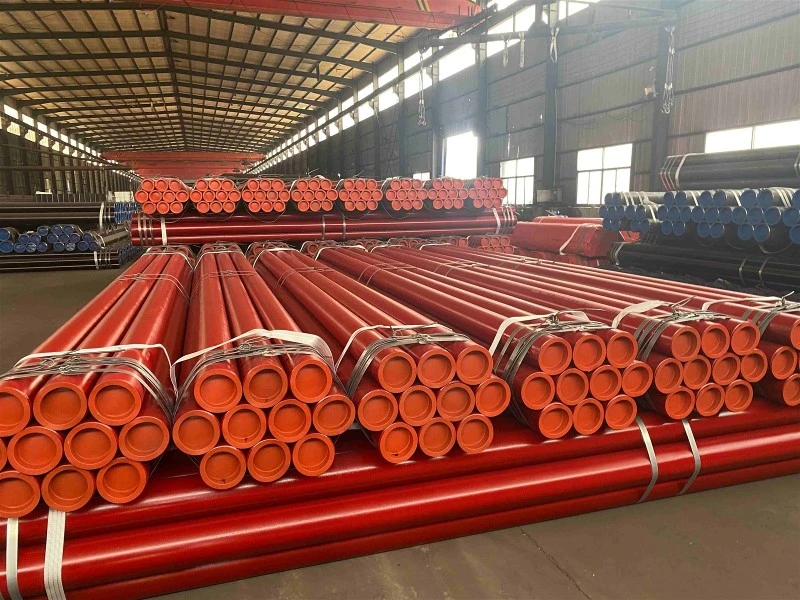
- Painted: short-term protection during storage and transport.
- Pre-galvanized: thin zinc applied to the strip before forming, suited to light indoor or sheltered use. The weld seam and cut ends are not fully coated.
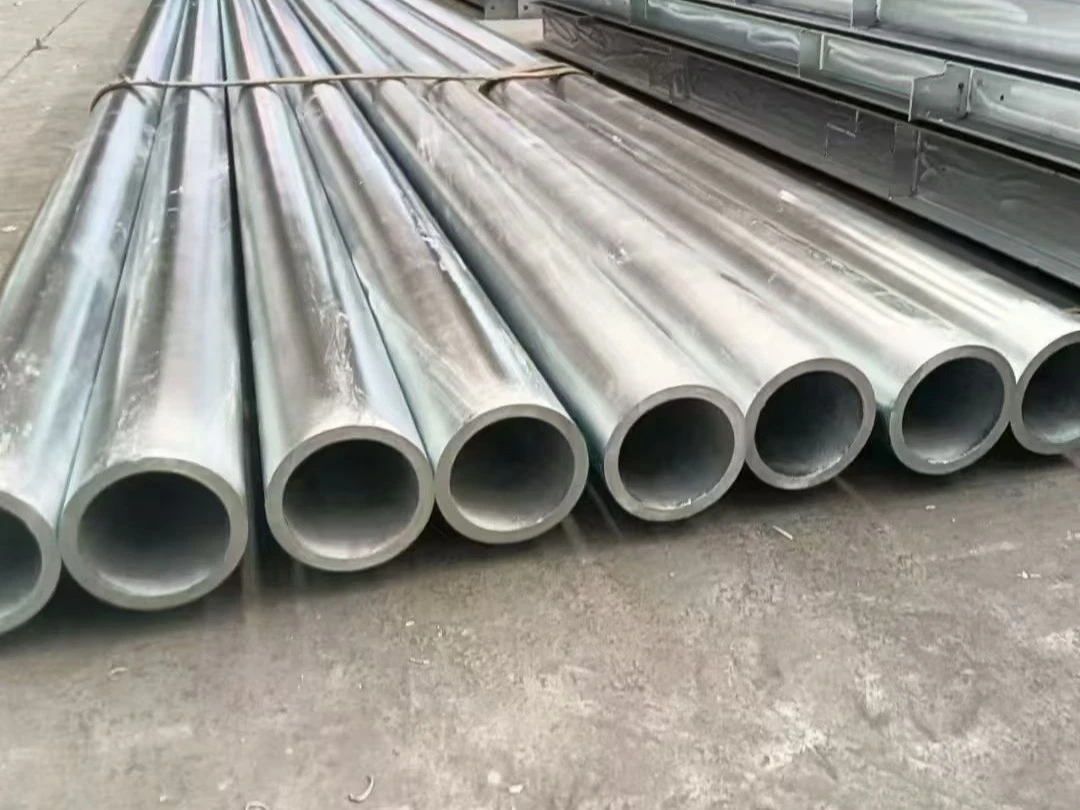
- Hot-dip galvanized: zinc on the inside, outside and ends, for outdoor and coastal exposure. See Galvanized Structural Hollow Section. Plan vent and drain holes in the design, and tell the supplier the tubes are for galvanizing, since steel chemistry affects coating quality.
Step 7: Documents and Marking
Ask for a mill test certificate (EN 10204 3.1 is standard; 3.2 with third-party witness if the contract requires it). The certificate should show the standard, grade, heat number, chemistry and mechanical test results. The tube should be marked so the heat number on the certificate matches the heat on the product.
Step 8: Check the Goods on Arrival
A short inspection routine catches problems early:
- Count and mark check: size, grade and heat number against the order and certificate.
- Measure outside dimensions and wall with calipers and a thickness gauge on several bars.
- Check straightness by sighting along the bar or laying it on a flat surface.
- Inspect the surface and seam: no cracks, laps, deep pits or damage. The outside weld should be dressed flush; ask whether an internal bead is acceptable for your use.
- For galvanized tube, check coating thickness (EN ISO 1461 sets minimum averages by steel thickness) and look for bare spots or lumps.
Choosing Between Square, Rectangular and Round
A quick rule of thumb:
- Columns and posts: SHS (or CHS)
- Beams, purlins and rails: RHS, long side vertical
- Torsion, wind exposure or visible architecture: CHS
- Many bolted or welded flat connections: SHS or RHS
Often the best structure mixes them. For a closer look at all three shapes see Square, Rectangular and Circular Hollow Sections, and for strength levels see Structural Hollow Sections by Steel Grade.
Common Buying Mistakes to Avoid
- Writing only "square tube 100" and leaving out wall, standard and grade
- Ordering the thinnest wall to save cost, then paying for rework or a heavier replacement
- Ignoring the corner radius when detailing welded joints
- Sending tubes for galvanizing without checking venting and chemistry
- Accepting a certificate that does not carry the delivered heat number
- Choosing on price per tonne without comparing tolerances and actual weight
Working With the Right Supplier
A good supplier does more than quote a price. They confirm that your size, wall, grade and standard are available together, point out issues before production, supply matching certificates, and pack the tubes to arrive in good condition. At Tianjin Brisk Metalwork we manufacture and supply welded and hot-finished hollow sections in the main international standards, with black, painted and galvanized finishes.