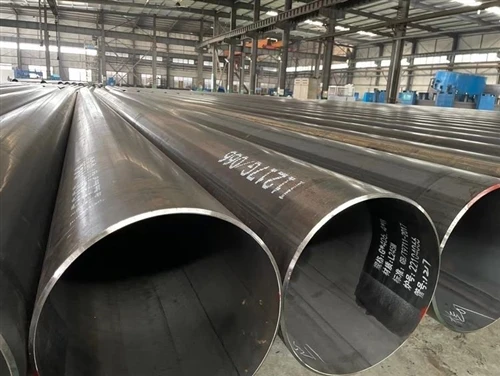
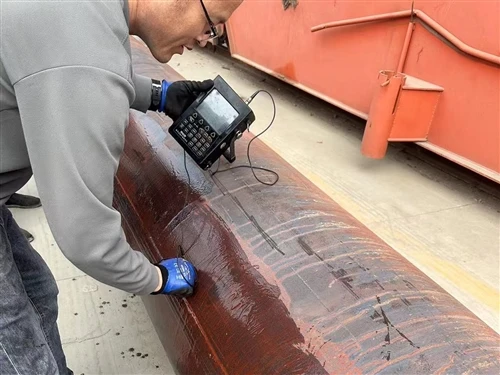
A pipe's internal lining and its external anti-corrosion coating solve two completely different problems, and mixing them up in a spec is one of the more common - and more expensive - mistakes buyers make. External coating (FBE, 3PE, 3PP, and similar systems) protects the pipe wall from the soil, water, or atmosphere it sits in. Internal lining protects the pipe wall from whatever is actually flowing through it, and that's a chemistry problem, not a burial-condition problem. A coating that performs beautifully against wet clay soil for thirty years can fail in weeks against the wrong fluid on the inside, and the reverse is just as true. This article is about that second question: which lining materials hold up against which fluids, and why the answer isn't as simple as "epoxy resists chemicals."
| Lining material | Potable / clean water | Mild chemicals | Strong acids / alkalis | Hydrocarbons / crude oil | Abrasive slurries | High temp. |
| FBE | Good fit | Good fit | Not suitable | Good fit | Not suitable | condition-dependent |
| Epoxy phenolic | Good fit | Good fit | condition-dependent | Good fit | Not suitable | Good fit |
| Polyurethane | Good fit | condition-dependent | condition-dependent | condition-dependent | Good fit | condition-dependent |
| Cement mortar | Good fit | Not suitable | Not suitable | Not suitable | condition-dependent | Good fit |
| Rubber (nitrile) | condition-dependent | Good fit | condition-dependent | Good fit | Good fit | Not suitable |
| PVC / PP lining | Good fit | Good fit | Good fit | condition-dependent | condition-dependent | Not suitable |
| PTFE lining | Good fit | Good fit | Good fit | Good fit | condition-dependent | Good fit |
| Galvanizing (Zn) | Good fit | Good fit | Good fit | Good fit | condition-dependent | Good fit |
Why Internal Compatibility Is a Different Problem Than External Corrosion
External corrosion protection is largely about excluding moisture and oxygen from reaching bare steel, and to a lesser degree resisting mechanical damage during installation and service. The soil environment on the outside of a buried pipe, while it varies, is a relatively narrow band of conditions compared to what can flow through the inside of a pipe. Internally, a lining might face anything from potable water at near-neutral pH to concentrated sulfuric acid, from clean fluid to an abrasive slurry carrying suspended solids, from ambient temperature to superheated steam. Each of those conditions attacks a lining material through a different mechanism - chemical dissolution, oxidation, swelling and softening, abrasive wear, or thermal degradation - and no single lining material resists all of them equally well. Choosing a lining is fundamentally a matching exercise: identify what's actually flowing through the pipe, at what concentration and temperature, and match that against a material's documented resistance data rather than its reputation.
Fusion Bonded Epoxy (FBE) Lining
FBE is one of the most widely used internal linings for water and mild hydrocarbon service, applied as an electrostatically sprayed powder that cures into a hard, smooth, continuous film. Its chemical resistance is solid against potable water, mildly corrosive water (including moderate chloride content), and many refined petroleum products, which is why it shows up so often as both an internal lining and external coating on the same pipe in oil and gas gathering service. Where FBE runs into trouble is with strong acids, strong alkalis, and aromatic solvents, all of which can degrade the epoxy film over time, and with abrasive slurries, where the relatively thin film (typically 300-500 microns) offers limited wear allowance against suspended solids. Operating temperature is also a real constraint - most FBE systems are rated to service temperatures in the 60-80degC range, with specialized high-temperature formulations pushing higher but at a cost and lead-time premium. For clean water, mild brine, and general hydrocarbon transport, FBE is usually the most cost-effective choice; for anything acidic, highly abrasive, or running hot, it's usually the wrong one.
Coal Tar Epoxy and Epoxy Phenolic Linings
Coal tar epoxy was, for decades, the default internal lining for oil and produced-water service, valued for its resistance to hydrocarbons and reasonable cost. Its use has declined significantly due to VOC emissions during application and the health and environmental handling concerns associated with coal tar pitch, and many jurisdictions now restrict or prohibit it. Epoxy phenolic lining, a related but distinct chemistry, remains in active use particularly for potable water storage tank interiors and some fuel and chemical storage applications, offering better temperature resistance than standard FBE (commonly rated to 90-120degC) and good resistance to a broader range of solvents. Buyers who see "coal tar epoxy" specified on an older project drawing should check current regulatory status in their jurisdiction before assuming it's still a viable option to order - in many markets it's effectively been phased out in favor of epoxy phenolic or polyurethane alternatives that don't carry the same emissions and handling burden.
Polyurethane Lining
Polyurethane lining trades some chemical resistance range for genuinely superior abrasion resistance, which is why it's the standard choice for pipelines carrying abrasive slurries - mining tailings, dredging spoil, sand-laden produced water, and similar high-solids-content services where a thinner epoxy film would wear through in a fraction of the design life. Polyurethane systems can be applied in significantly greater thickness than FBE (several millimeters is common for heavy-duty slurry service, compared to fractions of a millimeter for FBE), and that thickness itself becomes part of the wear allowance the pipe is designed around. Chemically, polyurethane holds up reasonably well against mild acids, alkalis, and hydrocarbons, though it's not the top performer against any single chemical category the way a purpose-built fluoropolymer lining would be - its selling point is the combination of decent chemical resistance with genuinely good abrasion resistance, not best-in-class performance at either individually.
Cement Mortar Lining
Cement mortar lining is close to a single-purpose material: it's the standard internal lining for potable water and raw water transmission mains, valued because it's inexpensive, self-healing to a degree (the alkaline cement surface can reform a protective layer after minor damage), and imparts no taste or chemical concern to drinking water. It has essentially no place outside water service - cement is attacked by acids and by soft, low-alkalinity water that leaches calcium out of the lining over time, and it has no meaningful resistance to hydrocarbons or industrial chemicals. Where cement mortar lining shows up in a spec, the application is almost always water transmission, and the main things worth confirming at order stage are the water's own aggressiveness (soft water and low-pH water shorten cement lining life) and whether the pipe needs an additional epoxy seal coat over the cement for particularly soft water conditions.
Rubber Lining
Rubber lining - natural rubber, nitrile, EPDM, and other synthetic rubber compounds depending on the specific service - is the lining of choice where chemical resistance and flexibility both matter, particularly for sour crude oil and gas service where hydrogen sulfide and other sour components are present, and for handling many acids and abrasive chemical slurries. The rubber compound selection matters enormously here: natural rubber resists many acids and abrasion well but degrades quickly in the presence of oils and many solvents, while nitrile rubber is the more common choice specifically for oil and hydrocarbon service because of its oil resistance. Getting the wrong rubber compound for the fluid in question is a genuine and common mistake - "rubber-lined" isn't a single specification, and the compound needs to be matched to the fluid the same way a metal alloy would be, not assumed interchangeable across rubber types.
Thermoplastic Linings: PVC, PP, PE, and PTFE
Thermoplastic linings - PVC, polypropylene (PP), polyethylene (PE), and PTFE (Teflon) - occupy the high end of chemical resistance, generally applied as loose or bonded sleeves rather than sprayed coatings. PVC and PP linings handle a wide range of acids, alkalis, and salts well and are common in chemical processing and wastewater applications where the fluid is aggressive but not extreme. PTFE sits at the top of the resistance range, handling nearly the full spectrum of industrial chemicals including strong acids, strong bases, and most solvents, which is why it's specified for the most aggressive chemical transport applications and for high-purity service where the lining itself must not contaminate the fluid. The tradeoff is cost and installation complexity - PTFE lining in particular is a specialized, expensive process, and it's rarely justified unless the fluid genuinely requires that level of resistance. Specifying PTFE lining for a fluid that a mid-range epoxy or rubber lining would handle just fine is a common way project budgets get inflated without a corresponding benefit.
Galvanizing as an Internal Coating - and Where It Doesn't Belong
Hot-dip galvanizing is occasionally specified as an internal coating, most often for potable water and compressed air piping, where the zinc layer provides sacrificial corrosion protection at low cost. It has real limitations that matter for fluid selection specifically: zinc is attacked by low-pH water, by water with high chloride or sulfate content, and by many industrial chemicals, and galvanized interior surfaces are increasingly restricted in potable water systems in some jurisdictions due to lead and cadmium trace-content concerns in the zinc coating itself, plus longer-term concerns about zinc leaching in soft or acidic water. For general compressed air and non-potable water service in a mild environment, galvanizing remains a reasonable low-cost option; for potable water specifically, it's worth checking current local plumbing code before defaulting to it, since acceptance varies by jurisdiction and has been tightening in a number of markets.
A Practical Selection Process
Start with the fluid itself, not the pipe size or pressure class. Identify exactly what's being transported, including trace components - a "mostly water" stream with occasional acidic slugs needs to be lined for the acid exposure, not the average condition, since the lining has to survive the worst case it will see, not the typical one.
Get actual concentration and temperature figures, not general category. "Acid service" covers everything from dilute, near-neutral streams to concentrated, aggressive ones, and lining resistance data is specific to concentration and temperature combinations, not to the chemical name alone. A material rated for 10% concentration at ambient temperature may not be rated for the same acid at 60% concentration or at elevated temperature.
Account for suspended solids and velocity, not just chemistry. A chemically compatible lining can still fail early from abrasive wear if the fluid carries solids at meaningful velocity - this is where polyurethane's thickness advantage or a purpose-built abrasion-resistant lining earns its cost premium over a thinner, more chemically resistant option that would otherwise be adequate.
Check the lining supplier's actual compatibility data, not a generic chart. Compatibility charts circulating online are a reasonable starting point but are frequently generalized or dated. For any service outside routine water or mild hydrocarbon transport, request compatibility data specific to the lining formulation being quoted, ideally including the actual concentration and temperature range of your application.
Weigh application and repair logistics alongside chemical performance. Sprayed linings like FBE and polyurethane can often be spot-repaired in the field with a compatible patch system. Bonded thermoplastic sleeves and cement mortar are harder to repair locally, which matters for pipelines in remote locations or with long lead times for a repair crew - a lining that's marginally less chemically ideal but field-repairable is sometimes the more practical choice than one requiring return to a specialized shop for any repair.
Don't over-specify. The temptation to default to the most chemically resistant lining available - PTFE, for instance - as a safety margin is understandable but expensive, and it isn't free of tradeoffs either: some high-resistance linings are more brittle or harder to repair than a mid-range option. Matching the lining to the actual service condition, with a reasonable margin rather than a maximum one, is usually the better use of project budget.
Internal lining selection is ultimately a chemistry-and-wear question answered with real data about the fluid, not a coating-type popularity contest. The pipe's external coating and its internal lining can be, and often are, entirely different materials chosen for entirely different reasons - and treating them as one decision is where a lot of avoidable field failures start.