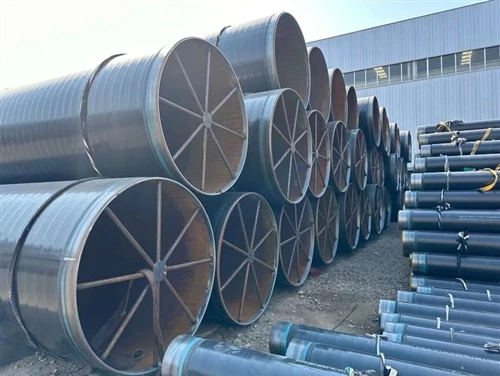
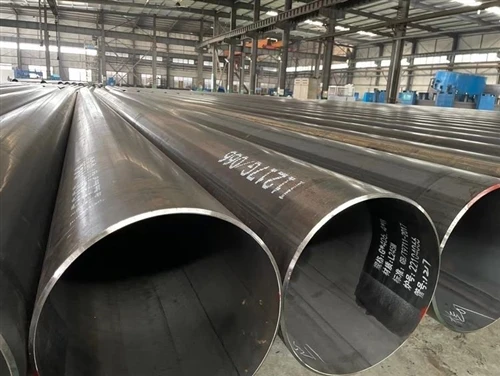
Both standards come from the same organization, both cover carbon and alloy steel pipe used in oil and gas, and both use letter-and-number grade names that look similar on a purchase order. That surface similarity is exactly why "API 5L L80" and "API 5CT X65" show up in real inquiries - requests that mix a grade from one standard with the product family of the other. The two standards are not overlapping versions of the same thing. They cover two different products, built for two different jobs, with grade systems that don't translate between them. This article works through what each standard actually governs, where the confusion comes from, and how to select correctly.
What API 5L Actually Covers
API 5L is the specification for line pipe - pipe whose job is to move oil, gas, or water from one point to another, typically over long distances, either buried, above ground, or subsea. Line pipe is manufactured as seamless or welded (ERW, LSAW, or SSAW depending on diameter and project requirements) and is joined in the field primarily by girth welding, one length to the next, to build a continuous pipeline.
API 5L organizes pipe into two Product Specification Levels. PSL1 is the baseline: minimum mechanical properties, standard chemistry limits, and testing largely left to agreement between buyer and mill. PSL2 adds mandatory Charpy impact toughness testing, a defined carbon equivalent ceiling for weldability, a bounded yield strength (both a minimum and a maximum, not just a floor), and mandatory full-length non-destructive testing of every pipe. Grades run on a single numeric ladder tied to minimum yield strength in thousands of psi - X42, X52, X60, X65, X70, and up to X80 for the highest-strength commonly available grades, alongside lower-strength Grade A and Grade B product for less demanding service.
Because line pipe runs for kilometers and gets welded together in the field, weldability is a first-order design concern, which is why PSL2's chemistry controls exist in the first place. The pipe's job, structurally, is to contain internal pressure along its length and survive the installation and operating environment - burial loads, thermal expansion, occasional external impact - not to hang under its own weight in a well or resist collapse from formation pressure closing in on it.


What API 5CT Actually Covers
API 5CT is a completely different specification, covering casing and tubing - the pipe that goes down a drilled wellbore to construct and produce the well itself, not to transport fluid between two surface points. Casing is set in successive strings (surface casing, intermediate casing, production casing) and cemented in place to isolate formations, stabilize the wellbore wall, and provide a pressure barrier back to surface. Tubing runs inside the innermost casing string as the conduit that actual production fluid flows through during the life of the well.
API 5CT grades are built around a completely different logic than API 5L's single numeric ladder. Instead of one number tied to yield strength, 5CT uses letter-number combinations where the letter groups often distinguish sour-service suitability, heat treatment, and strength tier rather than following a simple ascending scale: H40 and J55 for lower-pressure, shallow applications; K55 as a widely used general grade; N80 as a workhorse mid-strength grade with Type 1 and Type Q sub-variants; L80 and C90/C95/T95 as sour-service-capable intermediate grades under NACE MR0175; P110 for high-pressure deep wells; and Q125 at the top of the standard ladder for the most demanding depth and pressure combinations. The grade letters are not arranged by pure yield strength order the way 5L's X-grades are - L80, for example, sits at a lower nominal yield than N80 despite the letters not suggesting that at a glance, precisely because L80 is defined around sour-service metallurgical control rather than maximum strength.
Just as significant is how the pipe gets joined. Casing and tubing are almost never girth-welded in the field. They are connected with threaded and coupled joints - API round thread (short or long, designated STC/LTC), API buttress thread (BTC), or a wide range of proprietary premium connections licensed by connection technology companies for gas-tight, high-torque, or high-collapse-resistance applications. The connection carries its own pressure rating, torque specification, and sometimes its own separate qualification testing, entirely apart from the pipe body's own API 5CT mechanical properties.


The Core Differences, Side by Side
| Aspect | API 5L | API 5CT |
|---|---|---|
| Product | Line pipe | Casing and tubing |
| Primary function | Transport fluid over distance | Construct and produce a well |
| Typical joining method | Girth welding in the field | Threaded and coupled connections |
| Grade naming logic | Single numeric ladder (X42-X80) by min yield | Letter-number groups by strength tier, heat treatment, sour service capability |
| Product Specification Levels | PSL1 / PSL2 | Not applicable - casing/tubing uses its own grade and testing structure |
| Sour service handling | Optional PSL2 annex (NS/QS/MS suffix) | Built into specific grade families (L80, C90, C95, T95) |
| Connection design | Not applicable - pipe ends are beveled for welding | Central to the spec - thread type, coupling, torque rating |
| Governing failure mode focus | Longitudinal pressure containment, weldability, running fracture resistance | Collapse resistance, burst, tension/compression under well loads, connection leak-tightness |
Why the Confusion Actually Happens
The letter-number grade format is the real source of the mix-up. A buyer used to reading "X65" on a line pipe order sees "L80" on a casing quote and assumes it's the same kind of designation, just from a different supplier's naming convention - it isn't. X65 states a minimum yield strength of 65,000 psi on a pipe that will be girth-welded into a pipeline. L80 states a nominal yield strength of 80,000 psi on a pipe that will be threaded into a well, with sour-service chemistry controls built into the grade definition that have no equivalent concept on the 5L side. The numbers even use different conventions in places - 5CT grade numbers are typically nominal yield values rather than strict minimums in the same sense 5L's X-numbers are, and grade letters group by metallurgical family rather than a straight strength ranking.
Procurement teams that regularly buy both line pipe and OCTG (oil country tubular goods, the umbrella term covering casing, tubing, and drill pipe) tend to keep the two worlds mentally separate without much effort, because the projects themselves are different - a pipeline project and a drilling program rarely share a purchase order. The confusion shows up more often with newer buyers, smaller trading companies handling both product lines, or EPC contractors compiling a single steel package across a project that includes both a gathering pipeline and new wells, where a spec sheet gets copied and a grade code gets carried over into the wrong section by mistake.
A Case Worth Knowing
An EPC contractor compiling the steel package for a combined drilling-and-pipeline project sent a single consolidated inquiry listing "API 5L Casing, Grade L80, 7 inch, BTC connection." The request combined the pipeline standard's name with the casing grade, size, and connection type - internally consistent as an OCTG order, but mislabeled as API 5L. Sent to a mill or trader unfamiliar with the buyer's actual intent, that inquiry could easily be quoted as API 5L pipe cut to a 7 inch outside diameter with a beveled end, which is not usable as casing at all - wrong wall tolerance philosophy, no thread, and a grade designation that doesn't exist under 5L in the first place. The order was corrected before quotation only because the receiving mill's technical team flagged the standard-and-grade mismatch and asked which product was actually intended. The underlying lesson holds generally: the standard name, the grade code, and the connection type all need to agree with each other, because each one independently signals which product family the order actually belongs to.
How to Select Correctly: A Practical Buying Guide
Step 1: Identify what the pipe is actually doing. If it moves fluid between two points - a gathering line, a transmission pipeline, plant piping - the product is line pipe and the governing standard is API 5L. If it goes down a wellbore to construct or produce the well itself, the product is casing or tubing and the governing standard is API 5CT. This single question resolves the vast majority of standard-selection confusion before anything else is specified.
Step 2: Confirm PSL for line pipe, or grade family for casing/tubing. For API 5L, decide between PSL1 and PSL2 based on the project's code requirements, pressure class, and whether mandatory toughness testing and full NDT coverage are required. For API 5CT, select the grade family based on well depth, anticipated pressure, and whether H2S or other sour-service conditions are present - sour service specifically requires a grade qualified under NACE MR0175/ISO 15156, not just a high-strength grade chosen for load capacity alone.
Step 3: For casing and tubing, specify the connection separately from the pipe body grade. API round thread, buttress thread, and premium connections each carry their own pressure and torque ratings and are not interchangeable simply because the pipe body grade matches. Confirm connection type, thread compound requirements, and make-up torque specification as their own line item on the order.
Step 4: Match wall thickness and diameter tolerance philosophy to the product's actual function. Line pipe tolerances are built around consistent girth-weld fit-up along a pipeline route. Casing and tubing tolerances are built around thread machining accuracy and running clearance inside the previous casing string - the numbers on a tolerance table can look similar between the two standards without meaning the same thing in practice.
Step 5: Request the correct test and certification package for the standard actually in use. A line pipe mill test report should show PSL-appropriate chemistry, mechanical, and NDT data tied to the girth-weldability of the pipe. A casing/tubing certification package should additionally cover connection make-up and leak testing, and for sour-service grades, hardness and heat-treatment records demonstrating NACE compliance. Asking for "the standard certificate" without naming which standard invites the wrong package back.
Step 6: Cross-check the final designation string as a whole, not field by field. A correct line pipe designation reads as something like "API 5L X65 PSL2," combining standard, grade, and specification level. A correct casing designation reads as something like "API 5CT L80 Type 1, 7 in, 29 lb/ft, BTC" combining standard, grade, size, weight per foot, and connection. If any single element in that string belongs to the other standard's naming convention, the designation is internally inconsistent and needs to be resolved before the order goes out - exactly the failure pattern in the case above.
Closing the Gap Between the Two Standards
API 5L and API 5CT will keep looking similar on paper because they share an issuing body, a material family, and a numbering convention that both use letters and numbers in the grade name. The actual products, connection philosophies, and grade logic underneath that surface resemblance don't overlap at all. Getting the standard right at the point of inquiry - line pipe versus casing/tubing, based on what the pipe is actually doing in the project - avoids nearly every downstream problem this article has covered, from mismatched connections to unusable pipe ends to a certification package that doesn't answer the questions the project actually needs answered.