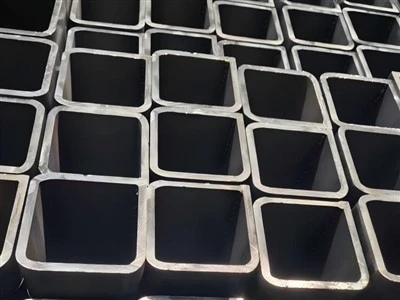
Tianjin Brisk Metalwork Co., Ltd. is one of the leading manufacturers and suppliers of large diameter structural hollow section in China. We have world-leading production equipment and strong manufacturing capabilities. Please feel free to buy bulk durable large diameter structural hollow section from our factory.


Which Route Do We Use for Which Size?
| Route | Typical OD | Typical wall | Best fit |
|---|---|---|---|
| LSAW (JCOE / UOE forming, longitudinal seam) | about 406 to 1,420 mm | thick wall, up to about 50 mm | Columns, heavy trusses, bridge members, piles |
| SSAW (spiral seam) | about 508 to 1,420 mm | light to medium wall | Long, lightly loaded members, large towers, ducts |
| Plate-welded box section | faces up to about 1,000 mm | by drawing | Large rectangular and special profiles |
Grades run from S355 to S460. We tell you at quotation stage which route fits your OD, wall and member length, instead of quoting the route that is easiest for us.
Why Use a Large Diameter Tube Instead of Several Smaller Members?
- One member carries what a bundle of tubes would. This cuts the number of pieces, connections and welds.
- Round sections have no weak axis. Bending and buckling behave the same in every direction, which suits columns with loads from several sides.
- Torsional stiffness is high, which suits arches, curved frames and crane structures.
- The hollow core is usable. It takes concrete infill, cables, ducts or internal stiffeners.
- Fewer, larger pieces mean a faster erection sequence on site.
How Do We Make Large Tubes Fit at the Splice?
At large diameter, the real fit-up problem is not the wall, it is the ends. A 914 mm tube with a tolerance of about 1% on diameter can differ by 9 mm from its neighbour. At a butt splice this causes high-low misalignment, and the welder grinds or builds up metal to bridge it. We control this at the product level:
- Diameter is measured by circumference tape, not only by caliper, because a large tube is never perfectly round.
- Tube ends are sized to a tighter tolerance than the body, so mating ends match.
- End squareness and out-of-roundness are checked against your splice drawing.
- Bevels are machined to your angle and root face, so the weld joint starts from a clean geometry.
- Mating pieces can be marked and shipped as matched sets when the project calls for them.
How Do We Control the Weld Seam?
- LSAW: seams are welded by double-sided submerged arc welding, and we place and mark the seam position so it can be set away from the visible face or the high-stress zone.
- SSAW: the spiral seam angle is controlled by coil width and forming angle, and we confirm it with you for exposed or architectural members.
- Exposed members: seams can be ground flush and painted, so the member reads as one smooth cylinder.
- Inspection: seams are checked by ultrasonic testing along their length, with radiographic checks at the ends and at repair points.
How Do We Control Quality?
- Plate or coil traceability from the mill certificate to the finished tube, by heat number
- Mechanical tests by heat lot, with weld tensile and bend tests on welded products
- Wall thickness checks by ultrasonic readings at several positions
- Normalizing or heat treatment when the project requires a hot-finished condition
- Every piece marked with grade, size, wall, heat number and seam position
- EN 10204 3.1 certificates, with SGS, BV, TUV or your own inspector welcome
Where Is Large Diameter Structural Tube Used?
- Stadium and roof structures with large arches and ring beams
- Bridge piers, arches and pedestrian bridges
- Transmission and wind-tower foundations and frames
- Port, offshore and jetty platforms
- Heavy industrial buildings and pipe racks
- Piling and foundation columns, including concrete-filled members
What Does a Real Large Diameter Order Look Like?
A steelwork contractor ordered 36 columns, OD 914 x 16 mm S355, 12 m each. Each column was spliced once on site, giving 24 butt-weld joints across the job. Their previous supplier supplied tubes to the standard diameter tolerance. On site, high-low misalignment on 20 of the 24 joints needed grinding or build-up, adding about 3 hours per joint, roughly 72 hours of welder time, plus extra inspection.
On the reorder, we measured diameter by circumference tape, end-sized the tubes to match and machined the bevels to the drawing. Only 4 joints needed any correction.
FAQ
Q: What is the largest wall you can make in large diameter?
A: Up to about 50 mm by the LSAW route, depending on OD and grade. Send us the size and we confirm.
Q: Can you supply large tubes with flanges or end caps?
A: Yes. Flanges, cap plates and stiffener rings can be welded on to your drawing.
Q: Do you supply impact-tested grades?
A: Yes. J2, K2 and NH grades are available for low-temperature service.
Q: Can you supply a section that is not on your list?
A: Send us the size and wall. We confirm whether we can make it or suggest the nearest standard size.


Hot Tags: large diameter structural hollow section, China large diameter structural hollow section manufacturers, suppliers, factory, hollow section prediction, hollow section research, hollow section stock, hollow section transportation, hollow section troughs, machinery hollow section