

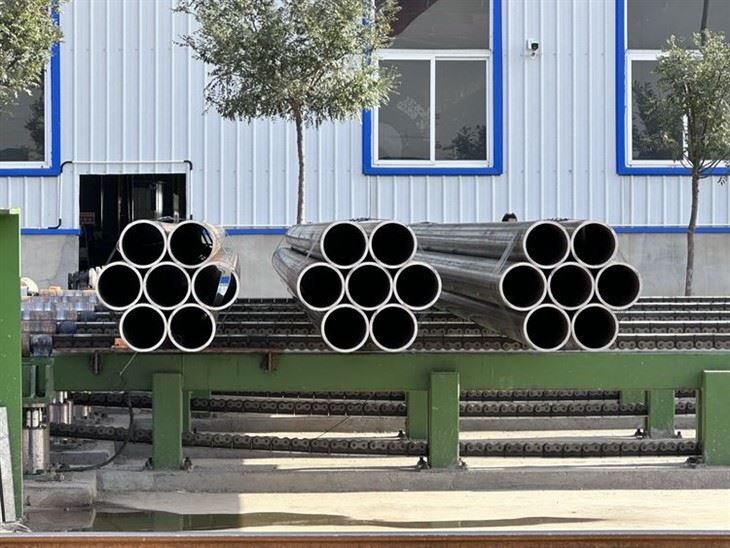

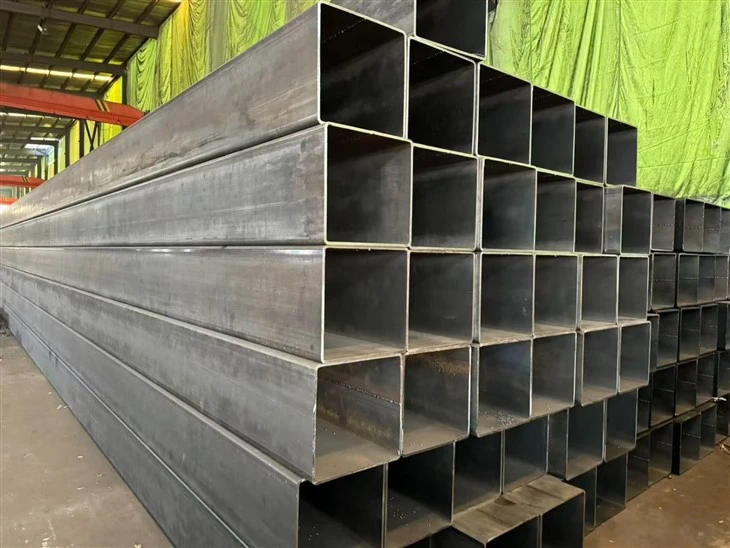
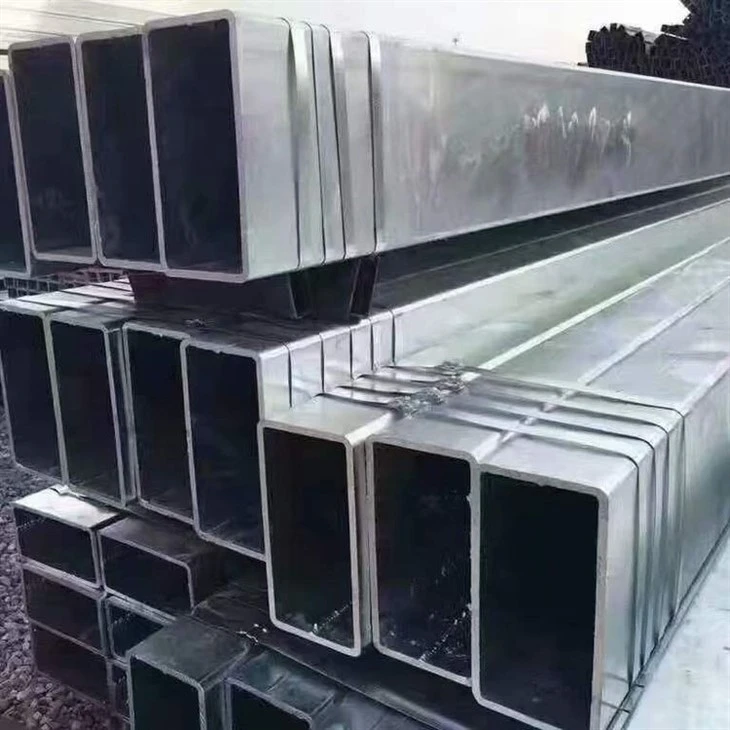
Tianjin Brisk Steel is one of the manufacturers of Welded ERW Hollow Section in China. Our products are mainly exported to the Middle East, Southeast Asia, Europe, New Zealand, and other regions.If you would like to learn more about our products, feel free to contact us and send your purchase list.


What Makes a Section "ERW"
ERW describes the welding method used to close the tube, not the shape or grade of the finished product. In the ERW process, flat steel strip is uncoiled, formed progressively through a series of rolls into a round or near-round tube shape, and the two edges are then joined by passing high-frequency electrical current directly through the strip edges as they're pressed together. The resistance heat generated at the joint melts the edges, which are then forged together under roller pressure - no filler metal is added.
This is different from submerged arc welding (SAW), which uses a filler wire and flux and is typically reserved for larger-diameter, heavier-wall pipe. It's also different from seamless production, which forms the tube from a solid billet with no weld seam at all. ERW sits in a specific niche: it's fast, produces a consistent seam on standard wall thicknesses, and is the dominant method for the small-to-medium structural sizes used in general construction.
After welding, the round tube is typically passed through additional forming rolls to convert it into square or rectangular hollow section (SHS/RHS), with the weld seam becoming part of one flat face or corner region depending on the mill's process layout.
ERW vs. Seamless vs. SAW: A Practical Comparison
Buyers sometimes default to assuming seamless is "stronger" and ERW is a compromise. In practice, for the wall thicknesses and diameters used in most structural hollow section applications, a properly produced ERW seam performs comparably to the base metal - the comparison isn't really about inherent strength, it's about production economics and size range:
- ERW is the most cost-effective route for small-to-medium structural sizes and is produced at high volume with tight dimensional control, making it the default choice for general building structures, bracing, and framing
- Seamless tube avoids the weld seam question entirely but is more expensive to produce and less common in the exact SHS/RHS structural sizes most projects need - it's more often seen in mechanical or high-pressure applications
- SAW tube is generally reserved for larger diameters and heavier walls beyond what ERW mills can efficiently produce, and carries its own seam inspection requirements
The practical takeaway for a structural buyer: for standard building-frame sizes, the question usually isn't "should I use ERW," it's "which ERW producer has the seam quality control to back their certification."
FAQ
Q: Can Welded ERW Hollow Sections be customized?
A: Yes. ERW Hollow Sections can be customized in terms of outer dimensions, wall thickness, length, steel grade, surface treatment, and packaging according to customer specifications and project requirements.
Q: Are ERW Hollow Sections suitable for outdoor construction?
A: Yes, ERW Hollow Sections can be used for outdoor applications when proper surface protection is applied. Options such as hot-dip galvanizing, painting, or anti-corrosion coatings can improve durability and resistance to weather conditions.
Q: Why choose Welded ERW Hollow Section for construction projects?
A: Welded ERW Hollow Section provides a balance of strength, accuracy, versatility, and cost efficiency. It is an ideal choice for structural applications where reliable performance and economical steel solutions are required.
Q: How are Welded ERW Hollow Sections tested before delivery?
A: Quality inspections may include dimensional inspection, chemical composition analysis, mechanical property testing, weld quality inspection, ultrasonic testing, and surface examination to ensure the products meet required standards.


Hot Tags: welded erw hollow section, China welded erw hollow section manufacturers, suppliers, factory


