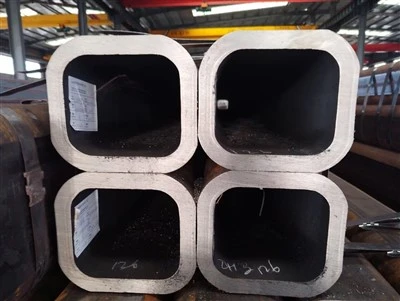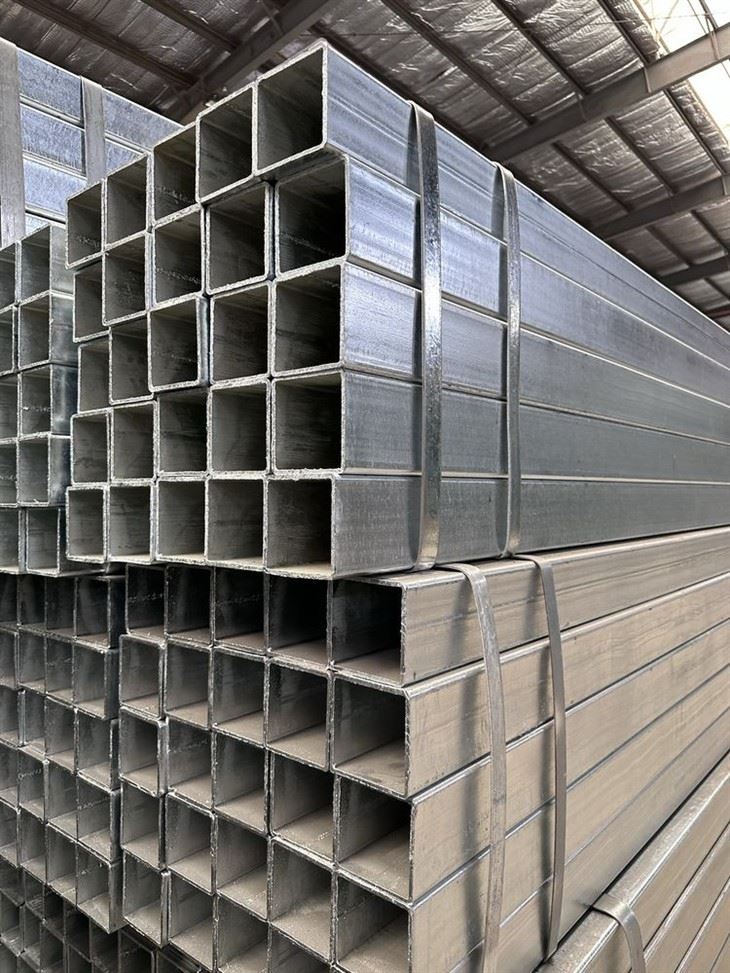
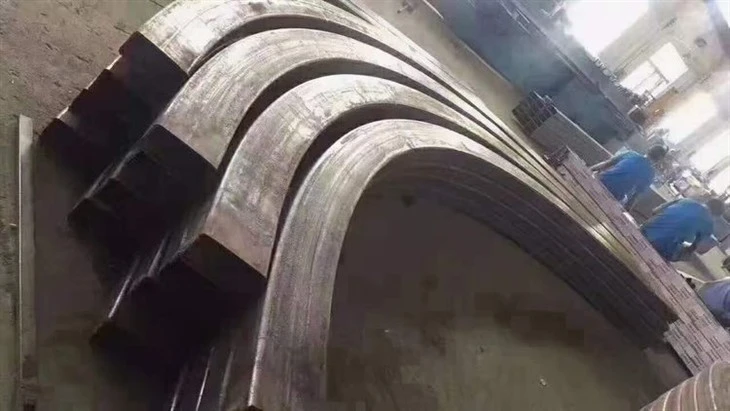
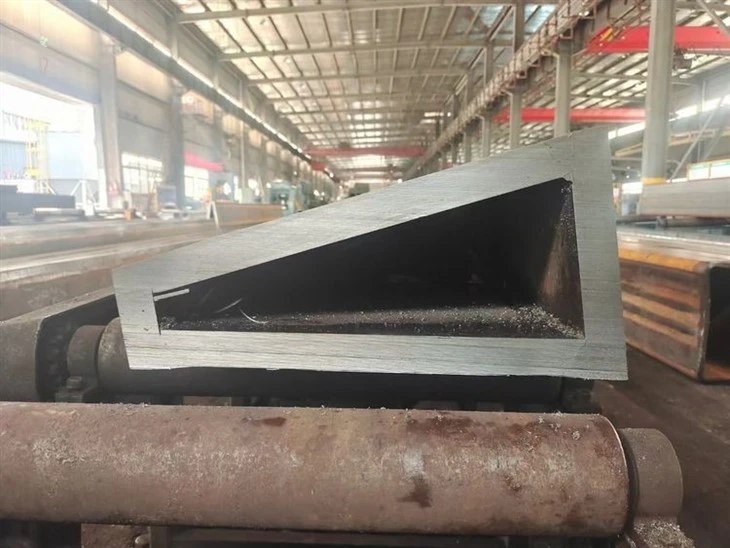
Tianjin Brisk Steel is one of the manufacturers of Structural Steel Hollow Section for Construction in China. Our products are mainly exported to the Middle East, Southeast Asia, Europe, New Zealand, and other regions.If you would like to learn more about our products, feel free to contact us and send your purchase list.


What Is Structural Steel Hollow Section?
Structural steel hollow section refers to steel tubing produced specifically for load-bearing applications in buildings, bridges, and industrial structures. It comes in three main profile types:
- SHS (Square Hollow Section) - equal-sided square tube, commonly used for columns
- RHS (Rectangular Hollow Section) - unequal-sided tube, often used where directional load resistance matters
- CHS (Circular Hollow Section) - round tube, favored in trusses and architectural exposed steelwork
Because the cross-section is closed, hollow section resists torsion and buckling more efficiently than open sections. This is why it's a preferred choice for columns, bracing members, and trusses where both axial load and lateral stability need to be managed with less material.
Manufacturing Process: Hot Rolled vs. Cold Formed
Structural hollow section is produced through two main routes, and the distinction actually matters for how the steel performs on site:
- Hot finished hollow section is formed and then heat-treated at high temperature, which relieves internal stresses from the forming process and produces a more uniform grain structure. This typically results in more predictable yield strength across the section and better performance in seismic or high-load-variation applications. EN 10210 governs this category in Europe.
- Cold formed hollow section is roll-formed at room temperature, which work-hardens the corners of the section. It's generally more cost-effective to produce and is widely used in general construction where the load demands don't require the tighter mechanical consistency of hot finishing. EN 10219 covers this category under European standards.
Neither process is universally "better" - the right choice depends on the load case, local seismic requirements, and the governing design code your project is built under. This is a decision best confirmed with your structural engineer, not assumed from habit.
Standards and Grades Commonly Specified
Buyers sourcing structural hollow section internationally will typically see one of the following standard families referenced in project specifications:
- ASTM A500 (Grade B / Grade C) - the primary US standard for cold-formed welded and seamless carbon steel structural tubing
- EN 10219 / EN 10210 - European standards for cold-formed and hot-finished hollow sections, respectively, commonly specifying grades such as S275JR and S355J2H
- JIS G3466 - Japanese standard for carbon steel square and rectangular tubes used in structural applications
Where Hollow Section Is Actually Used
In practice, structural hollow section shows up in a narrower set of applications than marketing copy often suggests. The main use cases are:
- Building columns - SHS and RHS are widely used in low- to mid-rise steel-framed buildings because their closed profile resists buckling in both axes, unlike an I-section which is strong in one direction and weaker in the other
- Roof and floor trusses - CHS in particular is common in exposed architectural trusses, where the round profile also simplifies welded node connections
- Bracing systems - diagonal bracing in seismic and wind-resistant frames frequently uses hollow section for its efficient torsional resistance
- Bridge and pedestrian structures - RHS and CHS are used in girders and railing frameworks where both strength and a cleaner visual profile are wanted
- Curtain wall and facade support framing - smaller SHS/RHS sizes are used to support cladding systems where the closed section resists twisting under wind load
One practical consideration that often gets overlooked in sourcing decisions: connection design for hollow section is inherently more complex than for open sections, because bolted connections typically require stiffening plates or specialized fittings, and welded connections need careful attention to stress concentration at the joints. Buyers should factor connection detailing into their overall cost comparison, not just the per-ton price of the tube.
Working with Us
We supply structural steel hollow section (SHS/RHS/CHS) manufactured to ASTM A500, EN 10219/10210, and JIS G3466, in grades including and S355J2H and GR.B. Full-size-range stock, mill traceability on every order, and support for staged deliveries on multi-phase projects are standard practice for us, not a special request.
If you're preparing a quote for an upcoming project, send us your specification - standard, grade, dimensions, and quantity - and we'll respond with pricing, lead time, and available certification documentation.
FAQ
Q: What's the difference between hollow section and hollow structural steel (HSS)?
A: They're the same product referred to by different regional naming conventions. "Hollow section" (SHS/RHS/CHS) is the term used under European and most international standards, while "HSS" is the term commonly used in North America under ASTM specifications. The underlying product - closed-profile structural steel tubing - is the same.
Q: What wall thickness tolerance should I expect on structural hollow section?
A: Tolerance bands vary by standard and nominal wall thickness - for example, EN 10219 and ASTM A500 each define their own permissible variation ranges. Rather than relying on a general figure, request the tolerance table for your specific standard and section size from your supplier, and compare it against a recent mill test report if possible.
Q: How far in advance should I place an order for structural hollow section on a phased project?
A: This depends on the supplier's current production schedule, the specification's standard/grade, and whether the sizes required are in standard stock ranges. For staged deliveries across multiple project phases, it's worth discussing a delivery schedule with the supplier at the quoting stage rather than placing phase orders independently, since this can affect both pricing and lead-time reliability.


Hot Tags: structural steel hollow section for construction, China structural steel hollow section for construction manufacturers, suppliers, factory