

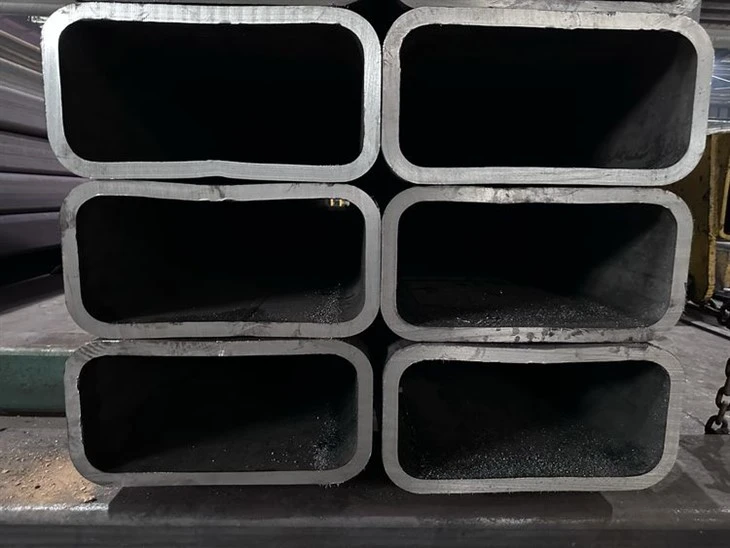
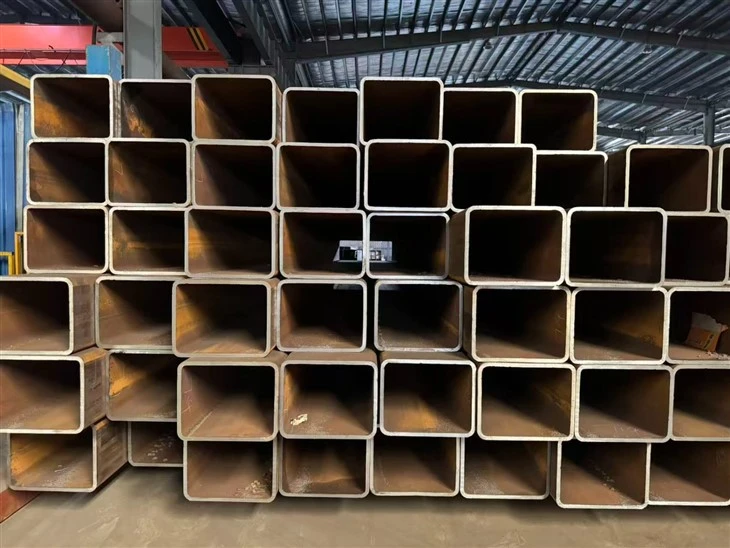
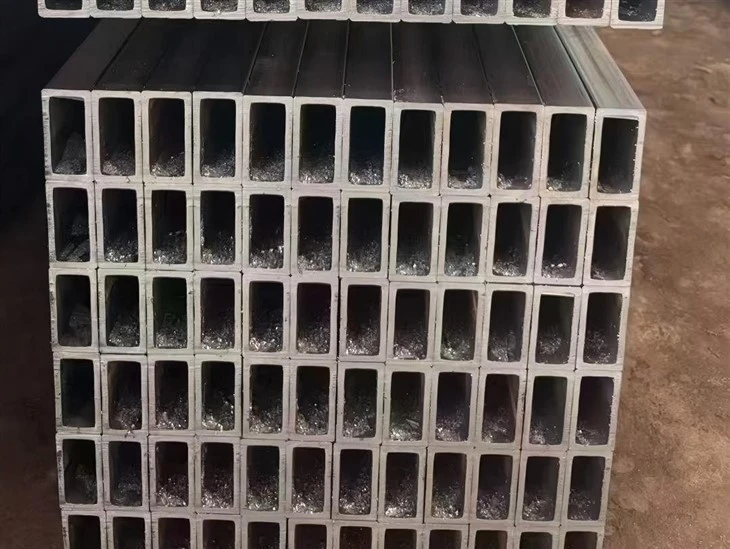
Tianjin Brisk Metalwork Co., Ltd. is one of the leading manufacturers and suppliers of en 10210 rectangular hollow section in China. We have world-leading production equipment and strong manufacturing capabilities. Please feel free to buy bulk durable en 10210 rectangular hollow section from our factory.
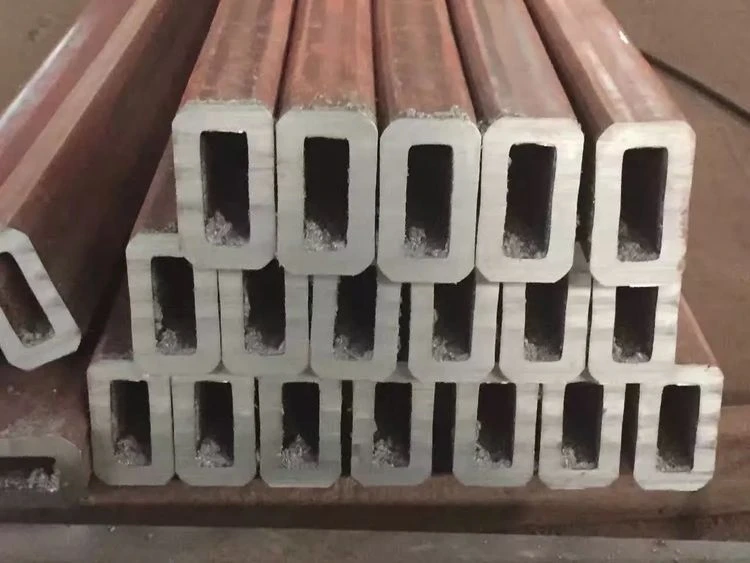
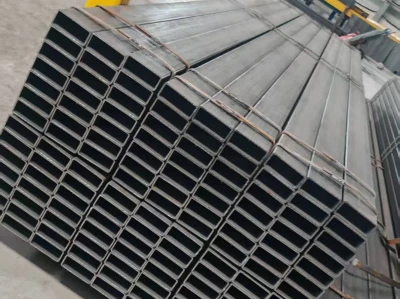
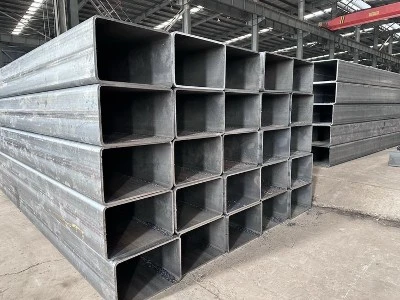
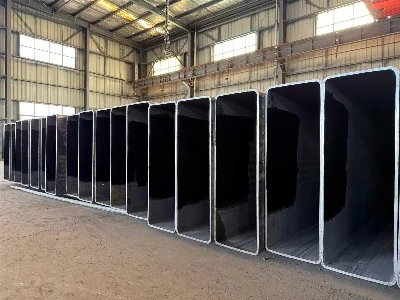
What Do We Supply Under EN 10210 Rectangular Hollow Section?
Size range: 20x10mm to 600x400mm. Wall thickness: 1.2mm to 50mm. Standard lengths: 6m and 12m, custom lengths on request.
Grades supplied: S235JRH, S275J0H/J2H, S355J0H/J2H/K2H, S355NH/NLH, S460NH/NLH. Surface finish: black mill finish, hot-dip galvanized, painted/primed. Every lot ships with an EN 10204 3.1 mill test report, including the normalizing record for welded-and-normalized production.
Where the wall thickness ceiling actually comes from: cold-forming a section applies bending force through rollers sized for a given wall; past a certain thickness, the forming force needed exceeds what the line can hold to tolerance. Hot-forming does not carry that same constraint, which is why our EN 10210 line reaches 40mm wall against 20mm on our EN 10219 cold-formed line at the same section size. If your beam spec calls for a wall thickness a cold-forming line cannot hold, this is the line that supplies it.
Why Do Moment Connections and Plastic Hinge Zones Call for Hot-Finished Specifically?
Cold-forming a section work-hardens the steel at the four corners, where the bend is sharpest. That work-hardened steel is stronger but has used up some of its ductility - it has less capacity left to rotate plastically before it starts to crack. For a static column or a brace that never needs to yield in service, this is not a factor. For a beam end designed to form a plastic hinge under seismic drift, it is the entire design assumption.
Hot-finishing removes this constraint by normalizing the section after forming, restoring a uniform grain structure through the corners as well as the flat faces. This is why moment-resisting frame beams in seismic design are specified hot-finished, not cold-formed - the plastic hinge zone needs the ductility margin the corners would otherwise have given up in cold work.
A specific case: a fabricator on a seismic-zone mid-rise steel frame was initially quoted cold-formed EN 10219 RHS for the moment-frame beams to save on unit cost. The structural engineer's submittal review flagged that the beam-end connection design relied on plastic hinge rotation documented for hot-finished sections only - the cold-formed corner ductility data on file did not cover the required rotation angle. Switching the order to EN 10210 hot-finished added roughly 8 percent to the per-ton material cost, but avoided a resubmittal cycle that would have cost several weeks against a fixed structural steel erection date. The cost difference was small next to what a rejected submittal would have cost in schedule.
What Does Hot-Finishing Mean for Fatigue and Cyclic-Load Beams?
Cold-forming leaves residual stress locked into the section from the forming process - not uniformly, but concentrated unevenly around the profile. Under a load that cycles (a crane runway beam taking thousands of hoist cycles, a bridge girder under repeated traffic load), an uneven residual stress pattern makes fatigue life harder to predict, because the applied stress is adding to an internal stress that was never fully mapped.
Post-forming normalizing relieves this residual stress across the section. For beams under genuinely cyclic service - crane runways, machine support gantries, bridge components - this is the reason the specification calls for hot-finished section rather than leaving it open to either process.
Can You Supply Heavy-Wall RHS Beyond Cold-Forming Range?
Yes - this is one of the more frequent reasons buyers come to our EN 10210 line specifically rather than defaulting to cold-formed. Heavy-wall RHS beams for crane girders, transfer beams, and deep frame members up to 40mm wall are produced on this line without the forming-force limitation a cold-forming mill runs into. If your section calculation calls for a wall thickness at or beyond what a cold-formed quote can hold, tell us the size and wall and we confirm feasibility and lead time before you commit to a design change.
EN 10210 Rectangular Hollow Section - Standard Capability
| Item | Our Range |
|---|---|
| Size range | 20x10mm to 600x400mm ,redrawn to 1500×1000 |
| Wall thickness | 2mm to 40mm |
| Standard length | 6m / 12m (custom on request) |
| Grades | S235JRH, S275J0H/J2H, S355J0H/J2H/K2H, S355NH/NLH, S460NH/NLH |
| Surface finish | Black, hot-dip galvanized, painted/primed |
| Processing available | CNC cutting, coping, end-facing, drilling |
| Certification | EN 10204 3.1, mill test report with normalizing record per lot |
FAQ
Q: Do you provide documentation confirming plastic hinge rotation capacity for seismic submittals?
A: We provide the mill test report and normalizing record confirming hot-finished production per lot. If your submittal requires a specific rotation-capacity test report beyond the standard mill certification, tell us the requirement before ordering so we can confirm whether it can be sourced against this production run.
Q: Can you supply wall thicknesses above 40mm, or is that a hard ceiling?
A: 40mm is our standard-tooling ceiling at most section sizes. Heavier walls are quoted case by case depending on the exact size - send us the dimensions and we confirm feasibility rather than assuming it is out of range.
Q: Is hot-finished RHS required for every beam in a seismic frame, or only the moment-connection members?
A: That is a structural engineering decision made in the frame design, not something we determine - our role is supplying to whichever specification your engineer sets for each member. Many seismic frames mix hot-finished beams at moment connections with cold-formed members elsewhere in the same structure; we can supply both from our EN 10210 and EN 10219 lines on one combined order.
Q: How much lead time does heavy-wall hot-finished RHS add compared to standard wall thickness?
A: Heavier wall sections generally run in smaller batch quantities per furnace cycle, which can extend lead time modestly versus a standard-wall run of the same size. Confirm your wall thickness and quantity with us early and we give you a firm date rather than a general range.


Hot Tags: en 10210 rectangular hollow section, China en 10210 rectangular hollow section manufacturers, suppliers, factory


