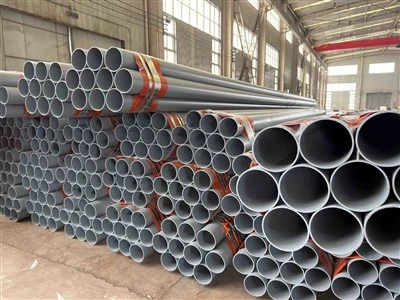
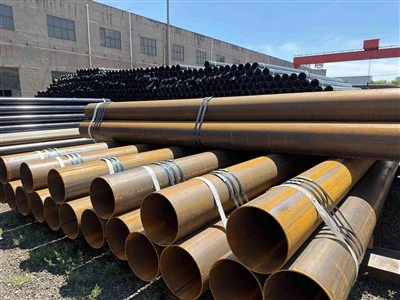
Tianjin Brisk Metalwork Co., Ltd. is one of the leading manufacturers and suppliers of api 5l x52 erw pipe in China. We have world-leading production equipment and strong manufacturing capabilities. Please feel free to buy bulk durable api 5l x52 erw pipe from our factory.
Tianjin Brisk Steel is one of the manufacturers of API 5L X52 ERW Pipe in China. Our products are mainly exported to the Middle East, Southeast Asia, Europe, New Zealand, and other regions.If you would like to learn more about our products, feel free to contact us and send your purchase list.


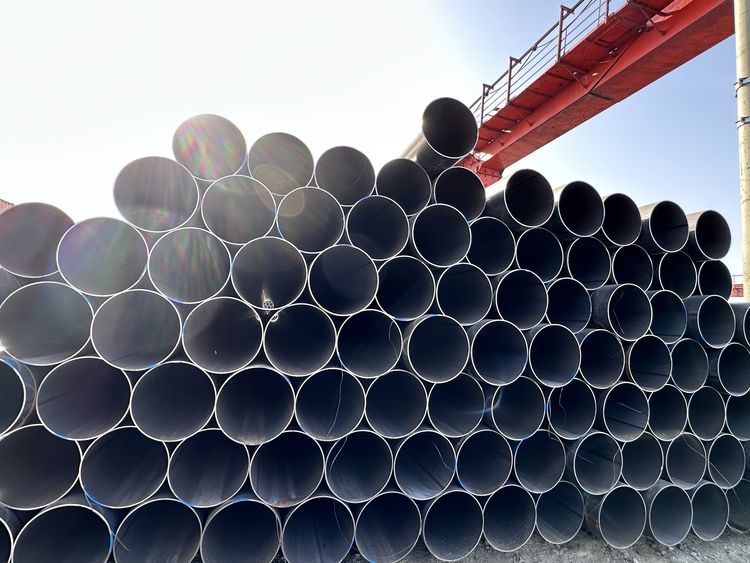
What Is API 5L X52 ERW Pipe?
API 5L X52 (also referred to as L360 under the ISO-based designation) is a carbon steel line pipe grade with a minimum yield strength of 360 MPa (52,200 psi). The "X52" name reflects this yield strength figure, expressed in thousands of psi.
X52 pipe can be produced by several methods - seamless, ERW, and submerged arc welding (SAW/LSAW) - but ERW is the most common and economical process for pipe with an outside diameter up to roughly 24 inches (610 mm). During ERW manufacturing, steel coil is cold-formed into a cylindrical shape and the seam is joined using high-frequency electrical resistance welding, without added filler metal. This produces a pipe with consistent wall thickness, a smooth weld seam, and good dimensional accuracy.
X52 sits in the middle of the API 5L strength ladder - stronger than Grade B, X42, and X46, but below X56, X60, X65, and X70. It is widely regarded as one of the most commonly ordered grades because it covers a broad range of onshore pipeline pressure requirements without the added cost of higher grades.
Chemical Composition
API 5L X52 pipe is available at two product specification levels - PSL1 and PSL2 - each with defined limits on carbon, manganese, and residual elements. The figures below apply to pipe with wall thickness ≤ 25 mm; heavier wall pipe is subject to negotiation with the manufacturer.
| Element | PSL1 (Welded) | PSL2 – X52N (Normalized) |
|---|---|---|
| Carbon (C) | ≤ 0.26% | ≤ 0.24% |
| Manganese (Mn) | ≤ 1.40% | ≤ 1.40% |
| Phosphorus (P) | ≤ 0.030% | ≤ 0.025% |
| Sulfur (S) | ≤ 0.030% | ≤ 0.015% |
| Nb + V + Ti | - | ≤ 0.15% |
| Copper (Cu) | ≤ 0.50% | ≤ 0.50% |
Manganese content may be increased by 0.05% for every 0.01% reduction in carbon, up to a maximum of 1.65%.
PSL2 pipe is subject to tighter chemistry controls and additional microalloying (niobium, vanadium, titanium) to refine grain structure and improve toughness - this is one reason PSL2 pipe is generally specified for higher-consequence or sour-service pipeline segments.
Mechanical Properties
| Property | PSL1 | PSL2 |
|---|---|---|
| Yield Strength (min) | 360 MPa (52,200 psi) | 360–530 MPa (depending on delivery condition) |
| Tensile Strength (min) | 460 MPa (66,700 psi) | 460–760 MPa |
| Weld Tensile Strength | ≥ 460 MPa | ≥ 460 MPa |
| Elongation | Per API 5L formula based on cross-sectional area | Per API 5L formula, generally ≥ 21% |
| Yield/Tensile Ratio | Not restricted | Max. 0.93 (PSL2) |
PSL2 also requires mandatory Charpy V-notch impact testing and hydrostatic testing on every length of pipe, along with tighter dimensional tolerances than PSL1 - buyers working on regulated pipeline projects should confirm which PSL level their project specification requires before ordering.
Standard Sizes
ERW production of X52 pipe typically covers:
Outside Diameter (OD): 21.3 mm – 630 mm
Wall Thickness (WT): 2.0 mm – 18 mm
Length: Random lengths (5.8–12m) or fixed/double-random lengths per customer requirement
For diameters beyond roughly 24 inches, line pipe is generally produced by LSAW or SSAW welding instead of ERW.
Buying Guide: What to Check Before You Order
1. Confirm PSL1 vs. PSL2 requirements PSL2 is mandatory for many regulated or offshore pipeline projects and comes with stricter testing, tighter chemistry, and mandatory impact testing. Ordering the wrong PSL level is one of the most common and costly mistakes in line pipe procurement.
2. Match the grade to your operating pressure X52 is not always the right choice - if your project's design pressure and pipeline diameter call for a higher-strength grade, using X60 or X70 can reduce wall thickness (and therefore weight and cost) for the same pressure rating. A supplier who can advise on this trade-off, rather than simply selling the grade you ask for, is worth prioritizing.
3. Verify welding and testing documentation Ask for mill test certificates (MTC) showing chemical composition, mechanical test results, and - for PSL2 - Charpy impact test results and hydrostatic test records for the actual production lot, not generic data sheets.
4. Check surface and coating requirements X52 pipe can be supplied bare, oiled, or with anti-corrosion coatings (FBE, 3-layer PE, coal tar epoxy) depending on the installation environment. Confirm this is specified clearly in your purchase order, as coating requirements affect both lead time and price.
5. Confirm end finish and packing Line pipe is typically supplied with beveled ends for field welding. Specify bevel angle, end protection (plastic end caps), and bundling requirements to avoid transport damage, especially for long-distance export shipments.
6. Ask about NACE MR0175 compliance for sour service If the pipeline will carry sour (H2S-containing) media, confirm the supplier can provide X52 pipe meeting NACE MR0175/ISO 15156 requirements, which involve additional hardness and material controls.
FAQ
Q: What documentation should come with an API 5L X52 pipe order?
A: At minimum, you should receive a mill test certificate (MTC) showing heat number traceability, chemical composition, and mechanical test results for the actual production lot. For PSL2 orders, this should also include Charpy impact test results and hydrostatic test records. If the pipe carries the API monogram, the certificate should reference the API license number, which buyers can verify against API's own licensee database.
Q: How is the required wall thickness for X52 pipe calculated?
A: Wall thickness is typically determined using a pipeline design formula (such as Barlow's formula) based on the design pressure, pipe outside diameter, allowable stress (a percentage of SMYS), and a design factor set by the applicable pipeline code. This calculation should be done by a qualified pipeline engineer rather than selected by wall-thickness "rule of thumb," since under-specifying wall thickness is a safety issue.
Q: Can API 5L X52 ERW pipe be hot-dip galvanized?
A: Yes, X52 ERW pipe can be hot-dip galvanized for corrosion protection in above-ground or non-buried applications. For buried pipeline service, external coatings such as 3-layer PE (3LPE) or fusion-bonded epoxy (FBE) are more commonly specified than galvanizing, since they offer better long-term protection against soil-side corrosion.
Q: What affects lead time when ordering API 5L X52 ERW pipe?
A: Typical factors include order quantity, whether the required OD/WT combination is already in production or needs to be scheduled, PSL2 testing requirements (which add inspection time), coating requirements, and export packing/documentation. Buyers working to a fixed project deadline should confirm lead time in writing before placing a purchase order, especially for PSL2 or coated pipe.


Hot Tags: api 5l x52 erw pipe, China api 5l x52 erw pipe manufacturers, suppliers, factory, erw pipe demographic impact, erw pipe dimensions accuracy, erw pipe distributor, erw pipe safety, erw pipe social impact, short erw pipe