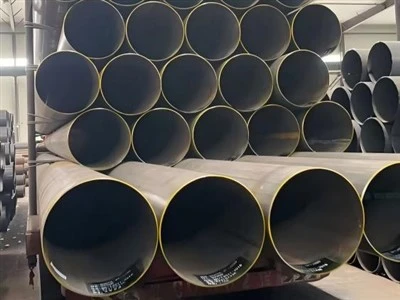
Hey there! As a supplier of ERW steel pipes, I often get asked about radiographic testing for ERW steel pipes. So, I thought I'd write a blog post to shed some light on this topic.
First off, let's talk about what ERW steel pipes are. ERW stands for Electric Resistance Welded. These pipes are made by rolling steel sheets into a tubular shape and then welding the edges together using an electric current. ERW steel pipes are widely used in various industries, such as construction, oil and gas, and automotive, due to their cost - effectiveness and good mechanical properties.
Now, what exactly is radiographic testing for ERW steel pipes? Radiographic testing, also known as RT, is a non - destructive testing (NDT) method. It's used to detect internal defects in the ERW steel pipes without damaging the pipes themselves. This is super important because internal defects like cracks, porosity, or lack of fusion in the weld area can significantly reduce the strength and durability of the pipes.
Here's how it works. In radiographic testing, a source of radiation, usually X - rays or gamma rays, is used. The ERW steel pipe is placed between the radiation source and a radiation - sensitive film or detector. The radiation passes through the pipe, and when it hits the film or detector, it creates an image. Defects in the pipe absorb or scatter the radiation differently than the surrounding material, which shows up as a contrast on the image.
For example, if there's a crack in the weld of the ERW steel pipe, the radiation will pass through the crack more easily than through the solid steel. This will result in a darker area on the film or detector, indicating the presence of the crack. Similarly, porosity (tiny holes) in the weld will also show up as distinct areas on the image.
There are a couple of different types of radiographic testing that can be used for ERW steel pipes. One is the film - based method, where a special X - ray film is used to capture the image. After the exposure, the film is developed, just like a regular photographic film. The developed film shows the internal structure of the pipe, and trained inspectors can analyze it to identify any defects.
Another method is digital radiographic testing. Instead of using a film, a digital detector is used to capture the radiation image. This method has several advantages. It's faster because there's no need for film development. The digital images can be easily stored, manipulated, and shared. Also, the sensitivity and resolution of digital detectors are often very high, which allows for more accurate defect detection.
So, why is radiographic testing so crucial for ERW steel pipes? Well, in many applications, the integrity of the pipes is of utmost importance. For instance, in the oil and gas industry, ERW steel pipes are used to transport oil and gas over long distances. A pipe with internal defects could fail under high pressure, leading to leaks, environmental disasters, and huge financial losses.
In the construction industry, ERW steel pipes are used in building structures. Defective pipes could compromise the safety of the entire building. By conducting radiographic testing, we can ensure that the pipes we supply meet the required quality standards and are safe to use in these critical applications.
At our company, we take radiographic testing seriously. We have a team of experienced technicians who are trained to perform radiographic tests on our ERW steel pipes. We also follow strict quality control procedures to ensure the accuracy and reliability of the testing results.
We offer a wide range of ERW steel pipes, including Galvanized Steel Pipe. Galvanized steel pipes are coated with a layer of zinc, which provides excellent corrosion resistance. They're commonly used in water supply systems and outdoor applications.
Another popular product is our ASTM A53 GR.A ERW PIPE. This type of pipe meets the ASTM A53 standard, which is widely recognized in the industry. It's suitable for a variety of general - purpose applications, such as structural supports and mechanical systems.
We also supply API 5L GR.X42 ERW STEEL PIPE. These pipes are designed for use in the oil and gas industry. They have high strength and good toughness, making them suitable for transporting oil and gas under high - pressure conditions.
If you're in the market for high - quality ERW steel pipes, we'd love to hear from you. Whether you need pipes for a small - scale project or a large - scale industrial application, we can provide you with the right products at competitive prices. Our team is always ready to assist you with any questions you may have and to help you find the best solution for your needs. So, don't hesitate to reach out and start a conversation about your procurement requirements.
References


- "Non - Destructive Testing Handbook", Volume 2: Radiography and Radiation Testing.
- ASTM International Standards on Steel Pipes.
- API Standards for Oil and Gas Industry Pipes.