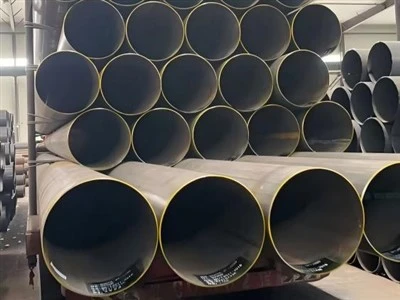
As a leading supplier of LSAW pipes, I'm often asked about the manufacturing process of these essential products. LSAW pipes, or Longitudinal Submerged Arc Welded pipes, are widely used in various industries due to their high strength, durability, and reliability. In this blog post, I'll take you through the step-by-step process of how LSAW pipes are manufactured.
1. Raw Material Selection
The first step in manufacturing LSAW pipes is selecting the appropriate raw material. The most common material used is steel, which can be sourced from high - quality steel mills. The choice of steel grade depends on the specific application of the pipes. For example, for applications in the oil and gas industry, steels with high corrosion resistance and strength are preferred.
We ensure that the raw steel plates meet strict quality standards. These plates are typically inspected for chemical composition, mechanical properties, and surface quality. Only plates that pass our rigorous quality control checks are used in the manufacturing process. This attention to raw material quality is crucial as it forms the foundation for the high - quality LSAW pipes we produce.
2. Plate Cutting
Once the raw steel plates are selected, they are cut to the appropriate size. This is done using advanced cutting machines, such as plasma cutters or laser cutters. The cutting process is highly precise, ensuring that the dimensions of the plates meet the required specifications.
The length and width of the plates are determined based on the diameter and length of the final LSAW pipes. For example, if we are manufacturing a large - diameter pipe, we need a wider and longer steel plate. During the cutting process, the edges of the plates are also beveled to prepare them for the welding process. This beveling helps to create a better weld joint and improves the overall strength of the pipe.
3. Plate Bending
After the plates are cut, they are bent into a cylindrical shape. This is achieved using a plate bending machine. The bending process is carefully controlled to ensure that the curvature of the pipe meets the design requirements.
There are different methods of plate bending, such as three - roll bending and four - roll bending. The choice of method depends on the thickness and diameter of the pipe. For thicker plates or larger - diameter pipes, four - roll bending may be more suitable as it provides better control over the bending process.
During the bending process, the plates are gradually formed into a circular shape. The edges of the bent plates are then aligned to prepare for welding. This alignment is crucial as any misalignment can lead to defects in the final pipe.
4. Welding
The welding process is the heart of LSAW pipe manufacturing. Longitudinal submerged arc welding (LSAW) is used to join the edges of the bent plates together. In this process, an electric arc is created between a consumable electrode and the workpiece (the bent steel plates).
The arc is submerged under a layer of flux, which protects the weld from oxidation and contamination. The flux also helps to improve the quality of the weld by providing a stable arc and reducing spatter. The welding process is automated, ensuring consistent and high - quality welds.
There are two types of LSAW welding: single - pass welding and multi - pass welding. Single - pass welding is used for thinner - walled pipes, while multi - pass welding is used for thicker - walled pipes. In multi - pass welding, multiple layers of weld are applied to build up the thickness of the weld joint.
5. Weld Inspection
After the welding process is complete, the welds are inspected to ensure their quality. Non - destructive testing methods, such as ultrasonic testing (UT), radiographic testing (RT), and magnetic particle testing (MT), are used to detect any internal or surface defects in the welds.
Ultrasonic testing is used to detect internal flaws, such as cracks or porosity, in the weld. Radiographic testing uses X - rays or gamma rays to create an image of the internal structure of the weld, allowing for the detection of hidden defects. Magnetic particle testing is used to detect surface and near - surface defects in ferromagnetic materials, such as steel.
Any defects found during the inspection are repaired before the pipe moves on to the next stage of the manufacturing process. This strict quality control ensures that only high - quality LSAW pipes are delivered to our customers.
6. Pipe Expansion
In some cases, the welded pipes are expanded to improve their roundness and dimensional accuracy. Pipe expansion is typically done using a hydraulic expander. The expander applies pressure to the inside of the pipe, causing it to expand slightly.
This process helps to eliminate any ovality or other dimensional deviations in the pipe. It also improves the mechanical properties of the pipe by reducing residual stresses. After the expansion process, the pipes are re - inspected to ensure that they meet the required specifications.


7. Heat Treatment
Heat treatment is an important step in LSAW pipe manufacturing, especially for pipes that will be used in high - stress applications. Heat treatment can improve the mechanical properties of the pipe, such as its strength, toughness, and hardness.
There are different types of heat treatment processes, such as annealing, normalizing, and quenching and tempering. The choice of heat treatment process depends on the steel grade and the intended application of the pipe. For example, if the pipe will be used in a high - temperature environment, quenching and tempering may be used to improve its heat resistance.
During the heat treatment process, the pipes are heated to a specific temperature and then cooled at a controlled rate. This process changes the microstructure of the steel, resulting in improved mechanical properties.
8. Final Inspection and Testing
Before the LSAW pipes are shipped to the customers, they undergo a final inspection and testing. This includes visual inspection, dimensional inspection, and mechanical property testing.
Visual inspection is used to check for any surface defects, such as scratches, dents, or rust. Dimensional inspection ensures that the diameter, wall thickness, and length of the pipes meet the required specifications. Mechanical property testing, such as tensile testing and hardness testing, is used to verify the strength and hardness of the pipes.
Only pipes that pass all the inspection and testing procedures are approved for shipment. This strict quality control ensures that our customers receive high - quality LSAW pipes that meet their expectations.
Comparison with Other Pipe Types
When considering LSAW pipes, it's also important to compare them with other types of pipes, such as Ssaw Pipe. SSAW pipes, or Spiral Submerged Arc Welded pipes, are another common type of welded pipe. While both LSAW and SSAW pipes are used in similar applications, there are some differences between them.
LSAW pipes have a longitudinal weld, which provides better strength and integrity in the longitudinal direction. They are often used in high - pressure and high - stress applications, such as oil and gas pipelines. On the other hand, SSAW pipes have a spiral weld, which allows for the use of wider steel coils and can be more cost - effective for large - diameter pipes.
In addition, LSAW Steel Pipes are available in a wide range of steel grades and specifications. For example, ASTM A671/A671M LSAW Steel Pipe is a popular grade for applications in the oil and gas industry due to its high strength and corrosion resistance.
Conclusion
The manufacturing process of LSAW pipes is a complex and highly technical process that requires advanced equipment and strict quality control. From raw material selection to final inspection, every step is crucial in ensuring the production of high - quality pipes.
As a LSAW pipes supplier, we are committed to providing our customers with the best - quality products. Our LSAW pipes are widely used in various industries, such as oil and gas, construction, and infrastructure. If you are in the market for high - quality LSAW pipes, we invite you to contact us for a detailed discussion about your requirements and how we can meet them.
References
- "Welding Handbook", American Welding Society
- "Steel Pipe Handbook", Pipe Manufacturers Institute