


The desert environment, characterized by extreme temperatures, high levels of solar radiation, low humidity, and abrasive sandstorms, presents a unique set of challenges for infrastructure, including pipelines. As a supplier of API5L SEAMLESS LINE PIPE, understanding the impact of the desert environment on these pipes is crucial for ensuring their long - term performance and reliability.
Temperature Fluctuations
One of the most significant factors in the desert is the large temperature difference between day and night. During the day, the sun beats down on the pipes, causing them to heat up rapidly. The high temperatures can lead to thermal expansion of the API5L SEAMLESS LINE PIPE. If the pipes are not properly installed with expansion joints or other compensation mechanisms, this thermal expansion can result in stress build - up within the pipes. Over time, these stresses can cause deformation, such as bending or warping of the pipes.
Conversely, at night, the temperatures can drop significantly. The rapid cooling leads to thermal contraction. This constant cycle of expansion and contraction can fatigue the material of the pipe. API5L seamless line pipes are typically made of steel, and repeated thermal cycling can cause micro - cracks to form in the steel structure. These micro - cracks can propagate over time, eventually leading to pipe failure. This is particularly concerning as pipeline failures can result in significant economic losses, environmental damage, and safety risks.
Solar Radiation
The desert receives intense solar radiation throughout the year. Ultraviolet (UV) rays from the sun can have a degrading effect on the external coating of the API5L SEAMLESS LINE PIPE. Most pipes are coated to protect them from corrosion and other forms of damage. However, prolonged exposure to UV radiation can break down the chemical bonds in the coating material.
As the coating deteriorates, it becomes less effective in protecting the underlying steel from the harsh desert environment. This exposes the pipe to corrosion, especially when combined with other factors such as sand abrasion and the presence of salt in the desert soil. The corrosion process can start on the surface of the pipe and gradually penetrate deeper into the material, reducing the wall thickness of the pipe and weakening its structural integrity.
Low Humidity
Low humidity is a defining characteristic of the desert. While one might think that low humidity would be beneficial for pipes as it reduces the risk of water - based corrosion, it can actually have some negative effects. In the absence of sufficient moisture, the static electricity generated by sand movement can build up on the surface of the pipes. This static charge can attract dust and sand particles, which can then adhere to the pipe surface.
Moreover, the low humidity can also affect the performance of some anti - corrosion coatings. Some coatings rely on a certain level of moisture to maintain their flexibility and adhesion to the pipe surface. In a low - humidity environment, these coatings may become brittle and start to crack, further exposing the pipe to potential damage.
Sandstorms
Sandstorms are a common occurrence in the desert. The high - velocity sand particles carried by the wind act like an abrasive. When these sand particles hit the surface of the API5L SEAMLESS LINE PIPE, they can abrade the external coating and the steel surface. The abrasion can remove the protective coating, leaving the steel vulnerable to corrosion.
In addition, the impact of sand particles can cause surface pitting on the pipe. These pits can act as stress concentrators, increasing the likelihood of crack initiation and propagation. The continuous sandblasting effect of sandstorms can also gradually wear down the pipe wall thickness. If the wall thickness is reduced beyond the design limit, the pipe may not be able to withstand the internal pressure, leading to a rupture.
Soil Conditions
Desert soil often contains a high concentration of salts. When the pipes are buried in the desert soil, the salts can react with the steel of the API5L SEAMLESS LINE PIPE. This chemical reaction can lead to electrochemical corrosion. The salts in the soil can act as electrolytes, facilitating the flow of electric current between different parts of the pipe.
The presence of different soil types in the desert can also cause differential corrosion. For example, if a pipe passes through areas with varying soil resistivity, it can create a galvanic cell within the pipe. This can accelerate the corrosion process in certain sections of the pipe, leading to uneven wear and potential failure.
Mitigation Strategies
To address these challenges, several mitigation strategies can be employed. For temperature - related issues, proper insulation can be installed around the pipes to reduce the impact of thermal cycling. Expansion joints can also be used to accommodate the thermal expansion and contraction of the pipes, reducing the stress on the pipe material.
Regarding the degradation of the coating due to solar radiation, special UV - resistant coatings can be applied to the pipes. These coatings are formulated to withstand the intense UV rays in the desert environment. Regular inspection and maintenance of the coating are also essential to detect and repair any damage in a timely manner.

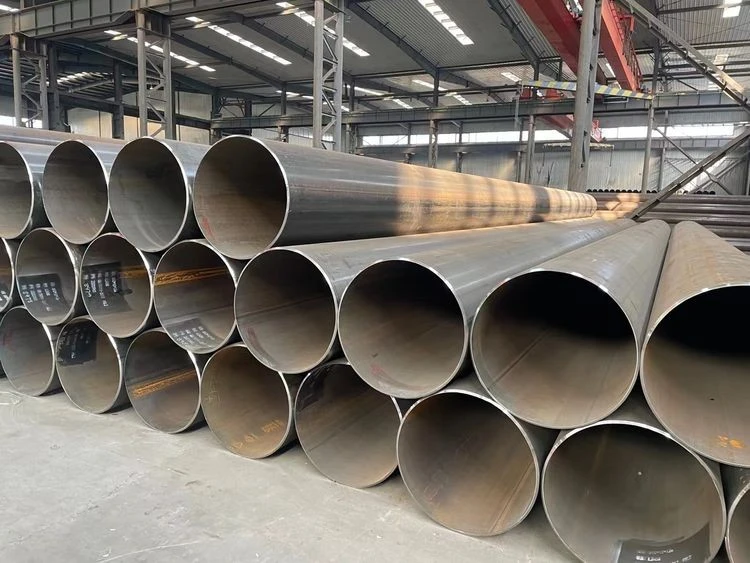
To deal with sandstorms, protective barriers can be installed around the pipes. These barriers can reduce the impact of sand particles on the pipes, minimizing abrasion. Additionally, increasing the wall thickness of the pipes in areas prone to severe sandstorms can provide an extra margin of safety.
For soil - related corrosion, cathodic protection systems can be installed. These systems work by applying an external electrical current to the pipe, which counteracts the natural electrochemical corrosion process. By maintaining the pipe at a negative potential, the cathodic protection system can prevent the corrosion of the steel.
Comparison with Other Pipe Products
In comparison to other pipe products such as ASTM A671 CC70 STEEL PIPE, ASTM A500 GR.C HOLLOW SECTIONS, and EN 10219 S355J0H SQUARE HOLLOW SECTION, API5L SEAMLESS LINE PIPE has its own advantages and disadvantages in the desert environment.
ASTM A671 CC70 steel pipes are often used in high - pressure applications. They have good weldability and corrosion resistance. However, in the desert, their performance may be affected by the same factors as API5L pipes, such as thermal cycling and sand abrasion. The coating of ASTM A671 CC70 pipes also needs to be carefully selected to withstand the desert conditions.
ASTM A500 GR.C hollow sections are commonly used in structural applications. Their shape and design may make them more susceptible to sand accumulation in the desert, which can lead to accelerated corrosion in the areas where sand collects.
EN 10219 S355J0H square hollow sections are known for their high strength and good ductility. But similar to other pipes, they are also vulnerable to the effects of the desert environment, including UV radiation and soil corrosion.
Conclusion
The desert environment has a significant impact on API5L SEAMLESS LINE PIPE. The combination of temperature fluctuations, solar radiation, low humidity, sandstorms, and soil conditions poses multiple challenges to the integrity and performance of these pipes. However, with proper understanding of these challenges and the implementation of appropriate mitigation strategies, the reliability and lifespan of the pipes can be significantly improved.
As a supplier of API5L SEAMLESS LINE PIPE, we are committed to providing high - quality products that can withstand the harsh desert environment. We have extensive experience in dealing with the unique requirements of desert projects and can offer customized solutions to meet the specific needs of our customers. If you are in the market for API5L SEAMLESS LINE PIPE for your desert - related project, we invite you to contact us for a detailed discussion about your requirements and how we can assist you in ensuring the success of your project.
References
- ASM Handbook Volume 13A: Corrosion: Fundamentals, Testing, and Protection. ASM International.
- Pipeline Corrosion: Inspection and Prevention. CRC Press.
- Steel Structures in Harsh Environments: Design, Construction, and Maintenance. Woodhead Publishing.


