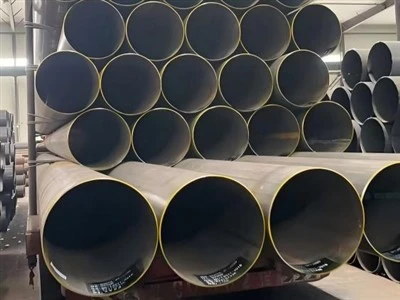
Hey there! As a supplier of SSAW (Spiral Submerged Arc Welded) pipes, I often get asked about the corrosion resistance of these pipes. So, I thought I'd take the time to break it down for you in this blog post.
First off, let's understand what corrosion is. Corrosion is basically a natural process that happens when metals react with their environment, usually oxygen and water. This reaction forms metal oxides or other compounds, which can eat away at the metal over time. For pipes, corrosion can lead to leaks, structural weaknesses, and a whole host of other problems.
Now, when it comes to SSAW pipes, their corrosion resistance is a crucial factor, especially considering they're used in all sorts of applications, from oil and gas transportation to water supply systems.


Factors Affecting the Corrosion Resistance of SSAW Pipes
Material Composition
The type of steel used to make SSAW pipes plays a huge role in their corrosion resistance. Most SSAW pipes are made from carbon steel, which is strong and relatively inexpensive. However, carbon steel is prone to rusting when exposed to moisture and oxygen. To improve its corrosion resistance, manufacturers often add alloying elements like chromium, nickel, and copper.
For example, stainless steel SSAW pipes contain a significant amount of chromium. Chromium forms a thin, protective oxide layer on the surface of the steel, which acts as a barrier between the metal and the environment. This layer is self - healing, meaning if it gets scratched, it can reform as long as there's enough oxygen present.
Coating and Lining
Another way to enhance the corrosion resistance of SSAW pipes is through coatings and linings. There are several types of coatings available, each with its own advantages.
- Epoxy Coating: Epoxy coatings are very popular because they provide excellent adhesion to the steel surface and offer good chemical resistance. They can protect the pipe from a wide range of corrosive substances, including acids, alkalis, and salts.
- Fusion - Bonded Epoxy (FBE) Coating: FBE coating is a high - performance coating that is applied electrostatically to the pre - heated pipe surface. It forms a tough, continuous film that provides long - term protection against corrosion.
- Polyethylene Coating: Polyethylene coatings are known for their high - density and good impact resistance. They can protect the pipe from mechanical damage as well as corrosion.
In addition to external coatings, some SSAW pipes are also lined with materials like cement mortar or plastic. Cement mortar lining is commonly used in water supply pipes as it provides a smooth surface that reduces friction and also protects the inner surface of the pipe from corrosion.
Environmental Conditions
The environment in which the SSAW pipes are installed has a major impact on their corrosion resistance. For instance, pipes used in coastal areas are exposed to saltwater, which is highly corrosive. The high salt content in the water accelerates the corrosion process.
Similarly, pipes buried in soil with high acidity or a lot of moisture are also at a higher risk of corrosion. In such cases, proper coating and cathodic protection (more on that later) are essential to ensure the longevity of the pipes.
Comparing SSAW Pipes with Other Types of Pipes
When it comes to corrosion resistance, it's interesting to compare SSAW pipes with other types of pipes like LSAW Pipes. LSAW (Longitudinal Submerged Arc Welded) pipes are made by welding the steel plate along its length, while SSAW pipes are made by spirally welding the steel strip.
In general, both SSAW and LSAW pipes can have similar corrosion resistance if they are made from the same material and have the same coating. However, the welding process can sometimes affect the corrosion resistance. In SSAW pipes, the spiral weld can be a potential weak point if not properly protected. But with the right coating and quality control, this issue can be minimized.
Another type of pipe to consider is ASTM A252 Piling Pipe. These pipes are often used in marine and foundation applications. They are designed to withstand high loads and also need to have good corrosion resistance, especially when used in harsh environments. SSAW pipes can be a cost - effective alternative to ASTM A252 piling pipes in some cases, as long as their corrosion resistance requirements are met.
En 10219 LSAW Pipe is also a popular choice in the European market. These pipes are made according to specific European standards and are known for their high quality. Again, the corrosion resistance of SSAW pipes can be comparable to En 10219 LSAW pipes, depending on the material and protective measures taken.
Cathodic Protection for SSAW Pipes
Cathodic protection is a technique used to prevent corrosion by making the metal surface a cathode in an electrochemical cell. There are two main types of cathodic protection:
- Sacrificial Anode Cathodic Protection: In this method, a more reactive metal (usually zinc or magnesium) is connected to the SSAW pipe. The more reactive metal acts as an anode and corrodes instead of the pipe. As the anode corrodes, it releases electrons, which flow to the pipe, making it a cathode and protecting it from corrosion.
- Impressed Current Cathodic Protection: This method involves using an external power source to supply a direct electric current to the pipe. The current makes the pipe a cathode, and a sacrificial anode (usually made of a non - consumable material like graphite) is used to complete the electrical circuit.
Maintaining the Corrosion Resistance of SSAW Pipes
Once the SSAW pipes are installed, it's important to maintain their corrosion resistance. Regular inspections should be carried out to check for any signs of coating damage, corrosion, or other issues. If any damage is found, it should be repaired immediately.
In addition, monitoring the environmental conditions around the pipes can also help in preventing corrosion. For example, if the soil around the buried pipes becomes more acidic over time, appropriate measures can be taken to neutralize the soil or add additional protection to the pipes.
Conclusion
In conclusion, the corrosion resistance of SSAW pipes depends on several factors, including the material composition, coating and lining, environmental conditions, and the use of cathodic protection. By choosing the right combination of these factors, SSAW pipes can provide long - term, reliable service in a wide range of applications.
If you're in the market for SSAW pipes and are concerned about corrosion resistance, we're here to help. Our team of experts can guide you through the selection process, ensuring that you get the pipes that meet your specific requirements. Whether you need pipes for a small - scale project or a large - scale industrial application, we've got you covered. So, don't hesitate to reach out and start a conversation about your pipe needs. We're looking forward to working with you!
References
- Jones, D. A. (1992). Principles and Prevention of Corrosion. Prentice Hall.
- Uhlig, H. H., & Revie, R. W. (1985). Corrosion and Corrosion Control. Wiley.
- Fontana, M. G. (1986). Corrosion Engineering. McGraw - Hill.