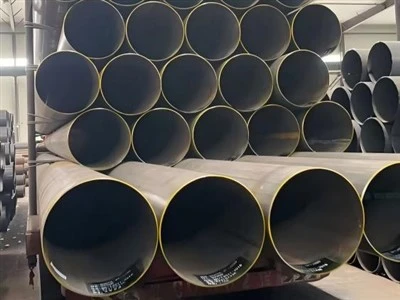
How to control the wall thickness uniformity of EN 10210 hollow sections?
As a reliable supplier of EN 10210 hollow sections, I understand the critical importance of wall thickness uniformity in these products. Wall thickness uniformity not only affects the structural integrity and performance of the hollow sections but also plays a significant role in meeting the strict quality standards of various industries. In this blog, I will share some key strategies and techniques that we employ to ensure the wall thickness uniformity of our EN 10210 hollow sections.
Understanding EN 10210 Hollow Sections
EN 10210 is a European standard that specifies the technical delivery conditions for hot-finished structural hollow sections of non-alloy and fine grain steels. These hollow sections are widely used in construction, engineering, and other industries due to their excellent strength, durability, and versatility. The standard defines different grades and dimensions of hollow sections, and wall thickness uniformity is one of the crucial quality parameters that need to be carefully controlled.
Importance of Wall Thickness Uniformity
Wall thickness uniformity is essential for several reasons. Firstly, it ensures the structural integrity of the hollow sections. In applications where the sections are subjected to heavy loads or stresses, non-uniform wall thickness can lead to stress concentrations, which may cause premature failure of the structure. Secondly, it affects the aesthetic appearance of the finished products. Uniform wall thickness results in a smooth and consistent surface finish, which is often required in architectural and decorative applications. Finally, it is crucial for meeting the dimensional tolerances specified in the EN 10210 standard. Non-uniform wall thickness can lead to dimensional variations, which may cause problems during installation and assembly.
Factors Affecting Wall Thickness Uniformity
Several factors can affect the wall thickness uniformity of EN 10210 hollow sections. These include:
- Raw Material Quality: The quality of the raw material used to manufacture the hollow sections is a critical factor. Inconsistent chemical composition, impurities, or inhomogeneities in the raw material can lead to variations in wall thickness.
- Manufacturing Process: The manufacturing process, including hot rolling, cold forming, and welding, can also affect wall thickness uniformity. Improper process parameters, such as rolling speed, temperature, and pressure, can result in uneven wall thickness.
- Equipment and Tooling: The condition and accuracy of the manufacturing equipment and tooling are essential for achieving uniform wall thickness. Worn-out or misaligned tools can cause variations in wall thickness.
- Quality Control Measures: Effective quality control measures are necessary to detect and correct any variations in wall thickness during the manufacturing process. Insufficient inspection and testing can lead to the production of non-conforming products.
Strategies for Controlling Wall Thickness Uniformity
To ensure the wall thickness uniformity of our EN 10210 hollow sections, we implement the following strategies:
- Selecting High-Quality Raw Materials: We source our raw materials from reputable suppliers who meet our strict quality standards. We conduct thorough inspections and tests on the raw materials to ensure their chemical composition, mechanical properties, and dimensional accuracy.
- Optimizing the Manufacturing Process: We continuously optimize our manufacturing process to ensure consistent wall thickness. We use advanced technology and equipment to control the rolling speed, temperature, and pressure, and we monitor the process parameters in real-time to detect and correct any deviations.
- Maintaining and Calibrating Equipment and Tooling: We regularly maintain and calibrate our manufacturing equipment and tooling to ensure their accuracy and reliability. We use precision measuring instruments to check the dimensions and tolerances of the tools, and we replace any worn-out or damaged parts promptly.
- Implementing Stringent Quality Control Measures: We have a comprehensive quality control system in place to ensure the wall thickness uniformity of our EN 10210 hollow sections. We conduct multiple inspections and tests at various stages of the manufacturing process, including raw material inspection, in-process inspection, and final inspection. We use advanced non-destructive testing techniques, such as ultrasonic testing and magnetic particle testing, to detect any internal defects or variations in wall thickness.
Case Study: Achieving Wall Thickness Uniformity in EN 10210 S355J2H Hollow Sections
To illustrate the effectiveness of our strategies for controlling wall thickness uniformity, let's take a look at a case study of our production of EN 10210 S355J2H HOLLOW SECTION. This grade of hollow section is widely used in structural applications due to its high strength and good weldability.


In this case, we received an order for a large quantity of EN 10210 S355J2H hollow sections with specific wall thickness requirements. To meet these requirements, we followed our standard procedures for selecting high-quality raw materials, optimizing the manufacturing process, maintaining and calibrating our equipment and tooling, and implementing stringent quality control measures.
During the manufacturing process, we closely monitored the wall thickness of the hollow sections using advanced measuring instruments. We found that the wall thickness was within the specified tolerance range, and the uniformity was excellent. We also conducted non-destructive testing on the finished products to ensure their internal quality. The test results showed that the hollow sections were free from any defects or variations in wall thickness.
The customer was very satisfied with the quality of our EN 10210 S355J2H hollow sections. They reported that the sections were easy to install and had excellent structural performance. This case study demonstrates our commitment to providing high-quality products with uniform wall thickness.
Comparison with ASTM A1085 Hollow Sections
While EN 10210 is a European standard, ASTM A1085 is an American standard for hot-formed carbon steel hollow structural sections. Both standards have similar requirements for wall thickness uniformity, but there are some differences in the specific test methods and tolerances.
ASTM A1085 HOLLOW SECTION uses a different set of dimensions and tolerances compared to EN 10210. However, the principle of controlling wall thickness uniformity remains the same. By implementing similar strategies for raw material selection, process optimization, equipment maintenance, and quality control, we can ensure the wall thickness uniformity of ASTM A1085 hollow sections as well.
Conclusion
Wall thickness uniformity is a critical quality parameter for EN 10210 hollow sections. By understanding the factors that affect wall thickness uniformity and implementing effective strategies for control, we can ensure the production of high-quality hollow sections that meet the strict requirements of various industries. At our company, we are committed to providing our customers with the best possible products and services. We continuously invest in research and development to improve our manufacturing processes and quality control measures.
If you are in the market for high-quality En 10210 Hot Formed Hollow Sections with uniform wall thickness, we invite you to contact us for a detailed discussion. Our team of experts will be happy to assist you with your specific requirements and provide you with a competitive quote.
References
- EN 10210:2006, Hot-finished structural hollow sections of non-alloy and fine grain steels - Technical delivery conditions
- ASTM A1085/A1085M - 18, Standard Specification for Hot-Formed Carbon Steel Hollow Structural Sections