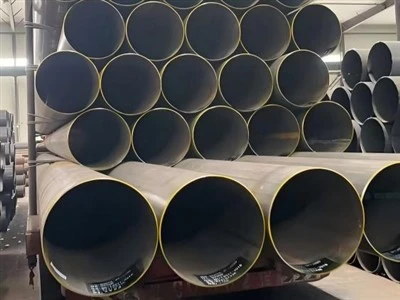
As a supplier of rectangular tubes, I often get asked about the international standards that govern these products. It's a crucial topic, as these standards ensure the quality, safety, and performance of rectangular tubes in various applications. In this blog, I'll break down some of the key international standards that play a significant role in the world of rectangular tubes.
ASTM Standards
One of the most well - known standards in the industry is ASTM. The American Society for Testing and Materials (ASTM) has developed a range of standards for rectangular tubes. For instance, ASTM A500 is a standard specification for cold - formed welded and seamless carbon steel structural tubing in round, square, and rectangular shapes.
The ASTM A500 GR.C STEEL HOLLOW SECTIONS fall under this standard. Grade C in ASTM A500 offers higher yield and tensile strength compared to some other grades. This makes it suitable for structural applications where strength is a critical factor, such as in building frames, bridges, and industrial structures. The standard defines the chemical composition, mechanical properties, dimensions, and tolerances of the rectangular tubes. It ensures that the tubes meet certain quality benchmarks, which is essential for the safety and durability of the structures they are used in.
API Standards
The American Petroleum Institute (API) also has standards that are relevant to rectangular tubes, especially those used in the oil and gas industry. The API 5L PSL2 X60 Line Pipe is an example. Although it is mainly focused on line pipes, the principles of quality control and performance requirements can also be applied to rectangular tubes used in related applications.
API standards are designed to ensure that the products can withstand the harsh conditions of the oil and gas industry, such as high - pressure environments, corrosive substances, and extreme temperatures. For rectangular tubes used in oil and gas facilities, compliance with API standards means they have the necessary strength, toughness, and corrosion resistance to perform reliably over long periods.
ISO Standards
The International Organization for Standardization (ISO) has a global reach when it comes to setting standards. ISO standards for rectangular tubes cover a wide range of aspects, including material properties, manufacturing processes, and testing methods.
ISO standards ensure that rectangular tubes are produced in a consistent manner across different countries and manufacturers. This is important for international trade, as it allows buyers and sellers to have a common understanding of the product quality. For example, ISO standards define the minimum requirements for wall thickness, dimensional accuracy, and surface finish of rectangular tubes. This helps in ensuring that the tubes can be used interchangeably in various applications without compatibility issues.
EN Standards
The European Committee for Standardization (CEN) has developed the EN (European Norms) standards. These standards are widely used in Europe and are also recognized in many other parts of the world. EN standards for rectangular tubes focus on aspects such as the chemical composition, mechanical properties, and manufacturing processes.
EN standards often have specific requirements for different types of applications, such as construction, automotive, and machinery. For example, in the construction industry, EN - compliant rectangular tubes need to meet certain strength and durability criteria to ensure the safety of buildings and structures.
Other Regional and Industry - Specific Standards
Apart from the major international standards mentioned above, there are also regional and industry - specific standards. For example, in some countries, there are local standards that take into account the specific environmental conditions, building practices, and regulatory requirements of that region.
In the automotive industry, there are standards that govern the use of rectangular tubes in vehicle frames and components. These standards focus on factors such as weight reduction, crashworthiness, and corrosion resistance.
Why Standards Matter for Rectangular Tube Suppliers
As a rectangular tube supplier, adhering to these international standards is not just a legal requirement; it's also a way to build trust with customers. When customers know that the rectangular tubes they are buying meet recognized standards, they can be confident in the quality and performance of the products.
Standards also help in ensuring consistency in production. By following a set of well - defined rules, we can produce rectangular tubes with uniform quality, which is essential for large - scale projects. Moreover, compliance with standards can open up new markets, as many international buyers require products to meet specific standards.
How We Ensure Compliance
At our company, we have a rigorous quality control process in place to ensure that our rectangular tubes meet the relevant international standards. We start with the selection of high - quality raw materials. Our suppliers are carefully vetted to ensure that the steel we use has the right chemical composition and mechanical properties.
During the manufacturing process, we use advanced equipment and techniques to ensure that the tubes are produced with the correct dimensions and tolerances. We also conduct regular inspections and tests at various stages of production. These tests include non - destructive testing, such as ultrasonic testing and magnetic particle testing, to detect any internal or surface defects.
Once the tubes are produced, we perform final inspections to ensure that they meet all the requirements of the relevant standards. We also provide detailed documentation, including test reports and certificates of compliance, to our customers.
Conclusion
In conclusion, international standards play a vital role in the world of rectangular tubes. They ensure the quality, safety, and performance of these products in various applications. As a supplier, we are committed to adhering to these standards to provide our customers with the best - quality rectangular tubes.


If you're in the market for rectangular tubes and want to discuss your requirements, feel free to reach out. We're here to help you find the right product for your needs. Whether you're working on a construction project, an oil and gas facility, or an automotive application, we have the expertise and the products to meet your requirements.
References
- American Society for Testing and Materials (ASTM) official publications
- American Petroleum Institute (API) official documents
- International Organization for Standardization (ISO) standards
- European Committee for Standardization (CEN) EN standards