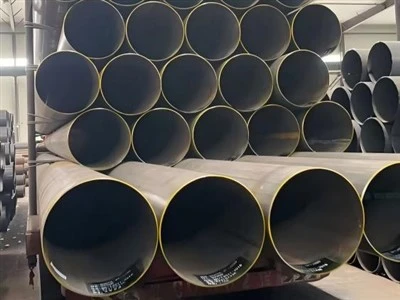
As a supplier of EN 10219 hollow sections, I often get asked about the fatigue resistance properties of these products. Fatigue resistance is a crucial factor in many applications, especially those where the hollow sections are subjected to cyclic loading. In this blog post, I'll delve into the fatigue resistance properties of EN 10219 hollow sections, exploring the factors that influence them and how they compare to other types of hollow sections.
Understanding Fatigue Resistance
Before we dive into the specifics of EN 10219 hollow sections, let's first understand what fatigue resistance means. Fatigue is the progressive and localized structural damage that occurs when a material is subjected to cyclic loading. Over time, these cyclic loads can cause microscopic cracks to form and grow, eventually leading to failure. Fatigue resistance, therefore, refers to a material's ability to withstand these cyclic loads without failing.
Factors Affecting Fatigue Resistance of EN 10219 Hollow Sections
Several factors can influence the fatigue resistance of EN 10219 hollow sections. These include:
Material Composition
The chemical composition of the steel used in EN 10219 hollow sections plays a significant role in its fatigue resistance. Elements such as carbon, manganese, silicon, and chromium can affect the strength, hardness, and toughness of the steel, all of which are important for fatigue resistance. For example, a higher carbon content can increase the strength of the steel but may also reduce its ductility, which can have a negative impact on fatigue resistance.
Manufacturing Process
The manufacturing process used to produce EN 10219 hollow sections can also affect their fatigue resistance. Hollow sections can be produced through various methods, such as hot-rolling, cold-forming, and welding. Each method has its own advantages and disadvantages, and the choice of manufacturing process can have a significant impact on the final properties of the hollow sections. For example, hot-rolled hollow sections generally have better fatigue resistance than cold-formed ones due to the improved grain structure and reduced residual stresses.
Surface Finish
The surface finish of EN 10219 hollow sections can also affect their fatigue resistance. A smooth surface finish can reduce the stress concentration at the surface of the hollow section, which can help to prevent the initiation and propagation of cracks. On the other hand, a rough surface finish can increase the stress concentration and make the hollow section more susceptible to fatigue failure.
Geometric Design
The geometric design of EN 10219 hollow sections can also play a role in their fatigue resistance. Factors such as the shape, size, and wall thickness of the hollow section can affect the stress distribution within the section and, therefore, its fatigue resistance. For example, a hollow section with a more uniform cross-section and a larger radius of curvature at the corners will generally have better fatigue resistance than one with a more irregular cross-section and sharp corners.
Comparing Fatigue Resistance of EN 10219 Hollow Sections with Other Types of Hollow Sections
EN 10219 hollow sections are just one type of hollow section available on the market. Other popular types of hollow sections include En 10225 Seamless Hollow Section, ASTM A501 STEEL HOLLOW SECTIONS, and EN 10210 S460ML HOLLOW SECTIONS. While each type of hollow section has its own unique properties, EN 10219 hollow sections are known for their excellent fatigue resistance.
Compared to En 10225 Seamless Hollow Section, EN 10219 hollow sections are generally more cost-effective and easier to manufacture. However, En 10225 Seamless Hollow Section may have better fatigue resistance in some applications due to their seamless construction, which eliminates the potential for stress concentration at the weld seams.
ASTM A501 STEEL HOLLOW SECTIONS are another popular type of hollow section. They are known for their high strength and good weldability. However, compared to EN 10219 hollow sections, ASTM A501 STEEL HOLLOW SECTIONS may have lower fatigue resistance due to their different material composition and manufacturing process.
EN 10210 S460ML HOLLOW SECTIONS are designed for high-strength applications. They have excellent mechanical properties and are often used in demanding structural applications. While EN 10210 S460ML HOLLOW SECTIONS may have better fatigue resistance than some other types of hollow sections, they are generally more expensive and may not be necessary for all applications.
Applications of EN 10219 Hollow Sections with High Fatigue Resistance
Due to their excellent fatigue resistance, EN 10219 hollow sections are widely used in a variety of applications where cyclic loading is a concern. Some common applications include:
Bridge Construction
In bridge construction, EN 10219 hollow sections are often used for the main structural components, such as the girders and columns. These components are subjected to cyclic loads from traffic, wind, and seismic activity, and therefore require high fatigue resistance to ensure the long-term safety and durability of the bridge.


Crane Booms
Crane booms are another application where EN 10219 hollow sections are commonly used. Crane booms are subjected to cyclic loads during lifting and lowering operations, and therefore require high fatigue resistance to prevent failure.
Offshore Structures
Offshore structures, such as oil rigs and wind turbines, are exposed to harsh environmental conditions and cyclic loads from waves, wind, and currents. EN 10219 hollow sections are often used in these structures due to their excellent fatigue resistance and corrosion resistance.
Conclusion
In conclusion, the fatigue resistance properties of EN 10219 hollow sections are influenced by several factors, including material composition, manufacturing process, surface finish, and geometric design. EN 10219 hollow sections are known for their excellent fatigue resistance, making them a popular choice for a variety of applications where cyclic loading is a concern.
If you're in the market for high-quality EN 10219 hollow sections with excellent fatigue resistance, I encourage you to reach out to me. I can provide you with more information about our products and help you find the right solution for your specific needs. Whether you're working on a bridge construction project, a crane boom design, or an offshore structure, I'm confident that our EN 10219 hollow sections will meet your requirements.
References
- "Steel Structures Design and Practice" by S. K. Duggal
- "Fatigue of Metals Structures" by R. P. Wei and Y. M. Chi