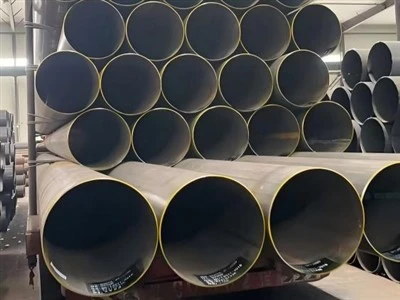
The strength of square tubes is a critical aspect that significantly influences their performance and suitability for various applications. As a square tube supplier, I understand the importance of these factors and their impact on the quality of our products. In this blog post, I will delve into the key factors affecting the strength of square tubes, providing insights that are essential for both professionals in the construction and manufacturing industries and those seeking knowledge about square tube materials.
Material Composition
The material composition of square tubes is the most fundamental factor that determines their strength. Different materials have distinct chemical and physical properties, which directly affect the tube's ability to withstand stress.
Steel Grades
Steel is one of the most commonly used materials for square tubes. The grade of steel plays a crucial role in its strength. High - strength low - alloy (HSLA) steels are widely favored for applications where superior strength is required. These steels contain small amounts of alloying elements such as copper, nickel, vanadium, and others. These elements enhance the steel's mechanical properties, including its yield strength and tensile strength.
For example, S355J2H HOT FINISHED HOLLOW SECTION is a popular steel grade for square tubes. It offers good weldability and high strength, making it suitable for structural applications in buildings, bridges, and machinery. The "S355" indicates a minimum yield strength of 355 MPa, which is significantly higher than some standard steel grades. This makes it ideal for withstanding heavy loads and external forces.
Alloying Elements
Alloying elements can further strengthen the steel. Chromium, for instance, can improve the corrosion resistance and increase the hardness of the steel. Molybdenum can enhance the high - temperature strength and creep resistance of the steel, making it suitable for applications in high - temperature environments. By carefully selecting and controlling the amount of alloying elements, manufacturers can tailor the strength and other properties of square tubes to meet specific application requirements.
Manufacturing Process
The manufacturing process of square tubes also has a profound impact on their strength.
Hot - Finishing and Cold - Finishing
Hot - finished square tubes are manufactured at high temperatures. During the hot - rolling process, the steel is heated above its recrystallization temperature, which allows for easy shaping and reduces internal stresses. Hot - finished tubes generally have a more uniform grain structure and better ductility. However, the surface finish may be rougher compared to cold - finished tubes.
Cold - finished square tubes, on the other hand, are processed at room temperature. This process involves further deformation of the tube, which can increase its strength through work hardening. Cold - finished tubes have a smoother surface finish and more precise dimensions. For example, EN 10219 STEEL PIPE often follows specific manufacturing standards, which ensure the quality and strength of the product through proper hot - or cold - finishing processes.


Welding
Welding is a common method used in the production of square tubes, especially when larger lengths or complex shapes are required. The quality of the weld can significantly affect the strength of the tube. A well - executed weld should have good fusion and a proper heat - affected zone. If the welding process is not carried out correctly, it can lead to defects such as porosity, cracks, or incomplete penetration, which can weaken the tube at the weld joint. Modern welding techniques, such as submerged arc welding (SAW) and gas metal arc welding (GMAW), are often used to ensure high - quality welds.
Geometric Parameters
The geometric parameters of square tubes, including their dimensions and wall thickness, are important factors influencing their strength.
Wall Thickness
The wall thickness of a square tube has a direct impact on its load - bearing capacity. Generally, a thicker - walled tube can withstand higher stresses and loads. For example, in applications where the tube is subjected to high - pressure or heavy - impact forces, a tube with a larger wall thickness is preferred. However, increasing the wall thickness also increases the weight and cost of the tube. Therefore, a balance needs to be struck between strength requirements and economic considerations.
Cross - Sectional Dimensions
The size of the square tube's cross - section also affects its strength. A larger cross - sectional area generally means higher bending and torsional strength. However, the shape and proportions of the cross - section are also important. For example, a tube with a more regular square shape may have better strength characteristics compared to a tube with an irregular cross - section. The aspect ratio of the tube (the ratio of the side length to the wall thickness) also influences its buckling resistance.
Environmental Factors
The environment in which square tubes are used can also affect their strength over time.
Corrosion
Corrosion is a major concern for square tubes, especially those made of steel. When steel is exposed to moisture, oxygen, and certain chemicals, it can undergo oxidation, leading to rust formation. Corrosion can reduce the wall thickness of the tube, which in turn weakens its strength. To prevent corrosion, square tubes can be coated with protective layers such as paint, galvanization, or other anti - corrosion treatments. For example, hot - dip galvanizing can provide a durable and sacrificial coating that protects the steel from corrosion.
Temperature
Temperature variations can also impact the strength of square tubes. At high temperatures, the strength of steel can decrease significantly due to thermal expansion and changes in the material's microstructure. On the other hand, at low temperatures, steel can become brittle, increasing the risk of cracking under stress. Therefore, when selecting square tubes for applications in extreme temperature environments, materials with suitable temperature - dependent properties need to be chosen. For example, ASTM A500 STEEL HOLLOW SECTIONS are often designed to have specific mechanical properties at different temperatures, making them suitable for a wide range of applications.
Conclusion
In conclusion, the strength of square tubes is affected by multiple factors, including material composition, manufacturing process, geometric parameters, and environmental factors. As a square tube supplier, we carefully consider these factors to ensure that our products meet the highest quality standards. By understanding these factors, our customers can make more informed decisions when selecting square tubes for their specific applications.
If you are in the market for high - quality square tubes and are looking for a reliable supplier, we are here to assist you. Whether you need square tubes for construction projects, machinery manufacturing, or other applications, we can provide you with the right products that meet your strength requirements. Contact us to discuss your procurement needs and start a productive business relationship.
References
- ASM Handbook Committee. (2004). ASM Handbook Volume 1: Properties and Selection: Irons, Steels, and High - Performance Alloys. ASM International.
- Degarmo, E. P., Black, J. T., & Kohser, R. A. (2003). Materials and Processes in Manufacturing. John Wiley & Sons.
- Shigley, J. E., & Mischke, C. R. (2003). Mechanical Engineering Design. McGraw - Hill.