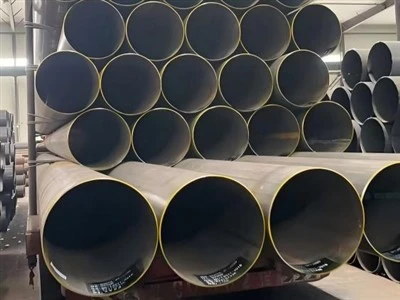
Determining the load - bearing capacity of EN 10219 hollow sections is a crucial aspect for various construction and engineering applications. As a supplier of EN 10219 HOLLOW SECTIONS, I understand the significance of providing accurate information about load - bearing capacity to our customers. In this blog, I will delve into the key factors and methods used to determine the load - bearing capacity of these hollow sections.
Understanding EN 10219 Hollow Sections
EN 10219 is a European standard that specifies the technical delivery conditions for cold - formed welded structural hollow sections of non - alloy and fine grain steels. These hollow sections are widely used in construction, machinery, and other industries due to their high strength - to - weight ratio, excellent corrosion resistance, and ease of fabrication.


The sections can come in different shapes such as circular, square, and rectangular. Each shape has its own unique characteristics and load - bearing capabilities. For example, circular hollow sections are often preferred in applications where torsional loads are significant, while square and rectangular sections are more suitable for applications with bending and axial loads.
Factors Affecting Load - Bearing Capacity
- Material Properties
The material of the EN 10219 hollow section plays a vital role in determining its load - bearing capacity. The yield strength and ultimate tensile strength of the steel are key parameters. Higher yield strength means the section can withstand greater stress before plastic deformation occurs. For instance, if we are using a high - strength steel grade, the load - bearing capacity of the hollow section will be higher compared to a lower - strength grade. - Section Geometry
The shape and dimensions of the hollow section have a direct impact on its load - bearing capacity. For circular sections, the diameter and wall thickness are important. A larger diameter and thicker wall will generally result in a higher load - bearing capacity. In the case of square and rectangular sections, the side lengths and wall thickness are critical. The aspect ratio (the ratio of the longer side to the shorter side in a rectangular section) also affects the behavior under load. - Loading Conditions
The type of load applied to the hollow section is a significant factor. There are different types of loads such as axial loads, bending loads, shear loads, and torsional loads. Axial loads act along the axis of the section, while bending loads cause the section to bend. Shear loads act parallel to the cross - section, and torsional loads cause the section to twist. Different loading conditions require different analysis methods to determine the load - bearing capacity.
Methods for Determining Load - Bearing Capacity
- Analytical Methods
Analytical methods are based on theoretical equations and principles of mechanics. For simple loading conditions, such as axial compression or pure bending, there are well - established equations available. For example, the Euler's formula can be used to calculate the critical buckling load of a column under axial compression. However, these analytical methods are often limited to idealized conditions and may not account for all the real - world factors such as imperfections in the section and non - uniform loading. - Numerical Methods
Numerical methods, such as the finite element method (FEM), are more versatile and can handle complex geometries and loading conditions. FEM divides the hollow section into small elements and analyzes the behavior of each element under load. This method can take into account factors such as material nonlinearity, geometric nonlinearity, and contact between different parts. It provides more accurate results compared to analytical methods, especially for complex structures. - Experimental Testing
Experimental testing is the most reliable way to determine the load - bearing capacity of EN 10219 hollow sections. Physical tests can be conducted on actual specimens to measure the load at which the section fails. These tests can be used to validate the results obtained from analytical and numerical methods. However, experimental testing is time - consuming and expensive, and it may not be feasible for every project.
Case Studies
Let's consider a case where a construction project requires the use of EN 10219 hollow sections for a building frame. The engineer needs to determine the load - bearing capacity of the sections to ensure the safety of the structure.
- Initial Design
The engineer first selects the appropriate shape and size of the hollow section based on the expected loads. For example, if the structure is mainly subjected to bending loads, a rectangular section may be chosen. The engineer then uses analytical methods to make an initial estimate of the load - bearing capacity. - Numerical Analysis
To get a more accurate result, the engineer performs a finite element analysis. The FEM model takes into account the material properties, section geometry, and loading conditions. The analysis shows the distribution of stress and strain in the section under different loads. - Experimental Validation
To confirm the results of the numerical analysis, a few specimens of the selected hollow section are tested in the laboratory. The experimental results are compared with the numerical results, and any discrepancies are analyzed.
Importance of Accurate Load - Bearing Capacity Determination
Accurately determining the load - bearing capacity of EN 10219 hollow sections is essential for several reasons. Firstly, it ensures the safety of the structure. If the load - bearing capacity is underestimated, the structure may fail under normal operating conditions, leading to potential disasters. Secondly, it helps in optimizing the design. By accurately knowing the load - bearing capacity, the engineer can select the most appropriate section size and material, which can reduce the cost of the project.
Related Products
As a supplier of EN 10219 HOLLOW SECTIONS, we also offer related products such as DN40 Galvanized Steel Pipe, EN 10025 S275JR Steel Tube, and EN 10025 Steel Pipes. These products are widely used in various industries and can complement the use of EN 10219 hollow sections.
Conclusion
Determining the load - bearing capacity of EN 10219 hollow sections is a complex but essential task. By considering factors such as material properties, section geometry, and loading conditions, and using appropriate methods such as analytical, numerical, and experimental techniques, we can accurately determine the load - bearing capacity. As a supplier, we are committed to providing high - quality EN 10219 hollow sections and related products. If you are interested in purchasing our products or need more information about load - bearing capacity determination, please feel free to contact us for procurement and further discussions.
References
- Eurocode 3: Design of steel structures - Part 1 - 1: General rules and rules for buildings
- "Steel Construction Manual" by the American Institute of Steel Construction
- "Mechanics of Materials" by R.C. Hibbeler