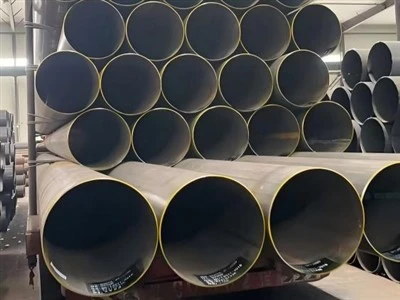
Hey there! As a seamless pipe supplier, I often get asked if seamless pipes are environmentally friendly. It's a great question, and one that I'm more than happy to dive into.
Let's start by understanding what seamless pipes are. Seamless pipes are made from a solid round steel billet that is heated and then pierced through the center to create a hollow tube. This process results in a pipe with no welded seams, which gives it several advantages over welded pipes, including better strength and durability.
Now, let's talk about the environmental aspect. When it comes to determining if seamless pipes are environmentally friendly, we need to look at a few key factors: production, usage, and end - of - life.
Production
The production of seamless pipes does require a significant amount of energy. Heating the steel billets to high temperatures and then piercing them is an energy - intensive process. However, modern manufacturing techniques have come a long way in reducing energy consumption. Many seamless pipe manufacturers, including us, are constantly investing in new technologies to make the production process more energy - efficient.


For example, some mills use advanced furnace designs that can better control the heating process, reducing waste heat and thus saving energy. Also, the use of recycled steel in the production of seamless pipes has become more common. Recycling steel reduces the need for mining new iron ore, which is a very energy - consuming and environmentally impactful process. When we use recycled steel, we're essentially giving old steel a new life, which is great for the environment.
Usage
Seamless pipes have a wide range of applications, from oil and gas transportation to construction and manufacturing. In many of these applications, seamless pipes offer better performance compared to other types of pipes. For instance, in high - pressure applications, seamless pipes are often the preferred choice because of their superior strength.
This better performance means that seamless pipes can last longer. A longer lifespan means less frequent replacement, which in turn reduces the overall environmental impact. If a pipe doesn't need to be replaced as often, there's less energy and resources spent on manufacturing new pipes and transporting them to the site.
Let's take the oil and gas industry as an example. Seamless pipes are used to transport oil and gas over long distances. Their seamless construction reduces the risk of leaks, which is not only important for safety but also for the environment. A leak in an oil or gas pipeline can have a devastating impact on the surrounding ecosystem, so using high - quality seamless pipes helps prevent such disasters.
End - of - Life
When a seamless pipe reaches the end of its useful life, it can be recycled. Steel is one of the most recycled materials in the world. Recycling steel requires significantly less energy compared to producing new steel from raw materials. The recycled steel can then be used to make new seamless pipes or other steel products.
This ability to be recycled makes seamless pipes a more sustainable option in the long run. It's a closed - loop system where the material can be reused again and again, reducing the demand for virgin materials.
Now, let's talk about some of our specific seamless pipe products. We offer a variety of seamless pipes, including ASTM A53 SEAMLESS STEEL PIPE. This type of pipe is widely used in general construction and mechanical applications. It has good strength and is relatively easy to work with.
Another popular product is ASME SA106 / ASTM A106 SMLS Pipe. This pipe is designed for high - temperature and high - pressure applications, such as in power plants and refineries. Its seamless construction ensures reliable performance even under extreme conditions.
We also have Boiler Steel Pipe, which is specifically designed for use in boilers. These pipes need to be able to withstand high temperatures and pressures, and our seamless boiler pipes are up to the task.
In conclusion, while the production of seamless pipes does have some environmental impacts, overall, they can be considered environmentally friendly. Their long lifespan, ability to be recycled, and superior performance in various applications all contribute to a lower environmental footprint.
If you're in the market for seamless pipes, whether it's for a small construction project or a large industrial application, we'd love to talk to you. We can provide you with high - quality seamless pipes at competitive prices. Just reach out to us, and we'll work with you to find the right solution for your needs.
References
- "Handbook of Seamless Pipe Manufacturing"
- "Environmental Impact of Steel Production" by various industry research papers
- Industry reports on sustainable manufacturing in the steel sector