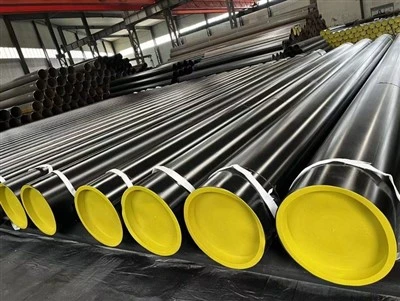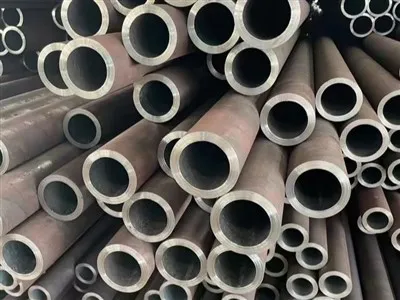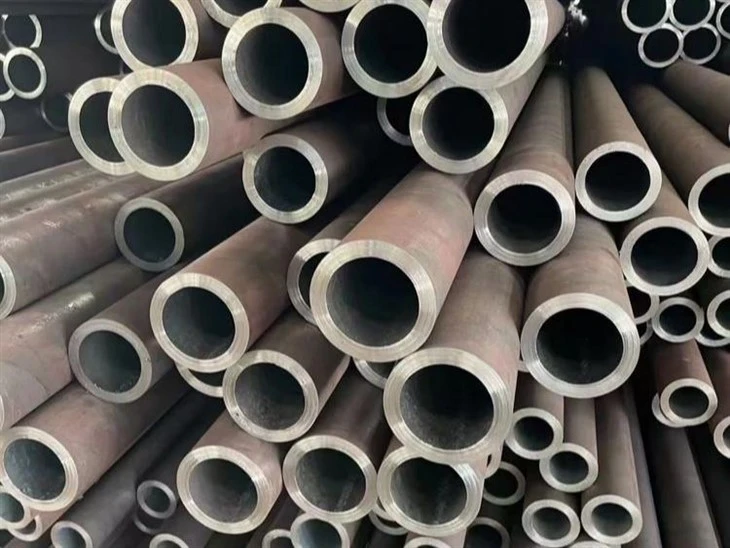
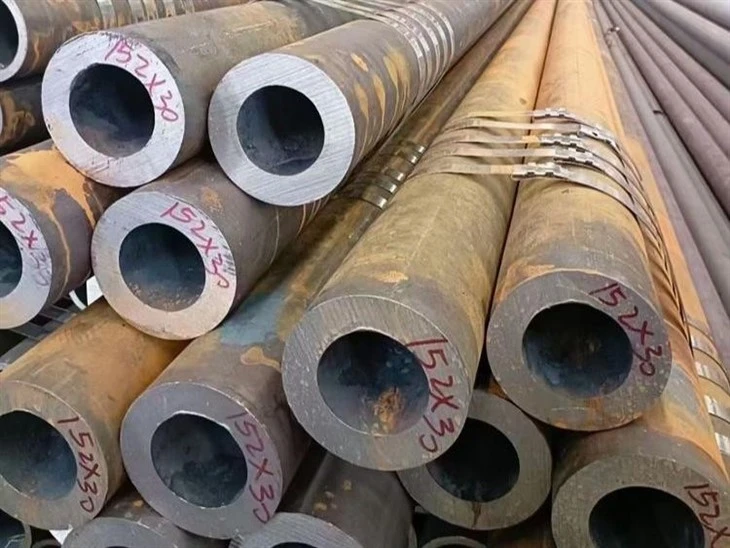
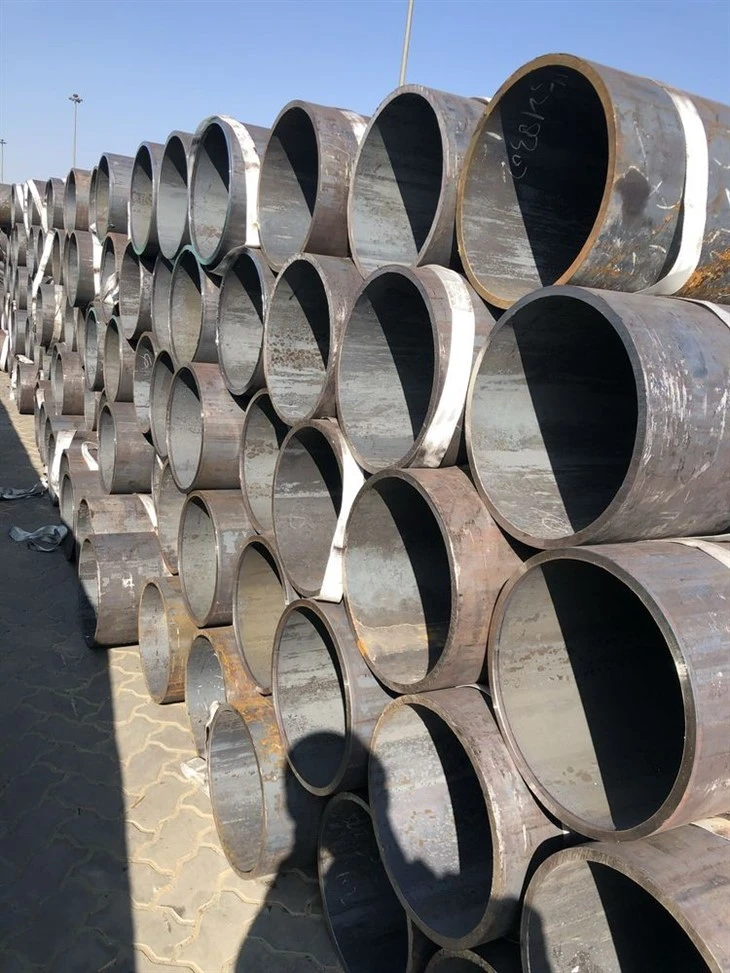
Tianjin Brisk Steel is one of the A106 Grade B Seamless Steel Pipe in China. Our products are mainly exported to the Middle East, Southeast Asia, Europe, New Zealand, and other regions.If you would like to learn more about our products, feel free to contact us and send your purchase list.


What ASTM A106 Actually Covers
ASTM A106 is titled "Standard Specification for Seamless Carbon Steel Pipe for High-Temperature Service." The key phrase is high-temperature service - this standard was written for piping systems that will see elevated operating temperatures, not just elevated pressure. It covers three grades (A, B, and C), of which Grade B is by far the most commonly stocked and specified due to its balance of strength and weldability.
Chemical Composition Requirements (Grade B)
| Element | Limit (max unless noted) |
|---|---|
| Carbon (C) | 0.30% max |
| Manganese (Mn) | 0.29% – 1.06% |
| Phosphorus (P) | 0.035% max |
| Sulfur (S) | 0.035% |
| Silicon (Si) | 0.10% min |
| Chromium (Cr) | 0.40% max |
| Copper (Cu) | 0.40% max |
| Molybdenum (Mo) | 0.15% max |
| Nickel (Ni) | 0.40% max |
| Vanadium (V) | 0.08% max |
The combined limit for Cr + Cu + Mo + Ni + V is also capped under the specification - a detail that's easy to miss if you only check individual elements against the table.
Mechanical Property Requirements (Grade B)
- Tensile strength: 60,000 psi (415 MPa) minimum
- Yield strength: 35,000 psi (240 MPa) minimum
- Elongation: Calculated per specimen basis (varies with wall thickness and specimen size, per the standard's elongation formula - not a flat percentage across all sizes)
A106 Grade B vs. A53 Grade B: The Comparison Buyers Actually Need
These two are frequently confused because they overlap heavily in size range and are sometimes priced similarly, but they are not the same product:
- A106 is written specifically for high-temperature service and has tighter chemistry control (notably on silicon content, which A53 doesn't specify a minimum for).
- A53 covers both seamless and welded (ERW) pipe, and includes a coating/galvanizing option (Type S, Type E, Type F designations) that A106 does not offer.
- A106 is seamless only - there is no welded version under this specification.
- In practice, A106 Grade B is generally the correct choice for process and high-temperature piping, while A53 is common for general structural, low-pressure, and utility-grade applications.
If your project specification calls for A106 specifically, substituting A53 - even if dimensionally identical - is not a compliant substitution.
Testing & Quality Verification
Because failure consequences are more severe in high-pressure service, testing requirements typically go beyond standard mill inspection:
- Hydrostatic testing to a specified test pressure (commonly 1.5× design pressure) on 100% of production
- Ultrasonic testing (UT) for wall thickness verification and internal defect detection
- Eddy current testing (ECT), primarily for thin-wall tubing where UT sensitivity is limited
- Positive Material Identification (PMI), especially important for alloy grades (P11/P22/P91) where mix-ups between similar-looking pipe can lead to serious in-service failure
- Charpy V-notch impact testing for low-temperature or high-toughness requirements
Frequently Asked Questions (FAQ)
Q: What is the maximum operating temperature for A106 Grade B pipe?
A: There's no single fixed maximum stated in A106 itself - allowable stress at a given temperature is determined using ASME B31.3 (or B31.1, depending on the governing code) stress tables, which show how allowable stress decreases as temperature rises. Your piping engineer should confirm allowable stress at your specific design temperature rather than relying on a generic maximum figure.
Q: Can A106 Grade B be used for sour service (H₂S-containing fluids)?
A: Not without additional qualification. Standard A106 Grade B doesn't include the hardness and processing controls required by NACE MR0175/ISO 15156 for sour service. If H₂S exposure is expected, this must be specified separately and verified against sour service requirements - don't assume standard A106 automatically qualifies.
Q: Is A106 Grade B pipe suitable for welding?
A:Yes, A106 Grade B is generally weldable using standard carbon steel welding procedures, and its carbon content (0.30% max) is controlled partly with weldability in mind. However, for heavy wall thicknesses or specific service conditions, appropriate preheat and welding procedure qualification should still be followed per your project's welding code.
Q: What's the difference between A106 Grade A, B, and C?
A:The three grades differ mainly in strength: Grade A has the lowest strength and highest ductility, Grade B is the most commonly used with moderate strength, and Grade C has the highest strength but is less commonly stocked. Grade B is the default choice for most general high-temperature piping unless a specific project reason calls for A or C.


Hot Tags: a106 grade b seamless steel pipe, China a106 grade b seamless steel pipe manufacturers, suppliers, factory, SEAMLESS MECHANICAL PIPE, seamless pipe corrosion resistance, seamless pipe dryer, seamless pipe fitting, seamless pipe grinder, seamless pipe normalization