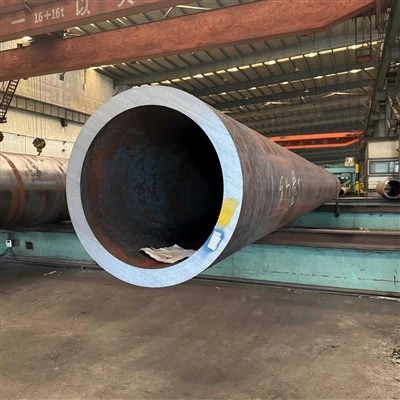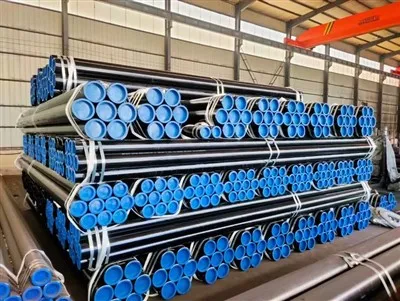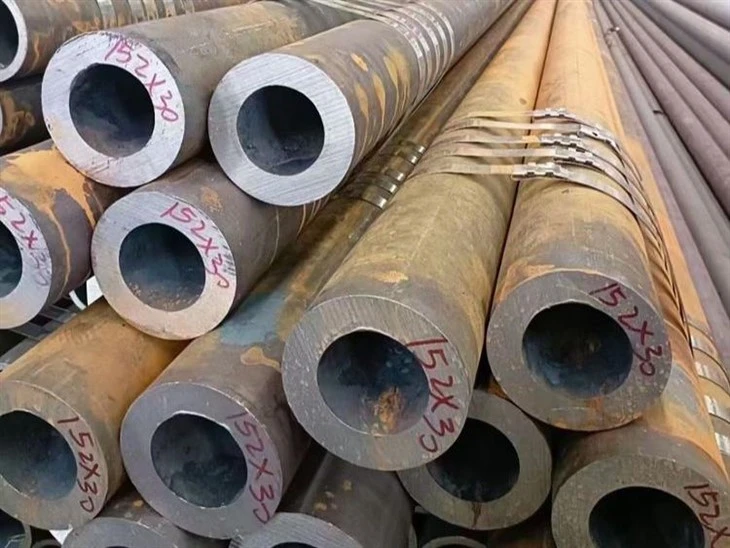
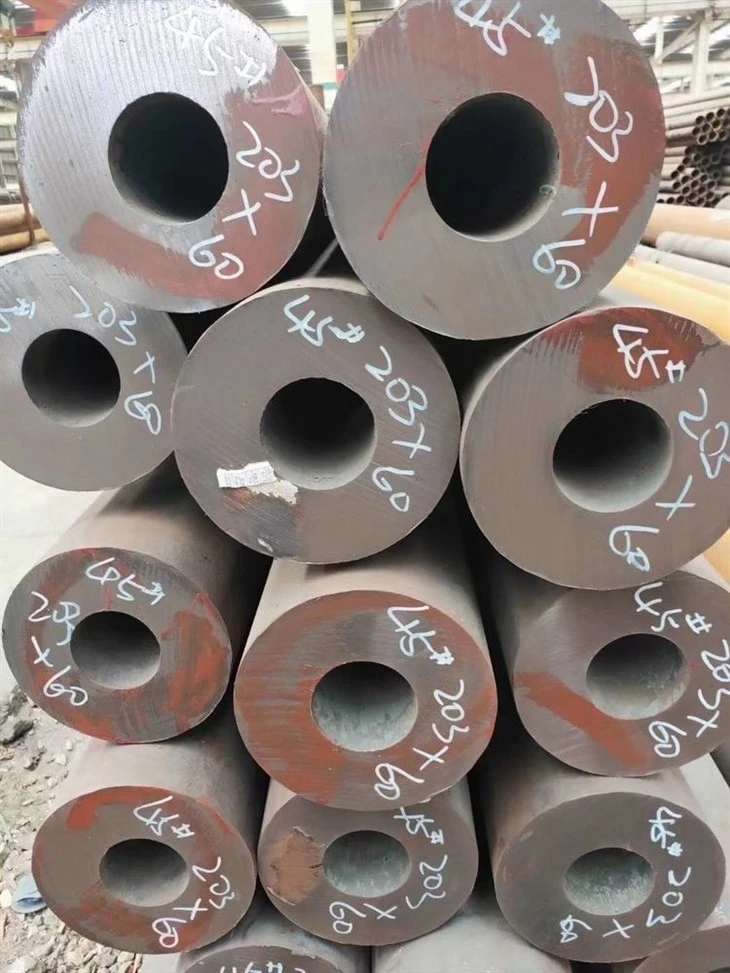
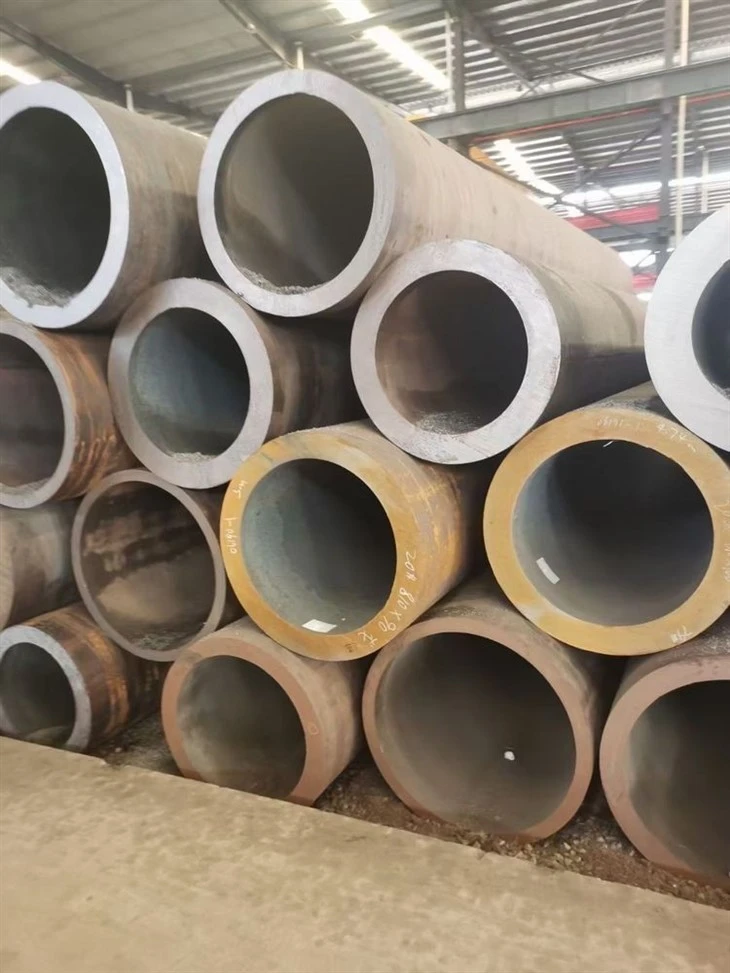
Tianjin Brisk Steel is one of the High Pressure Seamless Pipe in China. Our products are mainly exported to the Middle East, Southeast Asia, Europe, New Zealand, and other regions.If you would like to learn more about our products, feel free to contact us and send your purchase list.


What Actually Determines "High Pressure" Capability
Pressure rating is not a fixed property of a pipe size - it's the outcome of four variables working together:
- Outer diameter (OD) - smaller OD tolerates higher pressure at a given wall thickness
- Wall thickness - thicker wall increases pressure capacity, following Barlow's formula: P = (2 × S × t) / D
- Material yield/tensile strength (SMYS) - higher-strength alloys allow thinner walls for the same pressure
- Design factor / safety margin - set by the governing code, which varies by service class and consequence of failure
This means the same nominal pipe size can be rated for very different pressures depending on wall thickness and material grade - buyers should always confirm the actual calculated pressure rating rather than assuming from size alone.
Wall Thickness / Schedule Reference
High pressure applications typically call for heavier schedules than standard piping:
- Schedule 80 / XS - common minimum for moderate high-pressure service
- Schedule 160 - used for higher-pressure steam and process lines
- XXS (double extra strong) - reserved for the most demanding pressure/temperature combinations
- Custom wall thickness - for hydraulic cylinder tube and specialized pressure vessels, wall thickness is often specified as an exact dimension rather than a standard schedule, based on the honed bore and working pressure of the cylinder
Typical Applications
- Power generation: boiler superheater/reheater tubing, main steam lines, feedwater piping
- Petrochemical processing: high-pressure reactor feed lines, hydroprocessing units, catalytic reforming piping
- Hydraulic systems: cylinder barrel tube, hydraulic press piping, mobile hydraulics
- Pressure vessels: nozzle necks, high-pressure vessel shell courses
- Gas compression: compressor discharge piping, high-pressure gas storage manifolds
Mechanical Properties (API 5L X52 Reference)
- Yield strength: ≥ 359 MPa (52,000 psi)
- Tensile strength: ≥ 455 MPa (66,000 psi)
- Elongation: As per API 5L formula based on wall thickness and diameter
- Charpy impact (PSL2): Minimum absorbed energy per API 5L Annex requirements, tested at specified temperature
Higher grades (X60, X65, X70) allow thinner walls for the same pressure rating, reducing pipe weight and transportation cost - but require careful evaluation of field weldability and available welding procedures.
Testing & Quality Verification
Because failure consequences are more severe in high-pressure service, testing requirements typically go beyond standard mill inspection:
- Hydrostatic testing to a specified test pressure (commonly 1.5× design pressure) on 100% of production
- Ultrasonic testing (UT) for wall thickness verification and internal defect detection
- Eddy current testing (ECT), primarily for thin-wall tubing where UT sensitivity is limited
- Positive Material Identification (PMI), especially important for alloy grades (P11/P22/P91) where mix-ups between similar-looking pipe can lead to serious in-service failure
- Charpy V-notch impact testing for low-temperature or high-toughness requirements
Frequently Asked Questions (FAQ)
Q: What's the difference between high pressure seamless pipe and standard hydraulic tube?
A: Both may be seamless and both handle pressure, but hydraulic cylinder tube is additionally specified with a honed inner bore to a tight dimensional tolerance and controlled surface roughness (Ra) for seal and piston compatibility. Standard high-pressure pipe for piping systems (e.g., boiler or process lines) is not honed and doesn't carry the same bore finish requirements - the two are not interchangeable even at the same nominal pressure rating.
Q:Is PMI testing really necessary, or is a mill certificate enough?
A: A mill certificate documents what the material is supposed to be, but Positive Material Identification (PMI) verifies the actual chemistry of the specific pipe in hand - this matters because alloy grades like P11, P22, and P91 can look identical to carbon steel or to each other. PMI is considered standard practice for critical alloy piping projects precisely because certificate-only verification has led to costly mix-ups in the field.
Q: Can the same pipe size be rated for different pressures?
A: Yes. Pressure rating depends on wall thickness and material grade, not OD alone. The same nominal outer diameter can be supplied in multiple schedules (e.g., Schedule 80, 160, XXS), each rated for a different maximum pressure at a given temperature - always confirm the wall thickness and grade behind a quoted pressure rating, not just the pipe size.
Q: Does high pressure automatically mean I need alloy steel instead of carbon steel?
A: Not necessarily. Carbon steel (e.g., ASTM A106 Grade B) can handle substantial pressure if the wall thickness is sized correctly - alloy steel becomes necessary primarily when operating temperature rises to a point where carbon steel's strength degrades over time (creep) or where sour/corrosive service requires it. Pressure alone, at moderate temperature, is often solved with carbon steel and adequate wall thickness.


Hot Tags: high pressure seamless pipe, China high pressure seamless pipe manufacturers, suppliers, factory, ASTM A333 GR 6 SEAMLESS PIPE, seamless pipe association, seamless pipe connection, seamless pipe dimensions, seamless pipe market, seamless pipe shipping