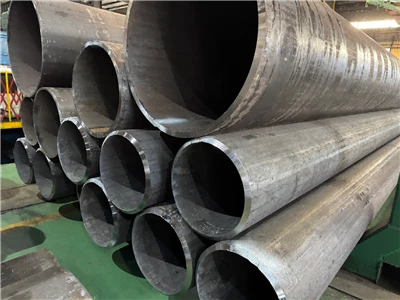
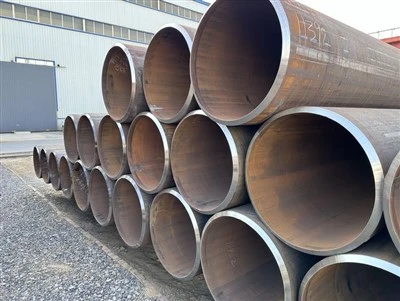
Tianjin Brisk Metalwork Co., Ltd. is one of the leading manufacturers and suppliers of lsaw pipe for marine piling in China. We have world-leading production equipment and strong manufacturing capabilities. Please feel free to buy bulk durable lsaw pipe for marine piling from our factory.
Tianjin Brisk Steel is one of the LSAW Pipe for Marine Piling in China. Our products are mainly exported to the Middle East, Southeast Asia, Europe, New Zealand, and other regions.If you would like to learn more about our products, feel free to contact us and send your purchase list.


Product Overview
| Item | Specification |
|---|---|
| Outside diameter | 406mm - 3,000mm (16" - 118") |
| Wall thickness | 8mm - 50mm+ (corrosion allowance available on request) |
| Length | Up to 18m per section, factory beveled for field splicing |
| Standards we supply to | API 5L, ASTM A252, EN 10219 |
| Steel grade | X42-X70 (API 5L), Grade 2/3 (A252), S355/S460 (EN) |
| Coating options | FBE, coal tar epoxy, tape wrap, bare/CP-ready |
| Testing | 100% UT + RT seam inspection, Charpy impact, full hydrostatic test |
| End finish | Beveled for welding, or machined flush for driving shoe fitting |
Send us your diameter, wall thickness, and standard, and we will confirm mill availability, delivery time, and pricing within one business day.
Why Buyers Choose Our LSAW Pipe for Marine Projects
Marine piling is not a forgiving place to discover a supplier's weak point. We built our marine piling line around three things buyers consistently ask for:
- Heavy wall at large diameter, in one plate - our JCOE line forms and welds plate up to 50mm thick at diameters most seamless or SSAW mills cannot match together, so you are not compromising on either dimension to get the wall thickness your corrosion allowance calls for.
- Zone-specific coating done in-house - FBE, coal tar epoxy, and tape wrap systems are applied under one roof, so the atmospheric, splash, and submerged zones of the same pile can carry different, correctly matched protection without a second vendor and a second lead time.
- Full documentation, every heat - mill test certificates, UT/RT seam reports, and Charpy results are issued per heat number and matched to your PO, so your inspector or class society is not chasing paperwork after the pipe has already shipped.
The Corrosion Zone Advantage
Most piling failures we see traced back to a wall-thickness spec don't come from a bad calculation - they come from treating the whole pile as one corrosion environment when it isn't. A single pile passes through several zones, and each one attacks steel at a different rate:
- Splash zone - the highest wall-loss rate on the pile, caused by repeated wetting and drying that keeps both oxygen and salt available at the surface
- Tidal zone - similar mechanism, slightly lower rate
- Atmospheric zone - moderate, fairly steady corrosion
- Submerged zone - lower rate, and the only zone where cathodic protection is actually effective
- Mudline / embedded zone - lowest rate, oxygen-limited soil environment
We quote wall thickness and coating by zone when a project needs it, not as a flat spec across the whole pile length. That means the splash zone gets the extra wall or the coal tar epoxy system it needs, without over-speccing (and overpaying for) the same protection on the submerged section, where cathodic protection is already doing the job.
Standards We Work To
There is no single dedicated LSAW-for-marine-piling standard, so we quote against whichever combination your project actually calls for:
- ASTM A252 - the standard US piling base spec; we add API 5L-level seam NDT and Charpy testing on top when the diameter or fatigue loading calls for it
- API 5L - used when the pile also needs pipeline-grade chemistry and toughness, common on offshore jacket piles
- API RP 2A-WSD - governs the design-side driving stress and fatigue checks; we build to the pipe requirements this generates
- EN 10219 / GB/T 9711 - for projects under European or Chinese design codes
If your spec sheet only references A252 grade and tolerance with no NDT or impact-testing detail, flag it to us before we quote - we will tell you upfront whether the diameter and service conditions call for more testing than A252 requires on its own, rather than let it surface at inspection.
Where This Pipe Is Used
- Port and wharf fender piles, berthing dolphins
- Bridge foundations over water
- Offshore platform jacket and conductor piles
- Breakwaters and coastal protection structures
- Mooring dolphins and marine terminal support piles
How This Solved a Real Order
A port fender pile order came to us with a single wall thickness specified for the full 24m pile, no separate allowance for the splash zone. We flagged the gap during quoting and proposed a corrosion allowance for the tidal and splash sections plus a coal tar epoxy system in that band, keeping the submerged section on standard FBE with cathodic protection. The customer approved the revised spec before fabrication - avoiding what would otherwise have shown up as accelerated wall loss in the splash zone years into service, and a costly retrofit wrap on an installed structure.
FAQ
Q: Does the same wall thickness need to apply along the whole pile?
A: Not usually once corrosion is factored in. We commonly quote a base structural thickness plus an added corrosion allowance concentrated in the splash and tidal zones, where wall loss is fastest.
Q: Can cathodic protection replace coating in the splash zone?
A: No. CP needs continuous contact with an electrolyte to work, and the splash zone cycles wet and dry. We recommend coal tar epoxy or tape wrap there instead, with CP reserved for the submerged and mudline sections.
Q: Is ASTM A252 enough on its own for a large-diameter marine pile?
A: Often not without additions. We commonly supply A252 grade and dimensional tolerance with API 5L-level seam NDT and Charpy testing layered on - we can confirm exactly what your diameter and service condition require when you send your spec.
Q: How is the driving shoe fitted, and does it affect coating?
A: The shoe end is typically left uncoated for field welding or bolting, then coated after attachment. We flag this in our coating scope so it's not missed as an uncoated gap once the pile is driven.


Hot Tags: lsaw pipe for marine piling, China lsaw pipe for marine piling manufacturers, suppliers, factory, aboveground lsaw pipe, coupled steel pipe, curved lsaw pipe, gb standard lsaw pipe, precisely cut steel pipe, steel pipe for underground pipeline