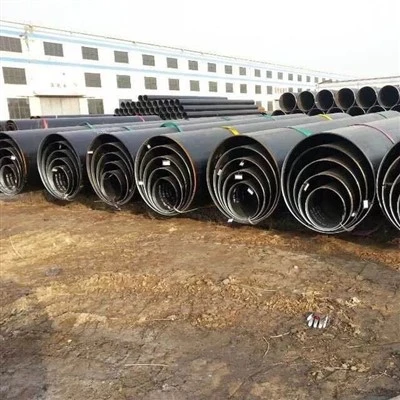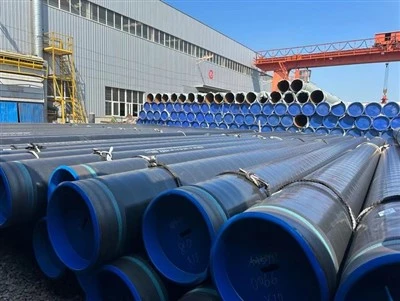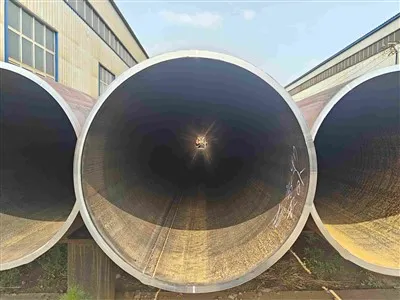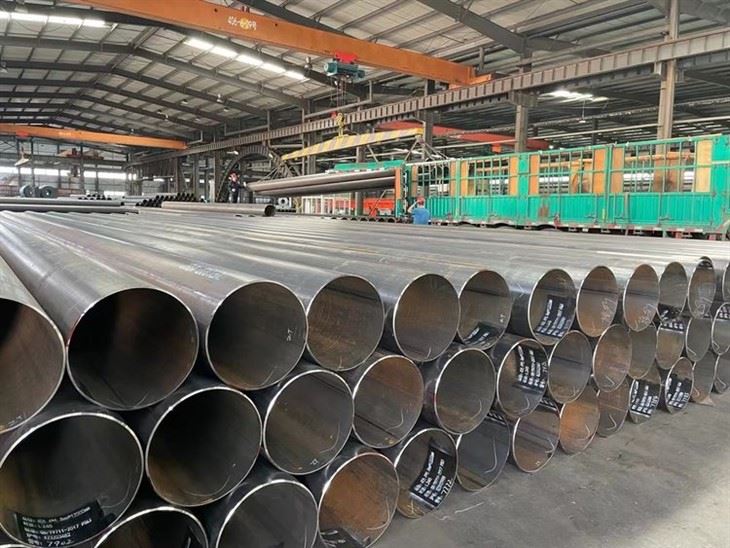
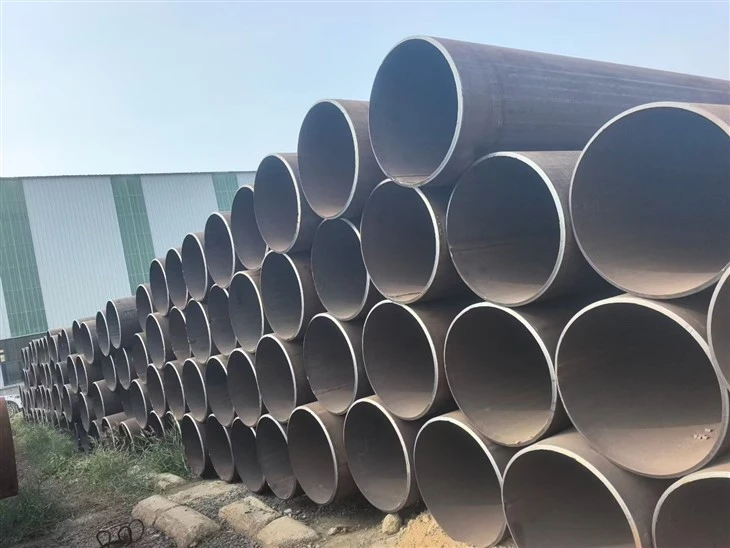
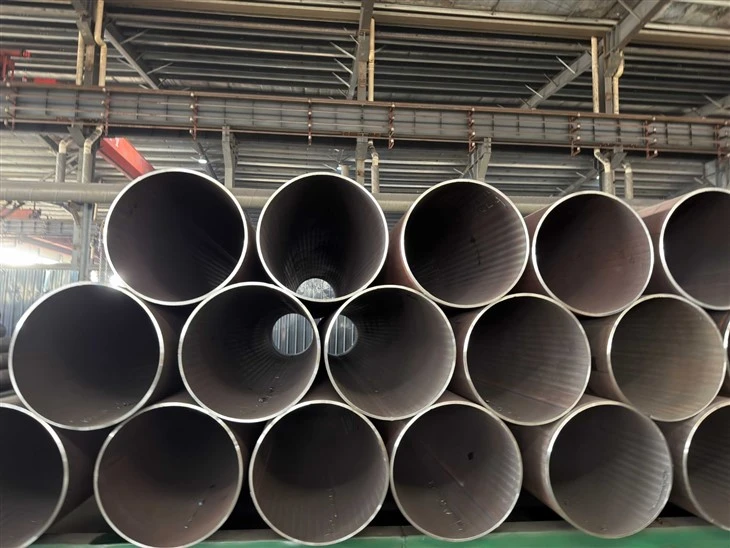
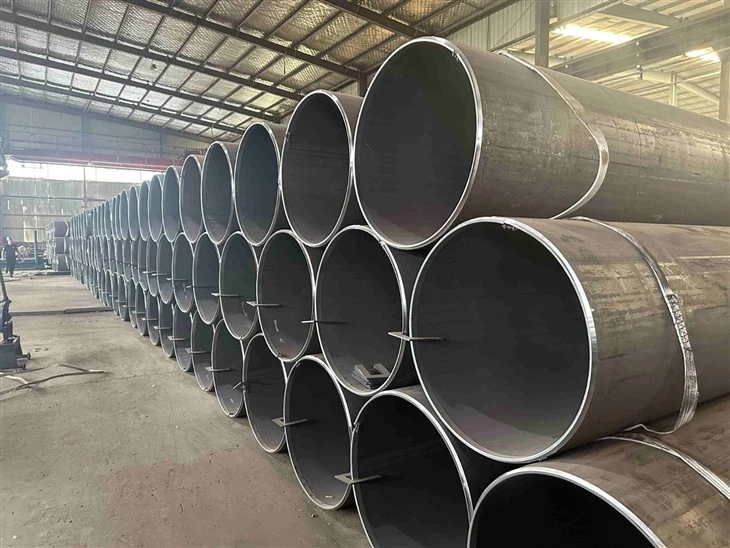
Tianjin Brisk Steel is one of the Hot-Finished EN10210 LSAW PIPE in China. Our products are mainly exported to the Middle East, Southeast Asia, Europe, New Zealand, and other regions.If you would like to learn more about our products, feel free to contact us and send your purchase list.


Quick Specification Reference
| Item | Typical Range |
|---|---|
| Standard | EN 10210-1 / EN 10210-2 |
| Process | LSAW (longitudinal submerged arc welded from plate) followed by post-weld normalizing |
| Delivery condition | N or NL (normalized / normalized, low-temperature impact tested) |
| Shape | Circular (round), square, rectangular |
| Outside diameter | Approximately 400 mm to 2000+ mm |
| Wall thickness | 6 mm to 60 mm+ |
| Common grades | S275NH/NLH, S355NH/NLH, S420NH/NLH, S460NH/NLH |
| Length | Typically up to 12 m, project-dependent |
| Surface finish | Mill/black, primed, or hot-dip galvanized |
What "Hot-Finished" Actually Means on a Welded Section
EN 10210 defines hot-finished two ways: formed hot (rolling or extrusion, with or without further heat treatment), or formed cold and then heat treated above 580 degrees C to reach a metallurgical condition equivalent to a genuinely hot-formed section. LSAW-produced EN 10210 pipe takes the second route. The plate is cold-formed and welded into a tube exactly as it would be for EN 10219 - the difference is what happens next: the completed tube goes through a normalizing furnace, which relieves the residual stress locked in by cold forming and refines the grain structure back to what a hot-rolled section would have.
That's the entire technical distinction between an EN 10219 cold-formed LSAW tube and an EN 10210 LSAW tube of the same size and starting process - the normalizing heat treatment, and the mechanical property guarantees (particularly impact toughness) that come with it.
Why Large Diameters Need This Route
Seamless piercing mills and hot-rolling lines have a practical size ceiling; true hot-formed EN 10210 seamless or continuously-welded tube tops out well below the diameters that structural columns, large pilings, offshore jackets, and bridge members often need. LSAW plate-forming has no such ceiling on diameter - it's limited mainly by plate width and rolling capacity. Normalizing after welding is what lets that large-diameter, plate-formed pipe still carry an EN 10210 hot-finished designation and its associated guaranteed toughness, rather than being limited to the lower-toughness cold-formed EN 10219 classification.
Production Sequence
- Steel plate is cut to width for the required tube circumference and edge-prepared for welding.
- The plate is formed into a cylindrical shape, typically on a JCOE (J-C-O-Expand) press line for large diameters.
- The longitudinal seam is welded from both the inside and outside using submerged arc welding (SAW), building full weld penetration.
- The seam and adjacent plate are inspected by ultrasonic and/or radiographic testing.
- The completed tube is heated in a normalizing furnace above 580 degrees C and held to allow full metallurgical transformation, then air cooled.
- The tube is re-checked for dimensional tolerance, straightness, and roundness after heat treatment, since normalizing can shift these slightly.
- Mechanical testing (tensile, and Charpy impact for N/NL delivery) is carried out on treated material, and the pipe is hydrostatically tested and certified.
Where This Grade of Pipe Gets Specified
Large-diameter structural columns and piles. Where the connection design or governing code specifically calls for EN 10210 rather than EN 10219, at a diameter beyond what seamless or continuously-formed hot mills can supply.
Offshore and marine structures. Jacket legs, braces, and similar members where low-temperature impact toughness (NLH grades) and freedom from cold-forming residual stress are part of the design basis, not just a nice-to-have.
Bridges and dynamically loaded structures. Fatigue-sensitive members benefit from the more uniform, stress-relieved microstructure that normalizing restores after cold forming.
Projects where fire performance matters. Normalized material behaves more predictably under fire-condition heating than an as-cold-formed section, since much of the relevant strength reduction behavior assumed in fire design is based on hot-finished, not cold-formed, properties.
FAQ
Q: Does the weld seam get weaker after normalizing?
A: No - normalizing is applied to relieve stress and refine grain structure across the whole tube, weld included, and is part of what qualifies the finished pipe's toughness properties in the first place. It doesn't degrade the weld; it's a required part of achieving the certified NH/NLH properties.
Q: How can I tell if a "EN 10210" quote is actually going through normalizing, or just cold-formed and welded?
A: Ask directly for the heat treatment record and Charpy impact test results on the mill test report. A genuine EN 10210 N/NLH delivery will show both; their absence means the material is effectively EN 10219-equivalent regardless of what standard is printed on the paperwork.
Q: Is EN 10210 LSAW pipe always round, or available in square/rectangular too?
A: Both are covered by the standard, but LSAW is a round-pipe process. Large-diameter square and rectangular EN 10210 sections are typically produced by welding flat plate segments rather than through LSAW forming - confirm the actual process with the mill if a non-round shape is needed at large size.
Q: What's the practical size boundary between hot-rolled/seamless EN 10210 and LSAW-normalized EN 10210?
A: It varies by mill capability, but as a general guide, seamless and continuously hot-formed product covers small to medium diameters, while LSAW-plus-normalizing becomes the practical route once diameter moves into the large-diameter range that seamless piercing mills can't reach.


Hot Tags: hot-finished en10210 lsaw pipe, China hot-finished en10210 lsaw pipe manufacturers, suppliers, factory, chemical industry lsaw pipe, large diameter lsaw pipe, lightweight steel pipe, longitudinally welded pipe, steel pipe for oil delivery, steel pipe with high strength and toughness