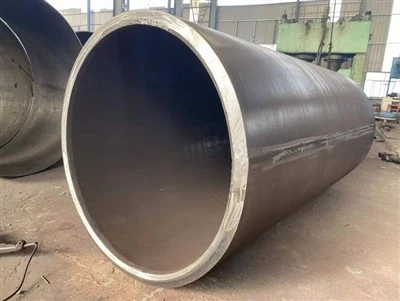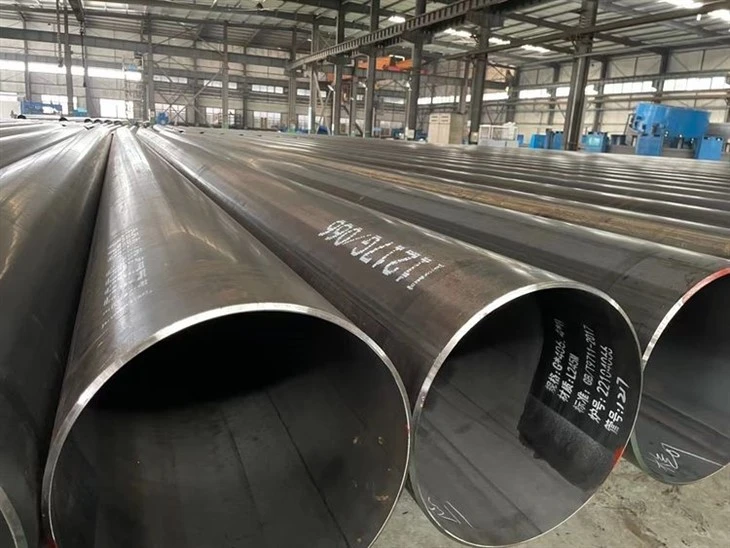
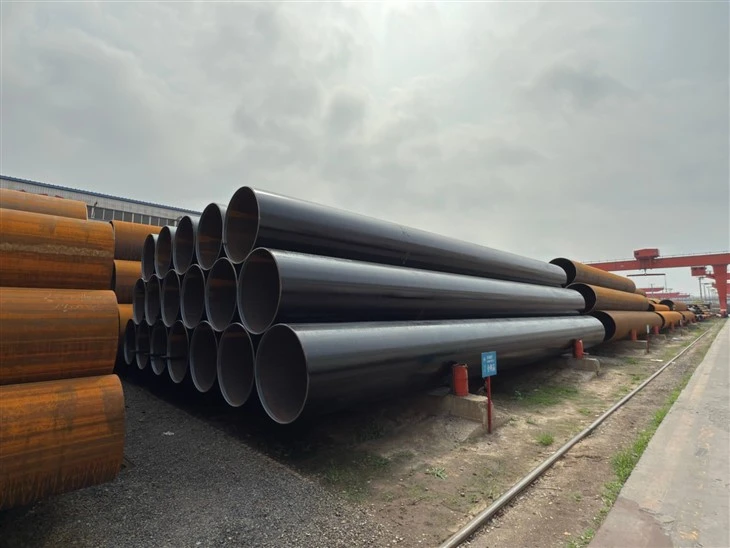
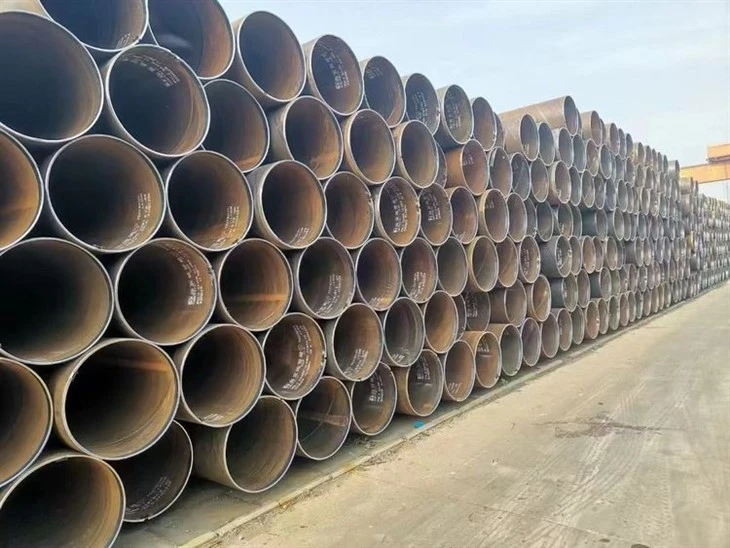
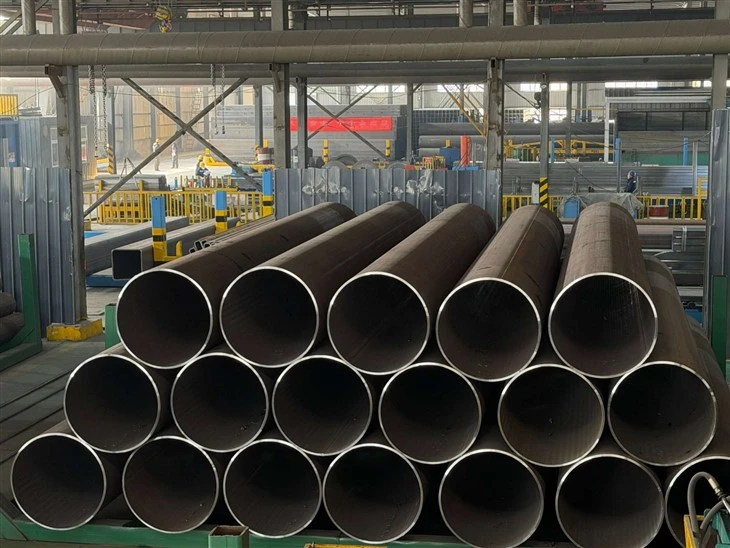
Tianjin Brisk Metalwork Co., Ltd. is one of the leading manufacturers and suppliers of astm a53 engineering structural pipes in China. We have world-leading production equipment and strong manufacturing capabilities. Please feel free to buy bulk durable astm a53 engineering structural pipes from our factory.
Tianjin Brisk Steel is one of the Astm A53 Engineering Structural Pipes in China. Our products are mainly exported to the Middle East, Southeast Asia, Europe, New Zealand, and other regions.If you would like to learn more about our products, feel free to contact us and send your purchase list.


Quick Spec Reference
| Item | ASTM A53 Grade B (structural use) |
|---|---|
| Governing structural design reference | AISC 360 / AISC Steel Construction Manual - recognized round pipe material |
| Minimum yield strength | 35,000 psi (241 MPa) |
| Minimum tensile strength | 60,000 psi (415 MPa) |
| Size designation | NPS and Schedule (e.g., 6" Std, 4" Sch 80) - not HSS OD×wall notation |
| Common structural sizes | NPS 2" through NPS 12", Schedule 40 and Schedule 80 most common |
| Ends | Plain end (weld), or threaded and coupled - an option A500 round HSS generally doesn't offer |
| Weldability | Standard structural welding procedures apply; no supplementary CVN toughness testing by default |
The Yield Strength Gap That Actually Matters
This is the single most consequential technical fact for anyone specifying A53 pipe structurally: A53 Grade B's minimum yield strength of 35 ksi is lower than ASTM A500 Grade B round HSS's 42 ksi, and lower still than Grade C round HSS's 46 ksi. A drawing note that just says "6" pipe" or references an HSS size without naming the material standard invites a fabricator to price whichever product is cheaper or more available - and if that turns out to be A53 where the engineer's calculation assumed A500 Grade B capacity, the installed member is carrying roughly 17% less design yield strength than the drawing's math assumed. This isn't a defect in A53 pipe; it's a mismatch between what got specified and what got calculated, and it only becomes visible if someone checks the material standard against the design basis before fabrication.
Reading Pipe Size Callouts on Structural Drawings
A53 pipe is sized by Nominal Pipe Size (NPS) and schedule - "NPS 6 Standard," "NPS 4 Schedule 80" - while structural HSS tube is sized by actual outside diameter and wall thickness, such as "HSS 6.625×0.280." These frequently describe dimensionally identical or near-identical members, but the naming conventions don't map to each other at a glance. A fabricator pulling stock based on an NPS callout and a detailer who modeled the connection based on an HSS designation can end up cross-referencing two different tables to confirm they're even discussing the same physical pipe - a coordination step that's easy to skip and a common source of RFIs late in a project.
Where Structural A53 Pipe Actually Gets Used
- Bollards - Schedule 40 or 80 pipe, typically concrete-filled, protecting building entries, loading docks, and fuel dispensers
- Handrail and guardrail systems - smaller NPS sizes (1-1/4" to 2") where threaded pipe fittings and flanges are often used for post bases and rail connections, taking advantage of A53's threaded-end availability
- Sign and light pole structures - pipe shafts for lower-height, lower-load sign and lighting structures where a full HSS or tapered pole isn't warranted
- Low-rise building columns - pipe columns in light industrial and agricultural buildings, often filled with concrete for added axial capacity
- Site and safety structures - fence line posts, vehicle barriers, and temporary structural bracing where round pipe's threaded-connection option simplifies field assembly compared to welded HSS
FAQ
Q: Can ASTM A53 pipe be substituted for ASTM A500 round HSS on a structural drawing?
A: Only if the engineer of record confirms it - the two have different minimum yield strengths, and a substitution changes the actual capacity of the member even when the outside dimensions match exactly.
Q: Does A53 pipe come with documentation suitable for a structural submittal?
A: Yes - a standard A53 mill test report showing chemistry, tensile, and yield results is generally sufficient for submittal purposes, provided the design calculation was based on A53's actual mechanical properties rather than assumed HSS values.
Q: Are threaded A53 pipe connections acceptable in place of welded HSS connections?
A: For applications like handrail and guardrail systems, threaded connections are standard practice and one of A53's practical advantages over HSS tube, which is typically only available plain-end for welding. Load-bearing structural connections should still follow the engineer's specified connection design.
Q: Is A53 pipe permitted in seismic-force-resisting systems?
A: Generally not without supplementary toughness testing or engineer approval - seismic design typically calls for a material standard with specified ductility performance, which base A53 doesn't include.


Hot Tags: astm a53 engineering structural pipes, China astm a53 engineering structural pipes manufacturers, suppliers, factory, duplex stainless steel lsaw pipe, heavyweight steel pipe, steel lsaw pipe, steel pipe for water, steel pipe with stable performance, super duplex stainless steel lsaw pipe