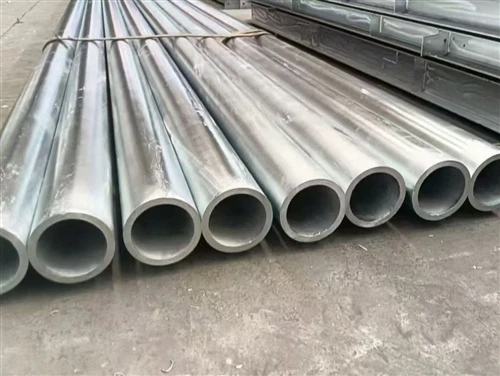
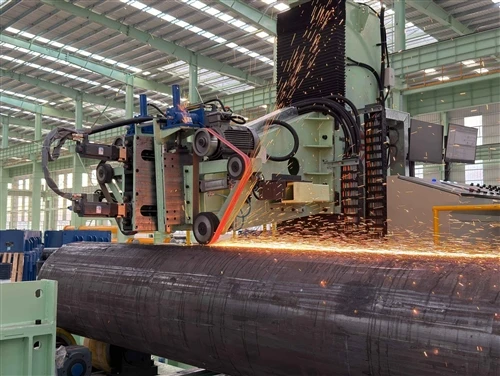
Steel is strong, affordable and easy to fabricate, but left unprotected it reacts with oxygen and moisture and turns into rust. Rust is not only cosmetic. It flakes away, thins the pipe wall, weakens joints and eventually causes leaks or structural failure. Hot-dip galvanizing is the most widely used way to slow that process, and it works through two protection mechanisms at once: a physical barrier and sacrificial (galvanic) protection.
This guide explains how those mechanisms work, what decides how long a zinc coating lasts, where galvanized pipe is not the right answer, and how to check quality before you place an order.
What Hot-Dip Galvanizing Actually Does
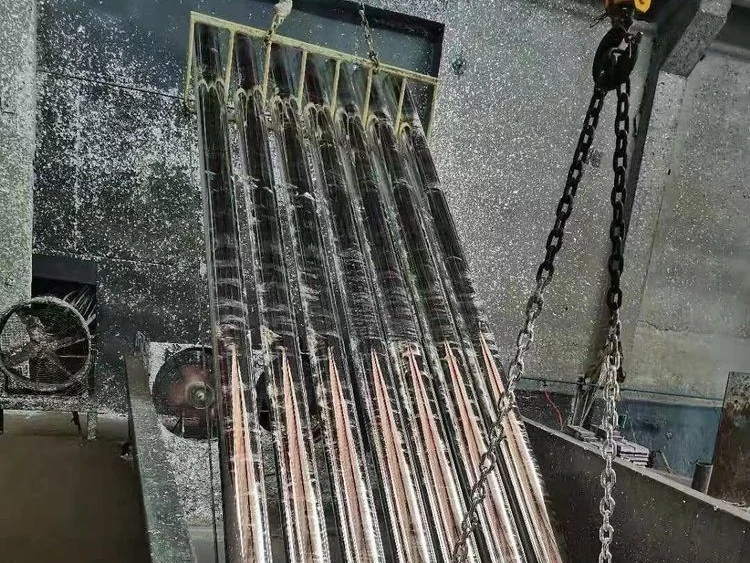
In hot-dip galvanizing, the cleaned pipe is dipped into a bath of molten zinc at roughly 450 degrees Celsius. The zinc reacts with the iron at the surface and builds a coating in layers:
- Zinc-iron alloy layers grow directly out of the steel surface. They are metallurgically bonded to the base metal, which is why the coating is hard to peel off.
- An outer layer of nearly pure zinc forms on top as the pipe is withdrawn from the bath.
Because the pipe is immersed, molten zinc reaches the outside surface, the edges, the corners and, when the pipe is vented properly, the inside surface as well. That complete coverage is something brush or spray paint struggles to match on a hollow section.
Mechanism One: The Physical Barrier
The first line of defence is simple. A dense zinc layer sits between the steel and the environment, so oxygen, water vapour, rain and condensation cannot reach the iron directly.
Zinc also protects itself. When exposed to air and moisture, its surface slowly forms a thin film of zinc oxide, zinc hydroxide and, finally, basic zinc carbonate. This patina is stable and adheres tightly, and it makes the zinc corrode far more slowly than steel would. This is why a galvanized surface often dulls from bright silver to matte grey over the first months in service. It is a sign the protective film is forming, not a sign of failure.
Mechanism Two: Sacrificial (Galvanic) Protection
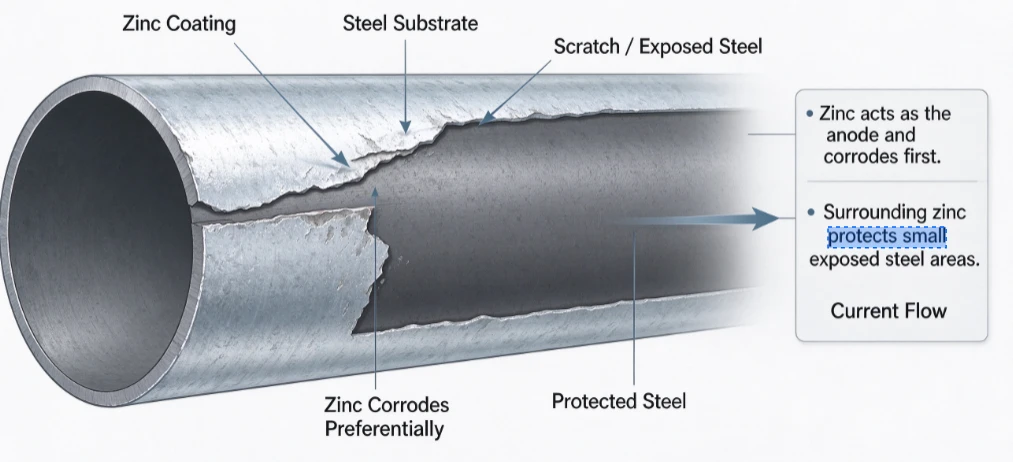
The second mechanism is what makes galvanizing different from most paint systems. Zinc is more electrochemically active than iron. When both are exposed to moisture at the same time, zinc becomes the anode and corrodes first, while the steel becomes the cathode and is protected.
This has a practical consequence. If the coating is scratched or a cut edge is exposed, the surrounding zinc continues to protect the bare steel. Small damaged areas, typically a few millimetres wide, stay protected as the zinc nearby slowly sacrifices itself. Paint on steel behaves differently: once the film is breached, rust can creep underneath it.
Galvanized Pipe vs Black Pipe
Black pipe has no coating. Its natural mill surface may carry a light oil film or varnish, but that only slows surface rust for a short time.
| Property | Black Pipe | Hot-Dip Galvanized Pipe |
|---|---|---|
| Surface protection | None, or a light oil or varnish film | Metallurgically bonded zinc coating |
| Outdoor exposure | Rusts within weeks to months | Protected for many years, depending on environment |
| Damage tolerance | Rust starts at any scratch | Sacrificial protection around small damage |
| Upfront cost | Lowest | Higher |
| Maintenance | Needs repainting and inspection | Often low maintenance |
| Typical use | Indoor, dry or painted structures | Outdoor, humid, coastal or long-life installations |
Black pipe is not "worse"; it is the right choice when you plan to paint or coat it yourself after fabrication, or when it stays in a dry indoor environment. Galvanized pipe is the better choice when you want protection built in and low maintenance later.
What Decides How Long the Zinc Lasts?
Two factors matter most: how thick the coating is and how fast zinc corrodes where the pipe is installed.
Coating thickness
Under common hot-dip standards, such as EN ISO 1461, thickness depends mainly on the steel wall thickness:
| Steel Thickness | Minimum Average Zinc Coating |
|---|---|
| 1.5 mm to under 3 mm | about 55 microns |
| 3 mm to under 6 mm | about 70 microns |
| 6 mm and above | about 85 microns |
An 85-micron coating holds roughly 600 grams of zinc per square metre of surface. By comparison, continuously pre-galvanized strip, such as Z275, carries about 275 grams per square metre on both sides combined, which is roughly 20 microns per side. That difference explains why hot-dip galvanized structural and outdoor pipe usually outlasts pre-galvanized tube in the same environment.
Environmental corrosivity
ISO 9223 classes atmospheres by how quickly zinc corrodes. Typical zinc loss per year is:
| Corrosivity Class | Typical Environment | Zinc Loss (microns per year) |
|---|---|---|
| C1 | Dry indoor | up to 0.1 |
| C2 | Dry or cold outdoor, rural | 0.1 to 0.7 |
| C3 | Urban, light industrial, mild coastal | 0.7 to 2 |
| C4 | Industrial, moderate coastal | 2 to 4 |
| C5 | Heavy industrial, marine | 4 to 8 |
| CX | Extreme marine or industrial | 8 to 25 |
A rough estimate of life to first maintenance is coating thickness divided by yearly zinc loss. For example, an 85-micron coating in a C3 environment losing 1 to 2 microns per year gives an order of magnitude of several decades. In a C5 marine site the same coating may last a fraction of that. These are estimates only, and local conditions such as sheltered areas, salt spray or standing water can change the result.
Where Galvanized Pipe Is Not the Right Choice
Honest selection means knowing the limits:
- Strong acids or alkalis: zinc dissolves quickly in environments with a very low or very high pH, roughly below 6 or above 12.5.
- Hot water systems: in some water conditions above about 60 degrees Celsius, zinc can lose its sacrificial behaviour toward steel, which can accelerate corrosion.
- Contact with copper or stainless steel in wet conditions: the zinc may corrode faster because of galvanic coupling with the more noble metal.
- Wet storage of stacked pipe: trapped moisture between tight bundles can form white rust, a white powdery zinc corrosion product. It is usually superficial, but it is best avoided by keeping bundles dry and ventilated.
- Cut, welded or threaded areas: machining and welding remove or burn off zinc locally, so these areas should be repaired with zinc-rich paint or thermal spray.
How to Choose and Check Galvanized Pipe: A Buyer's Guide
Use this checklist before you approve a quotation or accept a delivery.
1. Specify the standard and the process
Name the coating standard in your order, for example EN ISO 1461 for fabricated steel products or EN 10240 for tubes galvanized in automatic plants, or the equivalent ASTM or national standard your project follows. Also state hot-dip or pre-galvanized. The two are not interchangeable in performance.
2. Ask for coating thickness, not just "galvanized"
Request the minimum average coating thickness and the measurement report. Thickness is normally checked with a magnetic gauge at several points on each item. A supplier who cannot state the thickness cannot tell you the likely service life.
3. Match thickness to your environment
Use the corrosivity table above. Dry indoor use may only need a thin coating, while a coastal canopy or outdoor frame needs the heavier hot-dip values.
4. Check inside and outside coverage
For hollow sections, ask how the inside is protected. Hot-dip galvanized tubes need vent and drain holes or open ends so zinc can flow through. A sealed tube cannot be galvanized safely and may show uncoated pockets.
5. Inspect the appearance
A good coating is continuous, reasonably smooth and free of bare spots, blisters, heavy drips, flux stains and sharp zinc spikes. Colour variations from bright silver to dull grey are normal and do not by themselves indicate a defect. Very dark, rough, thick coatings can point to reactive steel chemistry, so ask the supplier about steel silicon and phosphorus control.
6. Check the base steel
Zinc protects the surface, not the structure. Confirm the grade, wall thickness, dimensions and mill certificate (such as EN 10204 3.1) just as you would for black pipe.
7. Plan the joints
Decide before ordering how you will connect and repair: galvanized bolts, touch-up paint for weld zones, and whether threading or site cutting is expected.
8. Check packing and storage
Ask for dry, strapped bundles with spacers or protection and keep them off wet ground on site.
Quick Selection Guide
| Your Situation | Suggested Choice |
|---|---|
| Dry indoor frame, will be painted | Black pipe, coated after fabrication |
| Mild outdoor use, light loads | Pre-galvanized or light hot-dip coating |
| Outdoor frame, canopy, solar mounting | Hot-dip galvanized, thickness to wall |
| Coastal or industrial site | Hot-dip galvanized, possibly with an added paint topcoat for a duplex system |
| Hot water, strong chemicals | Consult an engineer; galvanizing may not suit |
Key Takeaways
- Hot-dip galvanized pipe resists rust through a physical zinc barrier and sacrificial protection of small damaged areas.
- Coating thickness and environment decide service life, so ask for both numbers.
- Zinc is not suitable for every environment, especially strong acids, strong alkalis and some hot water systems.
- A careful buyer checks the standard, thickness report, inside coverage, appearance and base steel certificate.
Choosing the Right Galvanized Pipe for Your Project
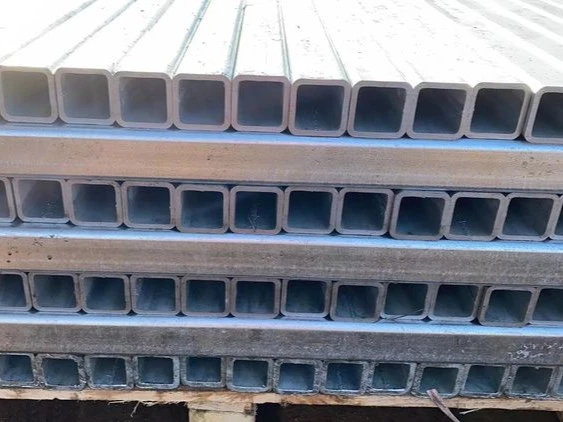
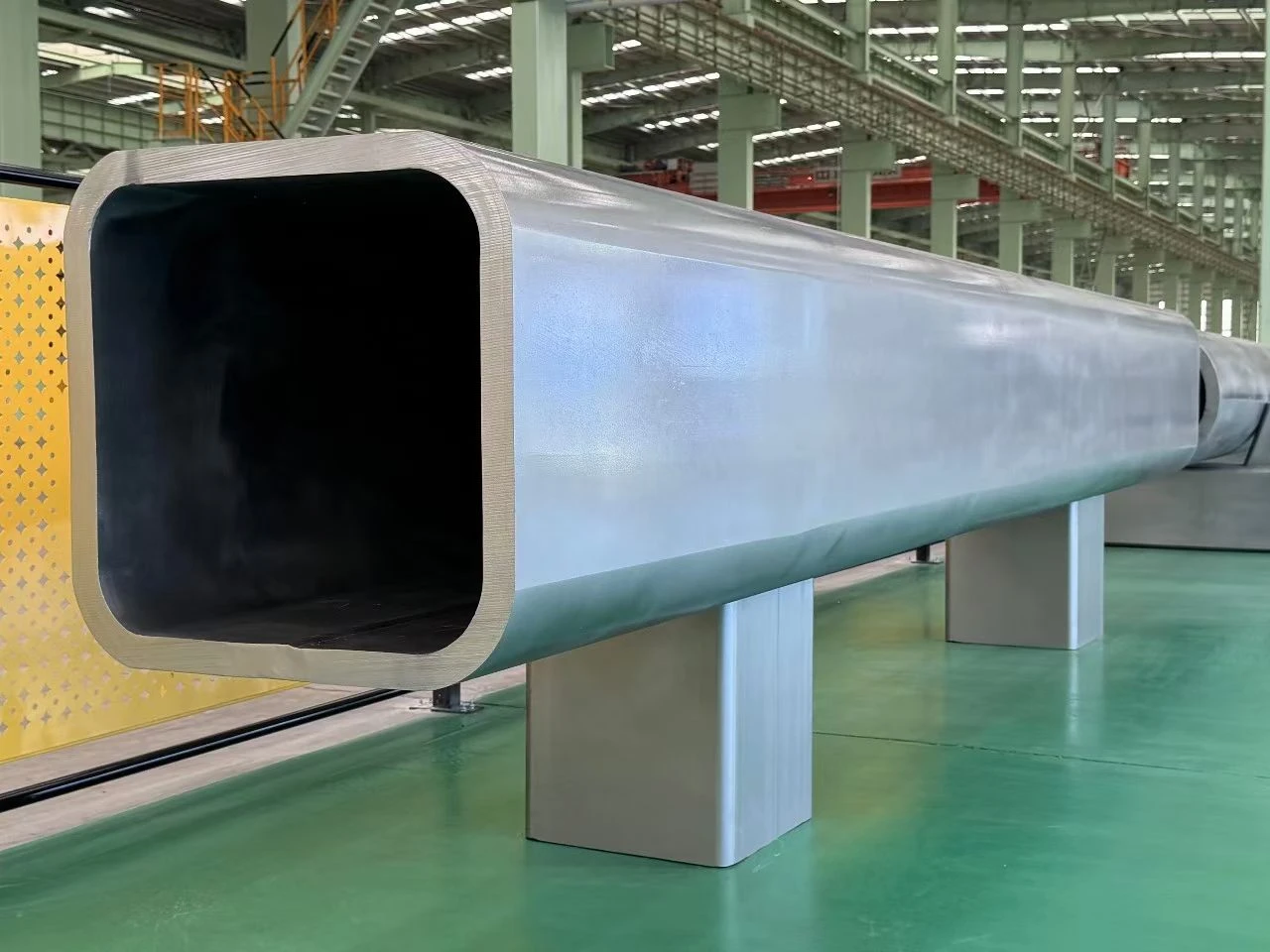
We manufacture and supply hot-dip galvanized round, square and rectangular steel pipe with the coating thickness, steel grade and vent details matched to your drawings. Send us your size list, application and site environment, and our engineers will recommend a coating specification and quotation.