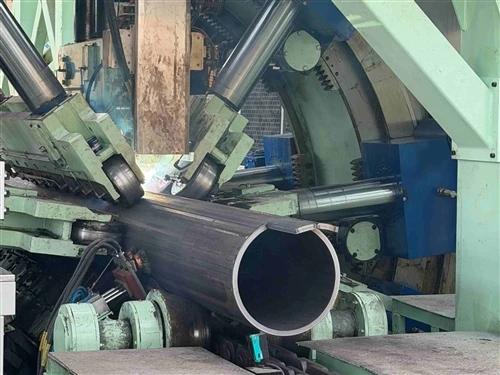
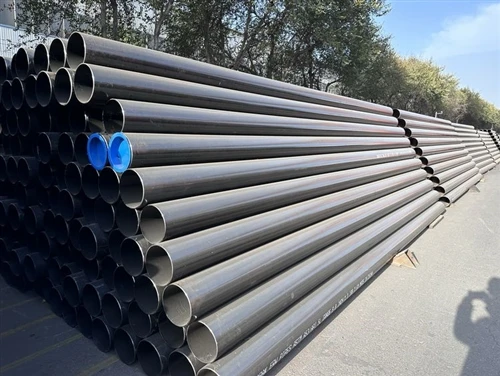
In the global construction, infrastructure, and heavy machinery industries, Rectangular Hollow Sections (RHS) are vital structural components. However, when procurement managers and structural engineers source RHS, they face a critical manufacturing choice: Hot Finished versus Cold Formed.
While cold-formed steel profiles are widely available for light-gauge applications, heavy structural frameworks subjected to immense dynamic loads, high compression, and extreme environmental variations demand superior metallurgical properties. This comprehensive industry document explores why hot finished RHS stands as the premium standard for high-stress engineering, the mechanical science behind its performance, and how premier global manufacturer Brisk Steel delivers certified solutions for international projects.


What Is the Difference Between Hot Finished and Cold Formed RHS?
What Is the Difference Between Hot Finished and Cold Formed RHS?
The fundamental differences between hot finished and cold formed hollow sections lie in their manufacturing temperature and internal stress profiles:
- Cold Formed RHS: Manufactured by taking a flat steel coil at room temperature, continuously bending it through a series of rollers into a rectangular profile, and welding the longitudinal seam. Because the steel is forced into shape while cold, massive internal residual stresses are locked inside the corners of the section.
- Hot Finished RHS: Manufactured through a process where the steel section undergoes its final shaping or heat treatment at a fully normalized temperature-typically exceeding 850℃ to 900℃. This intense heat completely alters the crystalline structure of the metal, eliminating residual stresses and restoring a uniform, homogeneous microstructure across the flat faces and the corners alike.
Why Does the Absense of Residual Stress Matter Under Heavy Structural Loading?
Why Does the Absense of Residual Stress Matter Under Heavy Structural Loading?
When cold formed steel is bent at room temperature, the corners undergo severe localized cold-working. This creates hidden mechanical vulnerabilities:
- Inconsistent Strength Profiles: In a cold-formed RHS, the yield strength increases in the corners due to strain hardening, but the ductility drops significantly. If the section is subjected to heavy structural modifications-such as field welding, hot-dip galvanizing, or beam-to-column jointing-these high-stress zones are highly prone to micro-cracking and brittle failure.
- Predictable Stress Distribution: Hot finished RHS from advanced mills like Brisk Steel is completely stress-relief annealed. Because the crystal grains recrystallize uniformly, the mechanical properties are identical throughout the entire cross-section. Structural engineers can input exact calculations into design software without factoring in unpredictable structural weaknesses in the corners.
How Do Tight Dimensional Tolerances and Sharp Corners Optimize Building Fit-Up?
In structural steelwork fabrication, time on-site translates directly to project costs. The physical profile of hot finished RHS offers significant geometric advantages over cold-formed alternatives:
- Thicker and Sharper Radii: Cold-formed sections require a larger, rounded external corner radius to prevent the steel from splitting during cold bending. Hot finished RHS features tight, sharp, and consistent corner profiles. This maximizes the flat usable surface area for multi-axis connection plates.
- Uniform Wall Thickness: Hot finishing ensures exceptional consistency in wall thickness and eliminates "out-of-roundness" or twisting along the length of the section. This high dimensional accuracy guarantees seamless alignment during automated orbital welding or manual bolt-up procedures.


Why Is Hot Finished RHS Safer Against Earthquakes, Dynamic Vibrations, and Arctic Cold?
Structures like multi-story skyscrapers, offshore oil platforms, pedestrian overpasses, and heavy-duty crane runways are subjected to dynamic fatigue-continuous cycles of vibration, shifting, and wind deflection.
- High Fracture Toughness: Hot finished steel exhibits excellent impact resistance and fracture toughness. This property prevents minor surface scratches or micro-pores from instantly propagating into large structural cracks under stress.
- Resilience to Low-Temperature Brittle Failure: At sub-zero temperatures, standard steel becomes brittle and can snap under sudden impact. Hot finished RHS maintains its ductility and high Charpy V-notch (CVN) impact energy values at temperatures as low as -20℃ or -46℃, making it the safest choice for severe winter climates or seismic zones.
Can Hot Finished RHS Eliminate Liquid Metal Embrittlement Risks During Galvanization?
For steel structures exposed to external moisture, coastal salt air, or industrial chemicals, hot-dip galvanizing is the preferred anti-corrosion treatment. However, dipping steel into molten zinc at approximately $450^\circ\text{C}$ introduces specific metallurgical risks.
- The Cold-Formed Risk: The intense heat of the zinc bath can trigger strain-age embrittlement in the high-stress corners of cold-formed RHS, causing the section to crack spontaneously during or shortly after galvanizing.
- The Hot Finished Assurance: Because hot finished RHS contains no residual manufacturing stresses, it can be hot-dip galvanized repeatedly without any risk of Liquid Metal Embrittlement (LME) or dimensional distortion, guaranteeing decades of rust-free service life.
Technical Performance Matrix: Hot Finished vs. Cold Formed RHS
| Engineering Property | Hot Finished RHS (e.g., EN 10210 / ASTM A501) | Cold Formed RHS (e.g., EN 10219 / ASTM A500) |
| Residual Internal Stress | None (Fully normalized structure) | High (Concentrated heavily in corners) |
| Ductility & Elongation | Excellent and Uniform | Reduced in corner sections |
| Corner Radius Profile | Tight, precise, maximized flat face | Rounded, thick, variable tolerances |
| Welding Safety Profile | Safe to weld anywhere, including corners | Risk of cracking when welding near corners |
| Galvanizing Compatibility | Outstanding; no risk of cracking | Susceptible to strain-age embrittlement |


How Does Brisk Steel Deliver Reliable Hot Finished RHS for Global Sourcing?
Sourcing high-performance structural steel requires a manufacturer with advanced production equipment, rigorous quality control, and complete transparency. Brisk Steel has established itself as a premier global manufacturer and exporter of hot finished RHS, catering to the strict specifications of international construction and engineering firms.
When international buyers partner with Brisk Steel, they integrate distinct structural and commercial advantages into their supply chains:
- Advanced In-Line Normalizing Infrastructure: Brisk Steel utilizes state-of-the-art inductive heating systems to ensure that every rectangular hollow section undergoes complete hot-finishing processing. Heating the steel uniformly above its critical transformation temperature guarantees the absolute elimination of residual internal stresses.
- Strict International Standard Compliance: Brisk Steel manufactures hot finished RHS in strict accordance with global structural standards, including EN 10210 (Grades S235JRH, S355J2H, S355NH) and ASTM A501. These certified grades ensure that your project easily passes stringent building audits and safety regulatory reviews.
- Comprehensive In-House NDT and Lab Proofing: To verify structural soundess before export, Brisk Steel subjects its production runs to a mandatory suite of quality checks. This includes online Ultrasonic Testing (UT), Eddy Current testing, dimensional mapping, and physical destructive testing (tensile, elongation, and low-temperature impact tests) executed in certified quality control laboratories.
- Turnkey Customization & Logistics Excellence: Brisk Steel provides custom lengths to fit exact building frameworks, minimizing on-site cutting waste. For transport over maritime shipping lanes, sections are bundled securely, treated with specialized rust-preventative coatings or factory-applied hot-dip galvanizing, and shipped with comprehensive documentation directly to your destination port.
What Parameters Must Be Checked Before Ordering Hot Finished RHS?
To ensure your project receives authentic hot finished material rather than cheaper cold-formed substitutions, procurement departments should verify the following indicators:
- Check the Applicable Specification Standard: Ensure your purchase order explicitly names EN 10210 or ASTM A501. Standards like EN 10219 or ASTM A500 designate cold-formed steel.
- Verify the Corner Profile and Thickness: Authentic hot finished RHS exhibits a tighter, uniform corner radius with an even wall profile around the perimeter. Cold-formed tubing often shows visible thinning or thickening along the bent radius.
- Inspect the Material Test Certificate (MTR): Demand a certified MTR complying with EN 10204 3.1. The documentation must explicitly list the delivery condition as "Normalized" or "Hot Finished" alongside actual Charpy impact energy values.
Conclusion
Selecting hot finished Rectangular Hollow Sections (RHS) is a critical decision for high-performance structural engineering. By eliminating hidden internal stresses, providing uniform mechanical strength, and offering superior corner profiles, hot finished steel ensures maximum load capacity, safety under dynamic loading, and worry-free hot-dip galvanization.
By partnering with an advanced, export-focused manufacturer like Brisk Steel, procurement managers secure absolute metallurgical consistency. Brisk Steel's commitment to strict international standards, advanced inductive heat treatment, and exhaustive laboratory proofing guarantees that your structural applications are anchored to long-term safety, durability, and engineering excellence.