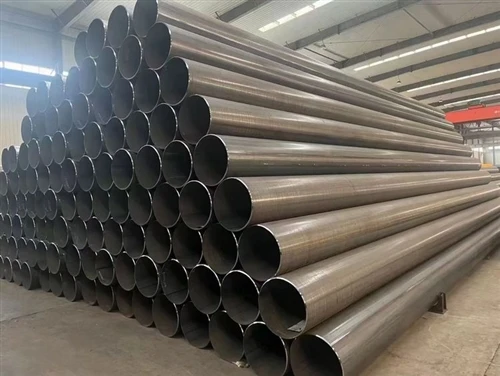
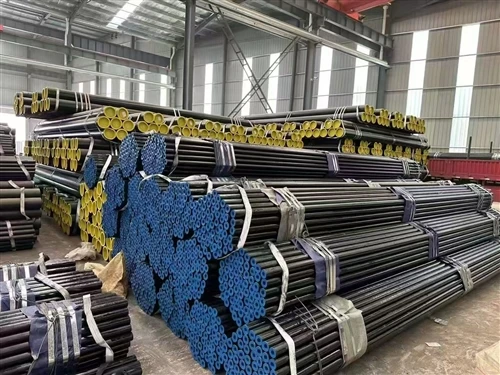
Structural Hollow Sections (SHS) and Rectangular Hollow Sections (RHS) are essential components in modern construction and engineering projects. These versatile steel profiles come in various sizes and specifications, making them suitable for a wide range of applications. In this comprehensive guide, we'll explore the world of SHS and RHS, delving into their sizes, applications, and key considerations for selection.
What are the standard sizes for SHS and RHS pipes?
When it comes to Structural Hollow Sections (SHS) and Rectangular Hollow Sections (RHS), understanding the standard sizes is crucial for engineers, architects, and construction professionals. These steel profiles are available in a wide range of dimensions to suit various project requirements.
For SHS pipes, which have a square cross-section, common sizes typically range from 20mm x 20mm up to 1200mm x 1200mm. The wall thickness can vary from 1.6mm to 16mm, depending on the structural requirements. Some of the most frequently used SHS sizes include:
- 50mm x 50mm
- 75mm x 75mm
- 100mm x 100mm
- 150mm x 150mm
- 200mm x 200mm
- 250mm x 250mm
- 300mm x 300mm
- 350mm x 350mm
- 400mm x 400mm
- 450mm x 450mm
- 500mm x 500mm
- 750mm x 750mm
- 600mm x 600mm
- 800mm x 800mm
- 900mm x 900mm
- 1000mm x 1000mm
- 1200mm x 1200mm
RHS pipes, characterized by their rectangular cross-section, offer even more flexibility in terms of dimensions. Standard sizes for RHS can range from 50mm x 30mm up to 500mm x 300mm or larger. Wall thicknesses are similar to those of SHS, ranging from 1.6mm to 16mm. Popular RHS sizes include:
- 50mm x 25mm
- 75mm x 50mm
- 100mm x 50mm
- 150mm x 100mm
- 200mm x 100mm
- 300mm x 200mm
- 400mm x 200mm
- 500mm x 300mm
- 600mm x 200mm
- 600mm x 300mm
- 800mm x 400mm
- 800mm x 500mm
- 1000mm x 500mm
- 1200mm x 1000mm
- 1200mm x 800mm
It's important to note that these sizes are not exhaustive, and manufacturers may offer custom dimensions to meet specific project needs. The choice of size depends on various factors, including load-bearing requirements, architectural design, and the specific application of the structural member.
When selecting the appropriate size for SHS or RHS pipes, engineers must consider several factors:
1. Load-bearing capacity: Larger sections and thicker walls generally provide greater strength and load-bearing ability.
2. Span length: The required length of the structural member influences the size selection.
3. Weight considerations: Balancing strength with overall structure weight is crucial for efficient design.
4. Aesthetic requirements: In some cases, the visible profile of the sections may influence size selection for architectural reasons.
5. Connections and joints: The chosen size must be compatible with the planned connection methods and other structural elements.
Understanding these standard sizes and their applications is essential for optimizing structural design and ensuring the longevity and safety of construction projects. Always consult relevant design codes and standards, such as AS/NZS 1163, when specifying SHS and RHS pipes for your project.
How does AS 1163 pipe specification apply to SHS?
AS 1163, the Australian Standard for structural steel hollow sections, plays a crucial role in defining the specifications for AS 1163 Pipe SHS (Square Hollow Sections) and other structural hollow profiles. This standard ensures that the steel sections used in construction and engineering projects meet stringent quality and performance criteria.
The AS 1163 specification covers several key aspects of SHS pipes:
1. Material Grades:
AS 1163 defines different grades of steel used for SHS, with the most common being C350 and C450. These grades indicate the minimum yield strength of the steel, with C350 having a yield strength of 350 MPa and C450 having 450 MPa. The choice of grade depends on the specific structural requirements of the project.
2. Manufacturing Process:
The standard specifies that SHS pipes should be manufactured using electric resistance welding (ERW) or a similar approved process. This ensures consistency in the weld quality and overall structural integrity of the sections.
3. Dimensional Tolerances:
AS 1163 sets out strict tolerances for the dimensions of SHS pipes, including:
External dimensions (width and depth)
Wall thickness
Straightness
Squareness of sides
Twist
These tolerances ensure that the SHS pipes meet the required specifications and can be reliably used in structural calculations and designs.
4. Surface Finish and Coatings:
The standard outlines requirements for surface finish, including acceptable levels of surface imperfections. It also provides guidelines for protective coatings, such as galvanization, which can be applied to enhance corrosion resistance.
5. Mechanical Properties:
AS 1163 specifies the required mechanical properties of AS 1163 Pipe SHS, including:
Tensile strength
Yield strength
Elongation
Impact toughness (for certain grades and thicknesses)
These properties are crucial for ensuring that the SHS pipes can withstand the expected loads and environmental conditions in their intended applications.
6. Testing and Inspection:
The standard mandates various tests and inspection procedures to verify compliance with the specified requirements. These may include:
Tensile tests
Flattening tests
Visual inspections
Non-destructive testing of welds
7. Marking and Documentation:
AS 1163 requires that SHS pipes be marked with specific information, including the manufacturer's name or trademark, the steel grade, and the standard designation. This ensures traceability and helps verify that the correct materials are being used on-site.
Applying AS 1163 to SHS pipes offers several benefits:
Quality Assurance: By adhering to this standard, manufacturers and suppliers ensure that their products meet consistent quality levels, giving confidence to engineers and builders.
Design Reliability: Engineers can rely on the specified properties when designing structures, knowing that the SHS pipes will perform as expected under various load conditions.
Safety: The stringent requirements of AS 1163 contribute to the overall safety and durability of structures incorporating SHS pipes.
Compliance: Using AS 1163-compliant SHS pipes helps projects meet regulatory requirements and building codes.
When specifying or using SHS pipes in Australian projects, it's essential to ensure that they comply with AS 1163. This may involve:
Requesting certificates of compliance from suppliers
Reviewing test reports to verify mechanical properties
Conducting on-site inspections to check dimensional accuracy and surface quality
Ensuring proper storage and handling to maintain the integrity of the sections
By understanding and applying the AS 1163 pipe specification to AS 1163 Pipe SHS, engineers and construction professionals can ensure the use of high-quality, reliable structural components in their projects. This attention to detail and adherence to standards contributes to the long-term success and safety of structures built with SHS pipes.
What are the key differences between SHS and RHS in structural applications?
Understanding the key differences between Square Hollow Sections (SHS) and Rectangular Hollow Sections (RHS) is crucial for making informed decisions in structural applications. While both are part of the structural hollow section family, their unique characteristics make them suitable for different scenarios in construction and engineering projects.
1. Geometric Properties:
The most obvious difference between SHS and RHS lies in their cross-sectional shape:
SHS: Square cross-section with equal width and depth dimensions.
RHS: Rectangular cross-section with unequal width and depth dimensions.
This fundamental difference in geometry leads to several important distinctions in their structural behavior and applications.
2. Moment of Inertia and Section Modulus:
The moment of inertia and section modulus are critical properties that affect a section's ability to resist bending and deflection:
SHS: Has equal moments of inertia about both principal axes due to its symmetrical shape. This makes it equally strong in resisting bending forces in all directions perpendicular to its length.
RHS: Has different moments of inertia about its major and minor axes. The moment of inertia is larger about the major axis (along the longer side), making it stronger in resisting bending in that direction.
This difference makes RHS more efficient in unidirectional bending applications, while SHS is preferred when multidirectional strength is required.
3. Torsional Resistance:
Torsional resistance is the ability of a section to resist twisting forces:
SHS: Generally has higher torsional resistance due to its symmetrical shape, making it more suitable for applications where twisting forces are significant.
RHS: Has lower torsional resistance compared to AS 1163 Pipe SHS of similar size, but this can be advantageous in certain design scenarios where controlled torsional behavior is desired.
4. Buckling Resistance:
Buckling is a mode of failure where a structural member suddenly deforms under compressive stress:
SHS: Offers uniform buckling resistance in all directions due to its symmetrical shape, making it ideal for columns and compression members.
RHS: Provides different buckling resistances about its major and minor axes, which can be leveraged in specific design situations to optimize material usage.
5. Connection Design:
The shape of the section influences the design and complexity of connections:
SHS: Generally simpler to connect due to its uniform shape, often requiring less complex welding or bolting arrangements.
RHS: May require more intricate connection designs, especially when joining members of different sizes or orientations.
6. Architectural Aesthetics:
The visual appearance of the sections can be a deciding factor in exposed structural elements:
SHS: Offers a clean, symmetrical look that is often preferred in modern architectural designs where the structure is visible.
RHS: Provides a more directional appearance, which can be used to emphasize certain design elements or create visual interest.
7. Material Efficiency:
When considering material usage and strength-to-weight ratio:
SHS: Generally more efficient when loads are applied in multiple directions or when torsional resistance is crucial.
RHS: Can be more material-efficient in beam applications where bending occurs primarily in one direction, as the section can be oriented with its stronger axis aligned with the primary bending plane.
8. Span Capabilities:
The different geometries affect the spanning capabilities of the sections:
SHS: Provides consistent performance for shorter spans or where loads are multidirectional.
RHS: Can achieve longer spans when oriented with its major axis vertical, making it suitable for beam and girder applications.
9. Fabrication and Availability:
Considerations for manufacturing and supply chain can influence the choice between SHS and RHS:
SHS: Often more readily available in a wide range of sizes due to its common use in various applications.
RHS: Offers more size combinations, providing greater flexibility in design, but some specific sizes may have longer lead times.
In conclusion, the choice between AS 1163 Pipe SHS and RHS in structural applications depends on a careful analysis of the specific project requirements. Factors such as load conditions, span lengths, architectural considerations, and overall structural efficiency must be weighed to determine the most suitable option. By understanding these key differences, engineers and designers can make informed decisions that optimize structural performance, aesthetics, and cost-effectiveness in their projects.
References
1. Standards Australia. (2009). AS/NZS 1163:2009 Structural steel hollow sections.
2. OneSteel. (2021). Structural Hollow Sections.
3. Tata Steel. (2022). Structural Hollow Sections Design Manual.
4. American Institute of Steel Construction. (2017). Steel Construction Manual, 15th Edition. AISC.
5. European Committee for Standardization. (2005). Eurocode 3: Design of steel structures. CEN.
6. Wardenier, J., Packer, J. A., Zhao, X. L., & van der Vegte, G. J. (2010). Hollow sections in structural applications. CIDECT.
7. Packer, J. A., Wardenier, J., Zhao, X. L., van der Vegte, G. J., & Kurobane, Y. (2009). Design guide for rectangular hollow section (RHS) joints under predominantly static loading. CIDECT.
8. BlueScope Steel. (2022). Structural Steel Hollow Sections.
9. Australian Steel Institute. (2020). Design Capacity Tables for Structural Steel Hollow Sections. ASI.
10. Zhao, X. L., Hancock, G. J., & Trahair, N. S. (2002). Lateral-torsional buckling of hollow flange beams. Journal of Structural Engineering, 128(6), 752-759.