If you've spent any time sourcing structural steel hollow sections in Europe or for a Eurocode-designed project, you've almost certainly run into both EN 10219 and EN 10210 on drawings, specifications, or mill certificates. On paper, they look interchangeable - same section shapes, overlapping size ranges, similar grade names. In practice, mixing them up on the wrong project is one of the more common and avoidable sourcing mistakes in structural steel procurement.
This guide walks through what actually separates the two standards, where each one belongs, and how to verify you're getting what your project actually needs - not just what a supplier is willing to call it.

The Core Difference: What Happens After Welding
Both standards cover square (SHS), rectangular (RHS), and circular (CHS) hollow sections used as structural members. The dividing line between them isn't shape, grade naming, or even the welding process itself - it's what happens to the section afterward.
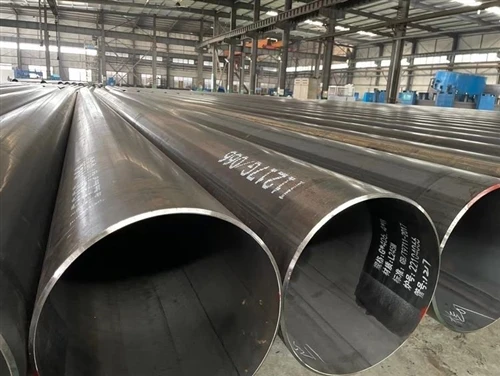
EN 10219 covers cold-formed welded structural hollow sections. The steel strip is roll-formed into shape and welded at, or close to, ambient temperature. No further thermal treatment is applied. This keeps production faster and less energy-intensive, which is reflected in generally lower pricing.
EN 10210 covers hot-finished structural hollow sections - a category that includes both seamless tubes and welded tubes that undergo an additional hot-finishing step (typically normalizing rolling) after forming. This step relieves the residual stresses and grain distortion introduced during cold forming, bringing the corner regions of the section much closer in mechanical performance to the flat faces.
That single processing difference cascades into almost everything else that matters for structural design: corner toughness, fatigue performance, residual stress levels, and in some cases, the required design approach under Eurocode 3.

Why Corner Properties Actually Matter
This is the part that gets glossed over in a lot of supplier literature, but it's the detail structural engineers care about most.
When a flat steel strip is cold-formed into a square or rectangular section, the corners undergo significant plastic deformation. This work-hardens the steel at exactly the points where connections - bolted, welded, or otherwise - tend to concentrate stress. The result is a section with noticeably different yield strength at the corners compared to the flat faces, along with locked-in residual stress.
For a static structure with straightforward gravity loading, this difference is often manageable and even accounted for conservatively in cold-formed section design tables. But for anything involving cyclic loading - wind-induced fatigue, seismic activity, vibration from machinery or traffic - the corner condition becomes a genuine design variable, not a footnote.
EN 10210's hot-finishing step largely resets this condition. Normalizing rolling heats the steel above its recrystallization temperature, allowing the grain structure to reform more uniformly across the whole section, corners included. This is precisely why EN 10210 tends to appear on offshore structures, seismic-zone buildings, and bridge components, where design codes explicitly weigh corner-region behavior.

Dimensional Tolerances: A Less Obvious but Real Distinction
Cold-formed EN 10219 sections generally hold tighter dimensional tolerances than their hot-finished counterparts. The cold-forming process is more dimensionally stable and repeatable at the mill level, while hot-finishing introduces slight dimensional variation from thermal expansion and contraction during the finishing pass.
This matters more than it might seem for architecturally exposed steelwork or modular construction systems where components need to fit together with minimal on-site adjustment. In these cases, EN 10219's tighter tolerance band can actually be the deciding factor over EN 10210, even on a project where fatigue loading isn't a primary concern.
Grade aming: A Common Point of ConfusionN
Both standards use grades from the same general S-series family (S235, S275, S355, S460), but the suffix letters differ, and buyers frequently overlook this:
- EN 10219 grades typically carry an "H" suffix combined with cold-forming-related designations, such as S235JRH, S275J0H, or S355J2H
- EN 10210 grades follow a similar naming pattern but can include additional suffixes like "NH" (normalized, hollow section) for grades such as S355J2H or S460NH
The grade number alone (235, 275, 355, 460) refers to the nominal yield strength in MPa, but the production route behind that number differs meaningfully between the two standards, even when the label looks nearly identical. A mill certificate should always specify which standard, not just which grade number, is being supplied against.
The Welding Detail Buyers Rarely Ask About
Most sourcing conversations stop at "cold-formed vs hot-finished," but there's a secondary variable worth understanding: how the weld seam itself is made before either finishing route begins. The overwhelming majority of both EN 10219 and EN 10210 welded sections today use high-frequency induction (HFI) welding, where an induction coil heats the strip edges to forging temperature just before they're pressed together, with no filler material added. This produces a narrow, dense weld line that's generally indistinguishable from the parent material once the section is finished.
Older or lower-tier production lines sometimes still use conventional electric resistance welding without the same frequency control, which can leave a coarser heat-affected zone at the seam. For EN 10219 material, where no subsequent hot-finishing evens things out, the quality of that original weld matters more, not less. It's a reasonable question to put to a supplier - not because conventional ERW automatically fails the standard, but because HFI has become the practical benchmark for consistent weld quality in structural hollow sections, and a mill confident in its process won't hesitate to confirm which method it runs.
Lead Times and Market Availability
One practical factor that rarely makes it into technical comparisons: EN 10219 sections are stocked far more widely than EN 10210 equivalents, simply because they represent the larger share of structural hollow section demand. Standard sizes and common grades in EN 10219 are often available from distributor stock with short lead times. EN 10210 material, particularly in less common size and grade combinations, more frequently requires a mill production run, which can extend lead times by several weeks depending on the producer's schedule.
This has a real procurement implication: if a project's structural design genuinely requires EN 10210 for corner-critical connections, it pays to confirm availability early rather than assuming it can be sourced on the same timeline as EN 10219. Late discovery of an extended lead time on load-bearing connection material has delayed more than a few structural steel packages.
Cost: Where the Real Trade-off Sits
EN 10219 sections are almost always less expensive than EN 10210 equivalents in the same size and grade, and the reason is straightforward: hot-finishing is an additional production step with real furnace time and energy cost attached. As a rough rule of thumb, expect EN 10210 material to carry a noticeable price premium - the exact margin varies by mill and market conditions, but it should never be negligible.
This creates a useful sanity check during procurement. If a supplier quotes EN 10210 pricing that sits at or near parity with their EN 10219 pricing for the same dimensions, that's a signal worth investigating. Either the hot-finishing step isn't genuinely being performed, or the mill is applying the EN 10210 label loosely. For any project where corner properties are load-bearing assumptions in the design, this is worth confirming with actual furnace or process records, not just a certificate stamp.
A Practical Selection Framework
For teams trying to decide between the two standards on a live project, a few questions tend to settle it quickly:
Does the design code explicitly reference corner-region mechanical properties? Many seismic design provisions and fatigue-sensitive design codes do. If so, EN 10210 is generally the safer and often the required choice.
Is the structure subject to meaningful cyclic or dynamic loading? Wind-sensitive tall structures, offshore platforms, bridges, and machinery-supporting frames lean toward EN 10210. Static commercial and light industrial buildings can often use EN 10219 without issue.
Is dimensional precision more critical than corner toughness? Modular systems, architecturally exposed steelwork, and projects with tight tolerance requirements for fit-up may favor EN 10219's more consistent dimensional control.
What does the budget allow? Where either standard would satisfy the structural requirements, EN 10219 offers meaningful cost savings, and there's no engineering reason to over-specify EN 10210 for a project that doesn't need it.
Verifying What You're Actually Buying
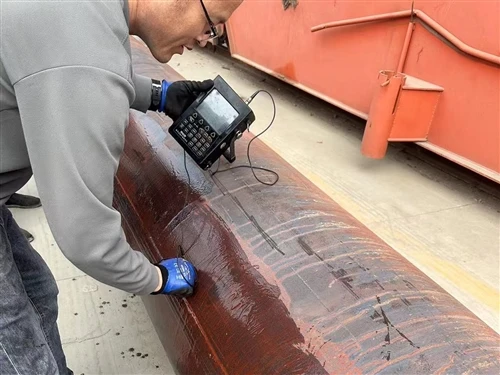
Whichever standard a project calls for, verification matters more than the label on a quotation. A legitimate mill certificate should reference the specific part of the standard (EN 10219-1/-2 or EN 10210-1/-2), state the actual grade with correct suffix, and include mechanical test results, not just a chemical composition summary. For EN 10210 material specifically, it's reasonable to request confirmation of the hot-finishing process itself, since this is the step most likely to be shortcut without leaving an obvious trace on a standard certificate.
Buyers working under CE marking requirements should also confirm the supplying mill holds a current Factory Production Control (FPC) certification under EN 1090-1 - both standards can support CE marking, but only when backed by valid FPC documentation, which lapses and needs periodic renewal.
Looking to source EN 10219 or EN 10210 hollow sections for a specific project? Send us your section type, grade, and load requirements, and we can help confirm which standard fits - along with mill certification to back it up.