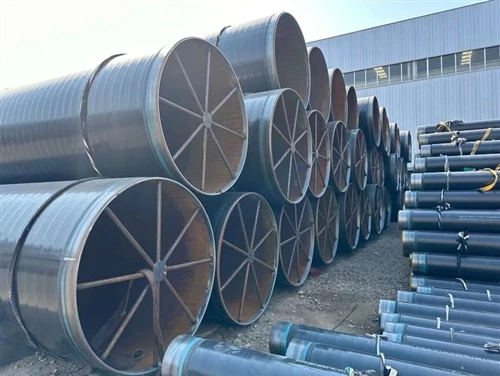
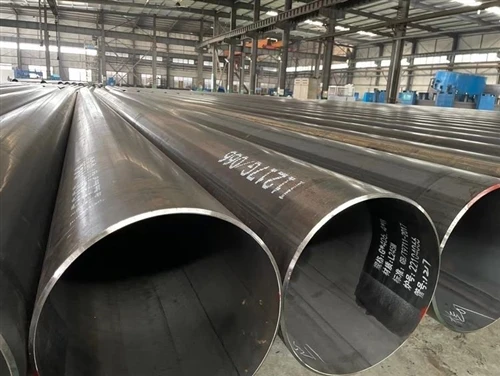
API 5L and ASTM A106 are the two most widely used standards for carbon steel pipes in global engineering projects. In particular, API 5L GR.B and ASTM A106 GR.B pipes from both standards appear similar and share comparable basic mechanical properties at room temperature, making them easily confused.
However, because they differ fundamentally in their original intent, applicable operating conditions, testing requirements, and performance at high or low temperatures, they cannot be arbitrarily interchanged. This article compares the two standards across seven key dimensions-origin, manufacturing, chemical composition, Mechanical Properties, Delivery Conditions, applications, and selection recommendations-to help users better distinguish between them.
Our Product
Tianjin Brisk Steel focus on produce and supply hollow section and steel pipe


ASTM A106 Seamless Carbon Steel Pipe for High-Temperature Service
- Primary Application: Specialized piping for process lines and high-temperature, high-pressure systems; the standard covers only seamless steel pipe and excludes welded pipe.
- Mainstream Steel Grades: Gr.A, Gr.B, and Gr.C (Gr.B has the highest market volume).
API 5L Specification for Line Pipe
- Primary Application: Trunk pipelines for long-distance transport of oil, gas, and water; covers seamless, ERW / HFW, and submerged arc welded (LSAW/SSAW) pipes.
- Classification System: PSL1 (standard product specification level) and PSL2 (advanced, rigorous specification level).
- Mainstream Steel Grades: Gr.B, X42, X52, X60, X65, X70, X80 (the number in the "X" series indicates the minimum yield strength in ksi).
Manufacturing Processes
|
Standard |
Manufacturing |
Size Range |
|
ASTM A106 |
Seamless steel pipe only (hot-rolled/cold-drawn); welded pipe prohibited; fully killed steel production |
Standard sizes NPS 1/8 to NPS 48; primarily small- to medium-diameter process piping |
|
API 5L |
Covers both seamless and all types of welded pipe (ERW/LSAW/SSAW);seamless is just one category |
Covers the full range from small diameters to ultra-large diameters (up to NPS 80) for long-distance pipelines |
Differences In Chemical Composition
ASTM A106 Gr.B (Designed for high-temperature service)
- C ≤ 0.30%, Mn: 0.29–1.06%, Si ≥ 0.10% (Silicon is key to high-temperature creep resistance)
- P and S capped at 0.035%; mandatory minimum silicon content inhibits graphitization failure at high temperatures and ensures stable long-term high-temperature strength
API 5L Gr.B Seamless Pipe (Designed for low-temperature toughness)
- C ≤ 0.28%, Mn ≤ 1.20%, no mandatory minimum for silicon
- P and S capped at 0.030% (stricter PSL2 requirements); carbon equivalent strictly controlled; optimized for field welding and low-temperature impact resistance; lacks high-temperature strengthening formulation
Compatibility of Mechanical Properties with Temperature Ranges
Room-Temperature Properties (Gr. B Comparison)
| Grade | Yield strength | Tensile strength |
| A106 Gr. B | ≥ 240 MPa | 415–585 MPa |
| API 5L Gr. B | ≥ 245 MPa | 415–655 MPa |
High-Temperature Performance (A106 Holds a Distinct Advantage)
-
ASTM A106: Designed for service temperatures up to 350°C (650°F); retains over 70% of its allowable stress at 400°C; the only compliant choice for high-temperature piping in boilers, steam systems, and refining units.
- API 5L: Not suitable for operating temperatures above 250°C; prone to graphitization embrittlement.
Low-Temperature Toughness (API 5L PSL2 Holds a Distinct Advantage)
- A106: Not suitable for low-temperature, permafrost, or polar environments; prone to brittle fracture.
- API 5L PSL2: Charpy V-notch impact testing is mandatory (standard at -20°C), making it suitable for oil and gas transport in northern permafrost regions, offshore areas, and mountainous terrain; impact testing for PSL1 is performed only if specifically agreed upon by the customer.
Delivery Conditions
ASTM A106 Delivery Condition
- Hot-finished pipe need not be heat treated. When hot-finished pipe is heat treated, it shall be heat treated at a temperature of 1200 °F [650 °C] or higher.
- The cold-drawn pipe shall be heat treated after the final cold-draw pass at a temperature of 1200 °F [650 °C] or higher.
API 5L Delivery Condition
- Delivery is possible immediately after controlled rolling and controlled cooling; normalization (Grade M steel) is required only for projects involving low-temperature or acidic service, while standard line pipe requires no additional high-temperature heat treatment, resulting in lower production costs.
So if you need to transport oil and gas fluids, and the pipeline operating environment is complex, with high toughness requirements, recommended API 5L standard. If the pipe needs to be used in high-temperature and high-pressure environments, ASTM A106 standard is recommended.
Applicable Scenarios
ASTM A106 Applications (High-Temperature Process Systems)
- Boiler water walls, main steam piping, and heat exchanger tubes in thermal power plants
- High-temperature process piping and furnace tubes in refineries and chemical plants
- Pipelines for high-temperature thermal oil, saturated steam, and superheated steam
- Seamless nozzles/connections for pressure vessels (indoor fixed process piping networks only)
API 5L Seamless Line Pipe Applications (Ambient/Low-Temperature Long-Distance Transport)
- Onshore and offshore oil and gas trunklines and gathering/distribution lines
- Long-distance buried pipelines for municipal natural gas, groundwater, and crude oil
- Buried high-pressure fluid pipelines in permafrost, alpine, or seismic zones
- Short-distance trunklines for ambient-temperature chemical media (non-high-temperature service)
❌ Restrictions: Not suitable for high-temperature steam (above 250°C) or boiler piping
Quickly Distinguish ASTM A106 And API 5L
| Comparison Item | API 5L Seamless Line Pipe | ASTM A106 Seamless High-Temperature Pipe |
|---|---|---|
| Issuing Organization | API (American Petroleum Institute) | ASTM (American Society for Testing and Materials) |
| Core Design Purpose | Long-distance oil, gas, water transmission pipeline, low & ambient temperature buried service | High-temperature steam, boiler, refinery process piping for power plants |
| Available Production Types | Seamless + ERW / LSAW / SSAW welded pipes | Only seamless pipe, welding pipe not allowed |
| Chemical Feature | Low carbon equivalent, strict control of P & S; no minimum silicon limit | Minimum Si ≥0.10%, good anti-creep performance under high heat |
| Working Temperature Limit | Max 200°C, NOT for long-term high-temperature service | Up to 350℃, specialized for high-temperature medium |
| Low-Temperature Impact Test | Mandatory for PSL2 grade (Charpy V-notch impact at -20℃) | No mandatory low-temperature impact test |
| Hydrostatic Test Standard | 1.4 times SMYS, higher pressure resistance | 1.2 times SMYS |
| NDT Inspection Rule | 100% full-body UT ultrasonic inspection required for PSL2 | Ultrasonic testing is optional, not compulsory |
| Heat Treatment | Controlled rolling is acceptable; normalizing only for low-temperature sour service | Annealed / normalized delivery as standard |
| Main Typical Application Cases |
1. Cross-country natural gas & crude oil trunk pipelines 2. Offshore platform risers 3. Urban buried gas pipeline 4. Arctic & alpine cold region gathering lines 5. Sour H₂S gas field pipelines |
1. Power plant boiler & superheated steam pipes 2. Refinery high-temperature furnace piping 3. Central heating station internal steam tubes 4. Ammonia chemical plant high-temperature heat exchange pipes 5. LNG station steam tracing pipelines |
| Disadvantages If Cross Replacement | Prone to graphitization & rupture when used over 200℃ | Brittle fracture risk in cold buried outdoor pipelines without impact resistance |
we are here for you
Please contact us with any questions or inquiries regarding your order.