

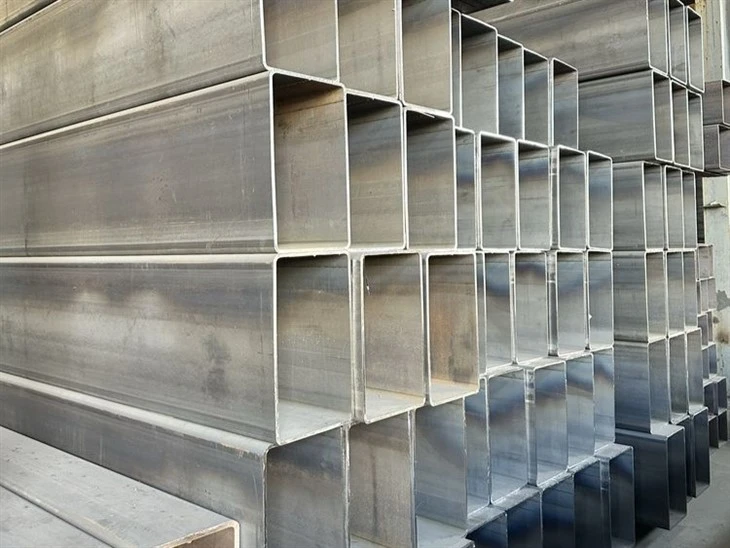
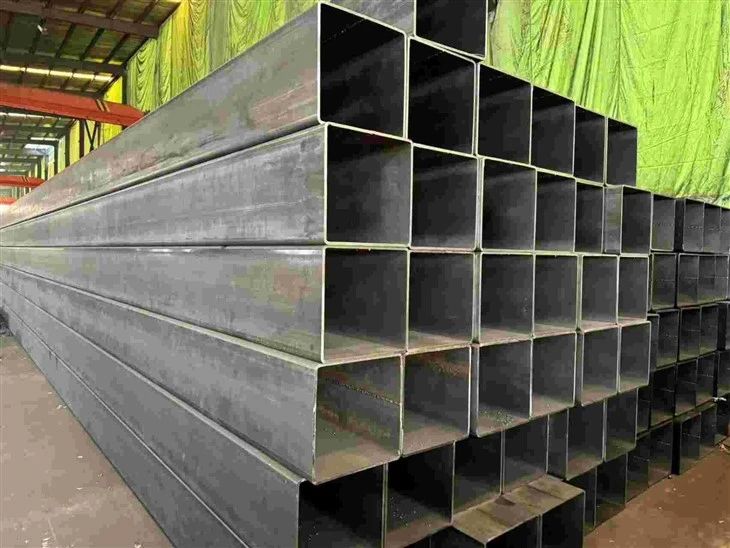
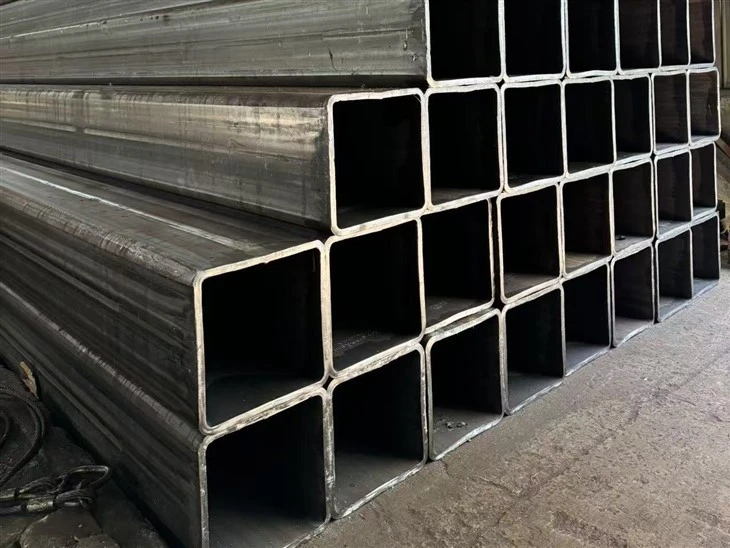
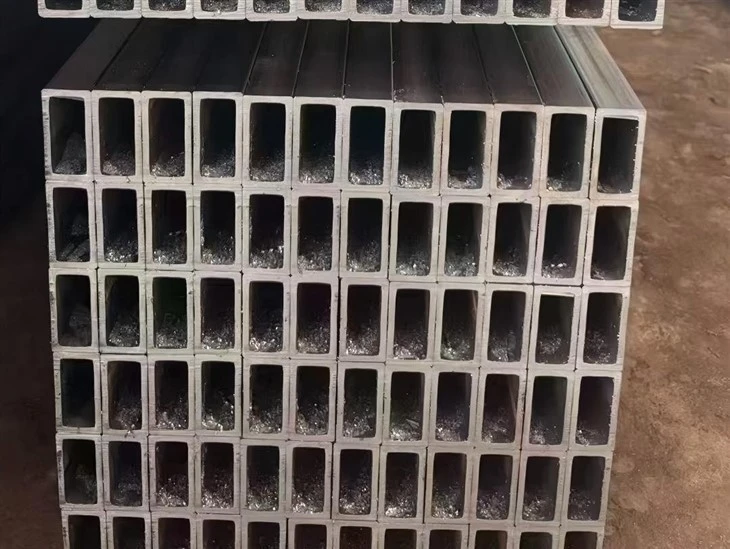
Tianjin Brisk Metalwork Co., Ltd. is one of the leading manufacturers and suppliers of rectangular hollow sections in China. We have world-leading production equipment and strong manufacturing capabilities. Please feel free to buy bulk durable rectangular hollow sections from our factory.
Tianjin Brisk Steel is one of the rectangular hollow sections in China. Our products are mainly exported to the Middle East, Southeast Asia, Europe, New Zealand, and other regions.If you would like to learn more about our products, feel free to contact us and send your purchase list.

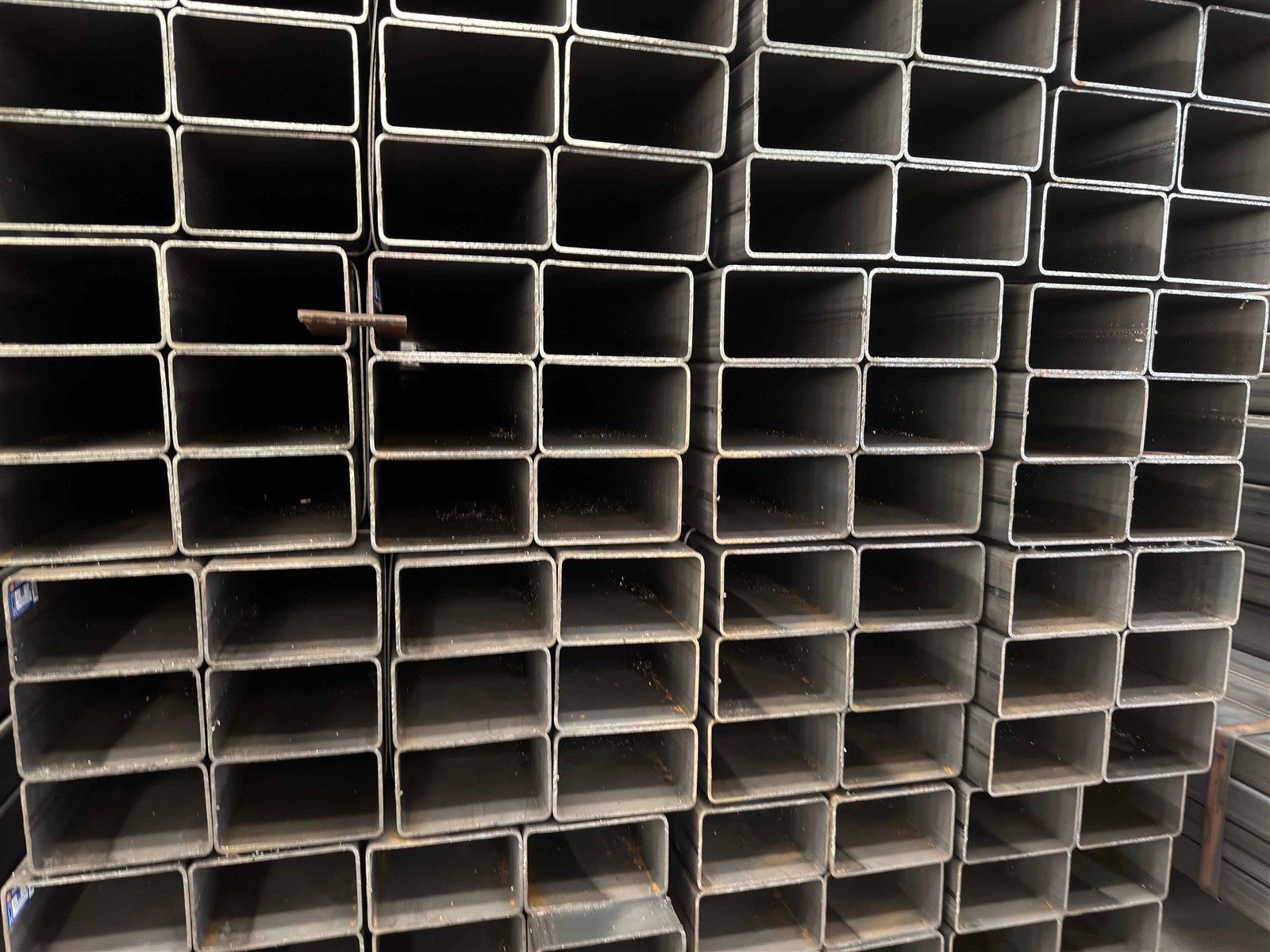


Choosing the Shape, Not Just the Standard
Most technical content on rectangular hollow sections focuses on which standard governs the product - EN 10210, EN 10219, ASTM A500, and so on. Standards matter, but they answer a different question than the one many buyers actually start with: why rectangular section at all, instead of square or round, and how do you pick the right rectangular size for the job? This guide focuses on that shape-selection layer - the engineering logic behind choosing RHS, how its proportions affect performance, and how to translate that into a correct order - rather than re-covering standards documentation available elsewhere on this site.
What Sets Rectangular Hollow Section Apart from Square and Round
A rectangular hollow section (RHS) is a closed structural profile with two pairs of unequal parallel sides, as opposed to a square hollow section (SHS, equal sides) or a circular hollow section (CHS, round). All three share the same core hollow-section advantages - closed profile, efficient material distribution around a central void, good torsional resistance, and clean lines for architectural exposure - but the rectangular shape adds one property the other two don't have: directional strength.
Because an RHS has a different depth than width, it resists bending more strongly along one axis than the other. A section oriented with its long dimension vertical carries more bending load in that direction than the same section turned on its side, or than an SHS of similar material weight. This directionality is the entire reason to choose rectangular over square in the first place - when a structural member has a clearly dominant load direction (a beam spanning between supports, for example), matching the section's strong axis to that load direction gets more structural performance out of the same amount of steel.
When Rectangular Beats Square or Round
Beams and spanning members with one dominant load direction. Floor beams, roof purlins, and lintels typically carry load primarily in one direction (usually vertical, from gravity loads). An RHS oriented with its long axis vertical delivers more bending resistance per unit weight than an SHS of similar total material, making it the more efficient choice for these members.
Where headroom or depth is constrained in one direction. A wide, shallow RHS can span a given load with less vertical depth than a square or round section would need, which matters when a beam has to fit within a limited ceiling or floor zone.
Where a flat face simplifies connections or cladding. Rectangular section's flat top and bottom faces make it straightforward to bolt or weld flooring, decking, or cladding directly to the section - an advantage over round section, which needs saddle plates or curved fittings for the same connections.
Where square or round is still the better call. Columns and other members carrying roughly equal load in all directions are usually better served by square (SHS) or round (CHS) section, since those shapes resist bending equally regardless of direction - an RHS oriented incorrectly for a multi-directional load case can actually underperform a square section of similar weight.
How Rectangular Section Properties Actually Work
The key numbers that describe an RHS's structural performance are its moment of inertia (a measure of bending resistance) around each axis, and these two values are different for the same section - that's the whole point of the shape. A section's "strong axis" moment of inertia (bending resistance when the long dimension runs parallel to the load) will always exceed its "weak axis" value (bending resistance when the section is rotated 90 degrees). Structural engineers select RHS size specifically by matching the strong-axis property to the actual load direction in the design - an RHS installed rotated 90 degrees from its intended orientation loses a significant fraction of its design bending capacity, which is a real and recurring field installation error worth flagging to fabrication crews.
Wall thickness compounds this effect: for a given outside dimension, increasing wall thickness increases both moment of inertia values, but the strong-to-weak axis ratio stays governed primarily by the outside dimension ratio (depth to width), not the wall thickness.
FAQ
Q: Is rectangular hollow section stronger than square hollow section of the same weight?
A: It depends on load direction. An RHS is stronger than a similar-weight SHS along its strong axis, but weaker along its weak axis. For a load that's clearly directional (like most beams), a correctly oriented RHS outperforms an SHS of the same weight; for a load that's roughly equal in all directions, SHS is usually the more efficient and forgiving choice.
Q: What happens if an RHS beam gets installed rotated 90 degrees from the design orientation?
A: Its bending capacity in the actual load direction drops to the weak-axis value, which is meaningfully lower than the strong-axis value the design likely assumed. This is a real and recurring field error - fabrication drawings should call out orientation explicitly, and site crews should be able to visually confirm which way is "up" for the section as installed.
Q: How do I know which depth-to-width ratio I need?
A: That's a structural engineering calculation based on span, load, and deflection limits - not something to select by rule of thumb. Your structural engineer will specify the required section based on the actual design loads; your role as a buyer is confirming the mill can supply that exact size, wall thickness, and standard.
Q: Does rectangular hollow section cost more than square hollow section?
A: Not inherently - pricing is driven mainly by steel weight (a function of outside dimensions and wall thickness) and standard/grade, not by the shape itself. A rectangular and a square section of similar weight and grade are typically priced comparably per ton.


Hot Tags: rectangular hollow sections, China rectangular hollow sections manufacturers, suppliers, factory, hollow section competitiveness, hollow section fencing, hollow section geometry, hollow section method, hollow section supply and demand, hollow section troughs


