

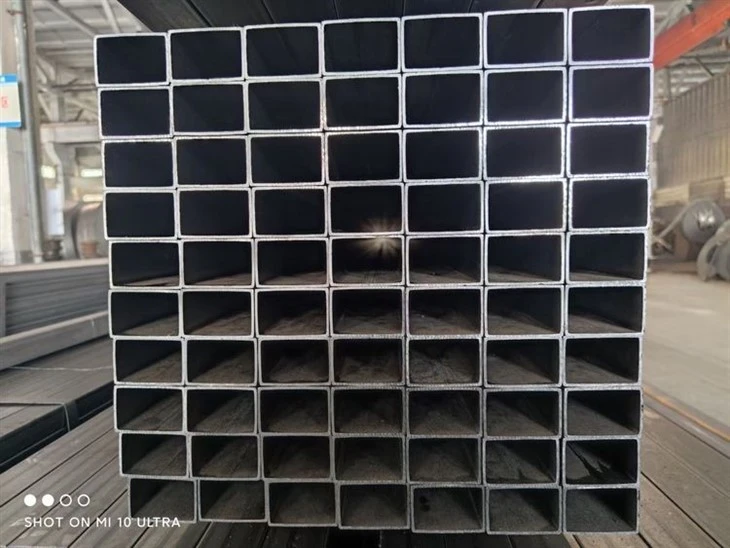
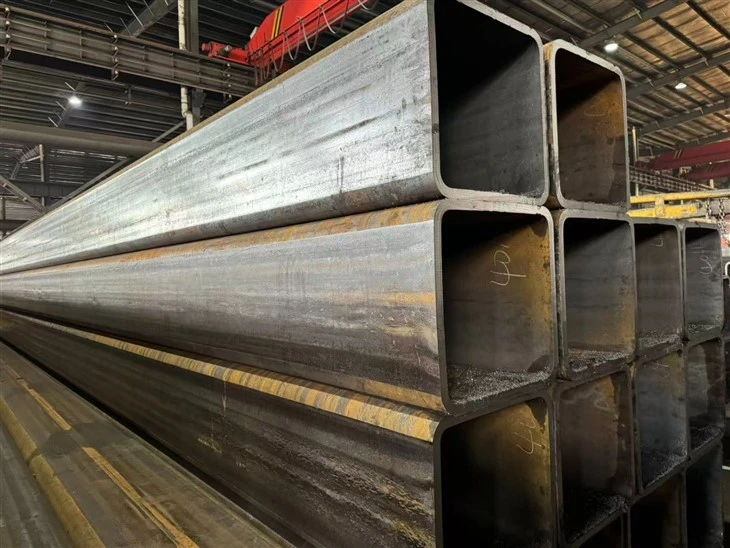
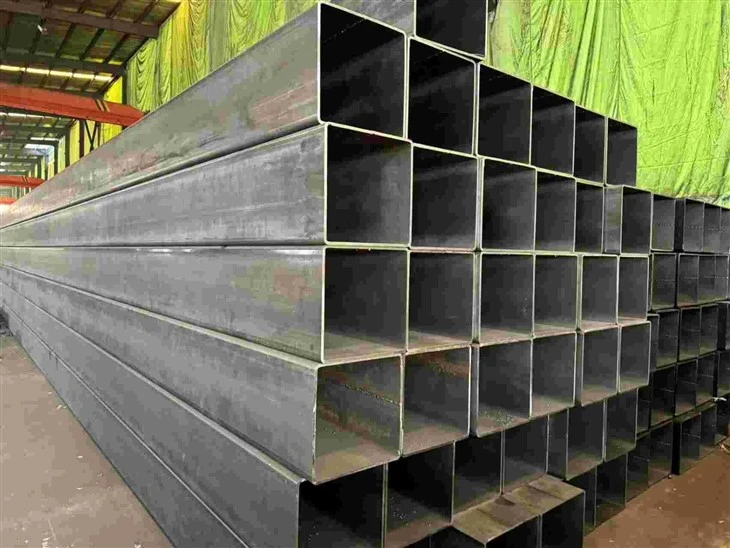
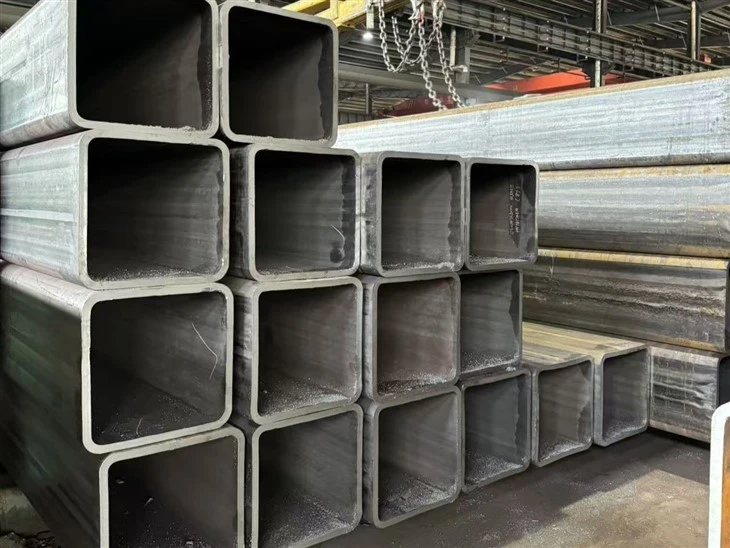
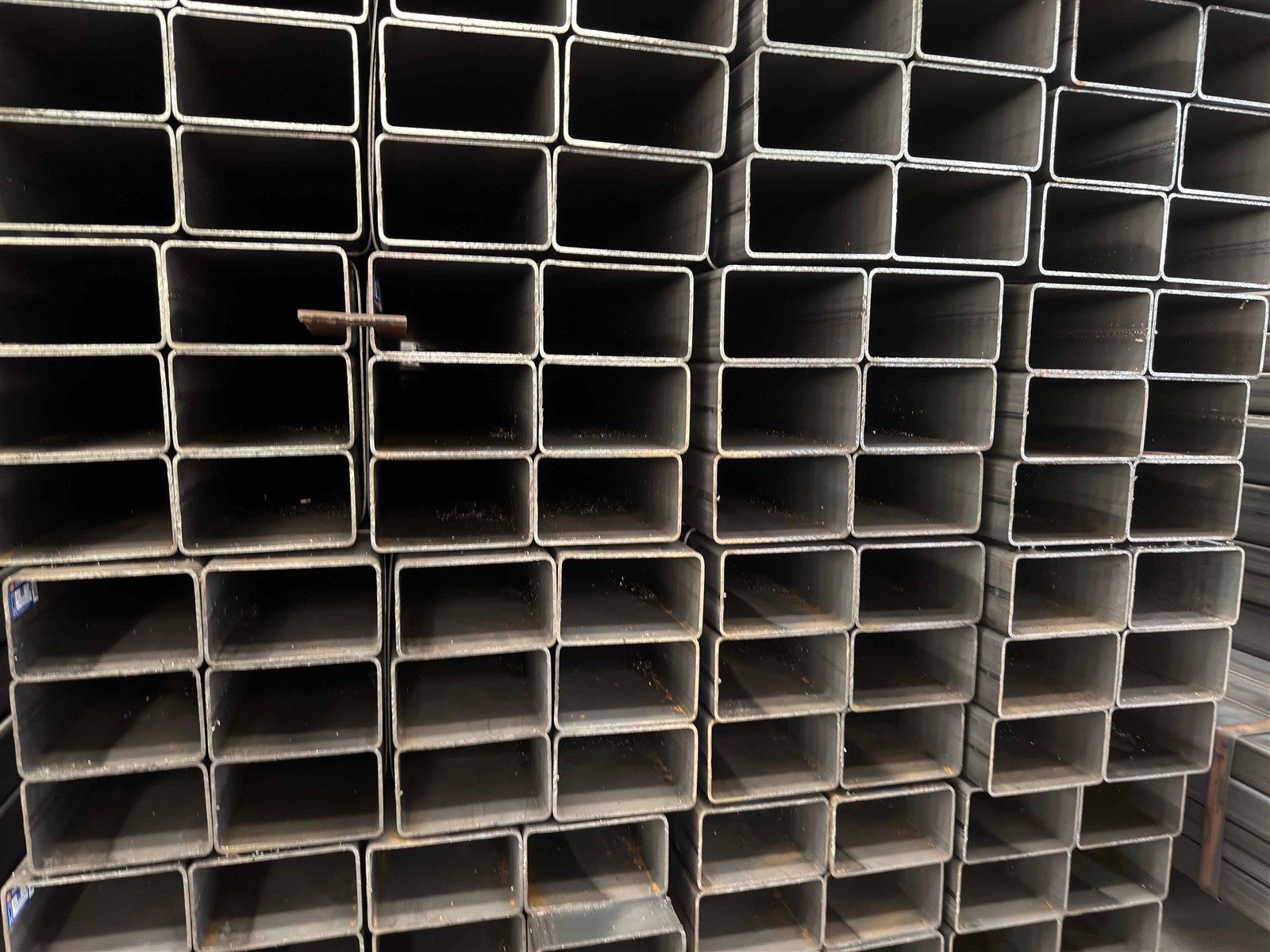
Tianjin Brisk Metalwork Co., Ltd. is one of the leading manufacturers and suppliers of thin-walled carbon steel welded square pipe in China. We have world-leading production equipment and strong manufacturing capabilities. Please feel free to buy bulk durable thin-walled carbon steel welded square pipe from our factory.
Tianjin Brisk Steel is one of the Thin-Walled Carbon Steel welded square pipe in China. Our products are mainly exported to the Middle East, Southeast Asia, Europe, New Zealand, and other regions.If you would like to learn more about our products, feel free to contact us and send your purchase list.



Quick Spec Table
| Property | Typical Range |
|---|---|
| Shape | Square (equal-sided), welded (ERW) |
| Outer size range | 10 x 10 mm – 100 x 100 mm (3/8" – 4") |
| Wall thickness | 0.8 mm – 3.0 mm (thin-wall band; heavier walls available on the standard line) |
| Thickness-to-width ratio | Typically below 1:15 - the practical dividing line between "thin-wall" and standard square tube |
| Standard | ASTM A500 Grade A/B/C, ASTM A513 Type 5/6, EN 10219 S235/S275 |
| Length | 6 m fixed, or cut-to-length / coil-fed |
| Tolerance (wall) | ±10% typical, tighter bands available on request |
| Finish | Black (mill), pre-galvanized coil, or hot-dip after welding |
| Common grades | ASTM A500 Grade A |
Why "Thin-Wall" Is Its Own Category
Most square-pipe buying guides treat wall thickness as a single sliding scale - pick a number, get a price. That works for structural columns and thick-wall fabrication, but it breaks down once you're below roughly 3 mm wall. At that gauge, three things change that don't apply to standard-wall square tube:
- Forming risk goes up. Squaring a thin-wall round into a sharp-cornered square puts more strain on the corner radius relative to the wall thickness. Push the ratio too far and the corners thin out or crack during roll-forming.
- Welding gets touchier. High-frequency ERW welding on thin strip is prone to burn-through if line speed and squeeze pressure aren't matched to the exact gauge. A weld bead that would be invisible on a 4 mm wall can leave a visible ridge - or a weak spot - on a 1 mm wall.
- Straightness and squareness tolerances tighten in relative terms. A 0.5 mm bow that's negligible on a heavy section becomes a visible defect on light tube used for visible framing or furniture.
None of this makes thin-wall pipe a lesser product - it's a different manufacturing discipline aimed at a different job: light structural framing, enclosures, racking, fencing infill, and fabrication where every extra kilogram of steel is dead cost, not extra strength you need.
How Thin-Wall Square Pipe Is Made
Slit coil to strip width sized for the target square perimeter, accounting for the tighter corner-radius allowance used on light gauges.
Cold roll-form the strip through a forming mill tuned for low-gauge material - fewer, gentler passes than a heavy-wall line to avoid work-hardening the corners before the seam is even welded.
HF induction weld the seam, with squeeze rolls and current set specifically for the gauge running that day (this is re-tuned per thickness change, not left on a "standard" setting).
Size and square the tube through calibrating rolls, checking flat-side straightness continuously - thin sections show forming defects immediately, so in-line correction matters more here than on thick-wall product.
Cut to length, deburr the ends, and stack with corner protection - thin-wall tube dents in transit more easily than heavy tube, so bundling and packaging get extra attention.
Inspect: wall thickness by ultrasonic gauge at multiple points per length (thin wall has more room for thickness drift than thick wall), plus visual weld-seam and squareness checks.

Where Thin-Wall Square Pipe Fits - and Where It Doesn't
Good fit:
- Light structural framing (non-load-bearing partitions, canopy frames, small shelters)
- Furniture and shop-fitting frames (tables, shelving, display stands)
- Fencing and railing infill panels
- HVAC duct supports and light equipment frames
- Agricultural fencing and small-gauge enclosures
- Signage frames and lightweight architectural trim
Not a fit - go heavier instead:
- Load-bearing structural columns or beams (use standard-wall A500/EN 10219 rated to AISC or Eurocode allowable stress)
- Anything requiring welded connections that will see repeated cyclic load - thin-wall welds have less material to absorb fatigue
- Underground or below-grade use without a coating spec matched for the exposure - thin sections corrode through faster than thick ones at the same corrosion rate
- Any application already quoted with a required minimum wall thickness for code compliance - check the wall spec before switching to a lighter one to save cost
FAQ
Q: What's the minimum wall thickness available in welded square pipe?
A: Most mills can hold down to around 0.8 mm on small sizes (up to roughly 40 mm square). Below that, forming and weld consistency both become unreliable, and few suppliers will quote it with a standard tolerance.
Q: Is thin-wall square pipe as strong as thick-wall pipe of the same outer size?
A: No - bending and torsional strength scale with wall thickness and section modulus, not just outer dimension. A thin-wall tube can look identical to a thick-wall one from outside but carry a fraction of the load. Always spec by both outer size and wall thickness together.
Q: Can thin-wall square pipe be hot-dip galvanized after welding?
A: Yes, and it's generally the better option for outdoor use, but thin sections need a controlled dip time and temperature - over-dipping a light-gauge tube can warp it or build an uneven coating thickness compared to thicker structural tube.
Q: Does thin-wall pipe cost less per length than standard-wall pipe of the same size?
A: Usually, since it's priced by weight and uses less steel - but not always proportionally, because thin-gauge forming runs slower and has higher scrap rates than standard-wall production, which can narrow the price gap on smaller orders.


Hot Tags: thin-walled carbon steel welded square pipe, China thin-walled carbon steel welded square pipe manufacturers, suppliers, factory, EN 10210 S355J0H HOLLOW SECTION, hollow section dealer, modular hollow section, retail hollow section, weather resistant hollow section, welded hollow section


