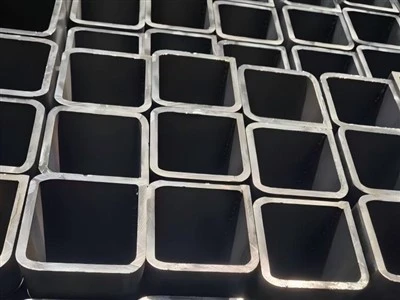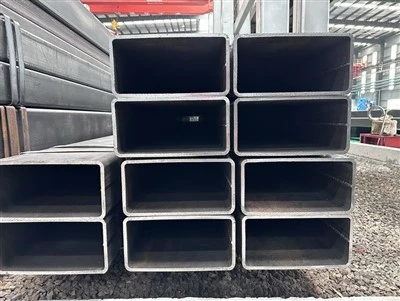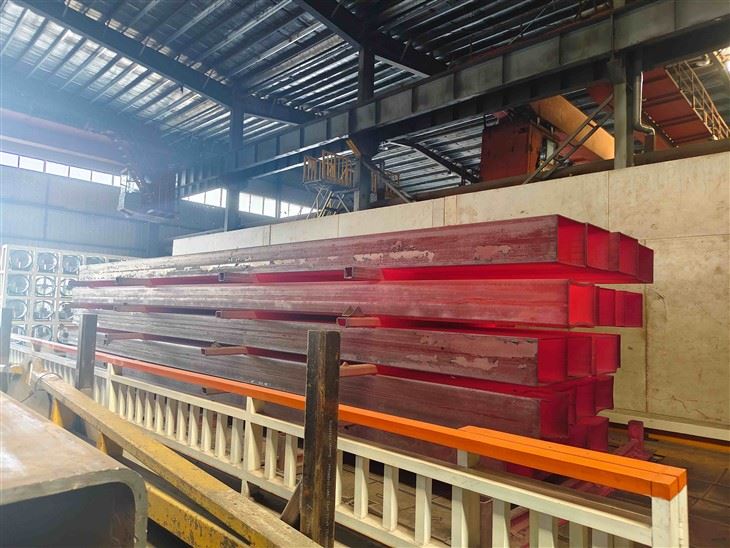
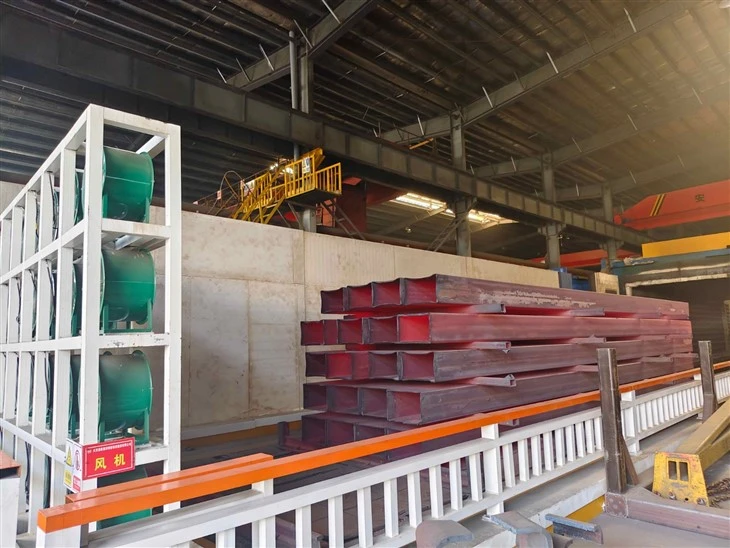
Tianjin Brisk Metalwork Co., Ltd. is one of the leading manufacturers and suppliers of normalized rectangular hollow section in China. We have world-leading production equipment and strong manufacturing capabilities. Please feel free to buy bulk durable normalized rectangular hollow section from our factory.
Tianjin Brisk Steel is one of the manufacturers of Normalized Rectangular Hollow Section in China. Our products are mainly exported to the Middle East, Southeast Asia, Europe, New Zealand, and other regions.If you would like to learn more about our products, feel free to contact us and send your purchase list.


Product Introduction
Normalized Square & Rectangular Hollow Sections (+N)
Square Hollow Section (SHS) / Rectangular Hollow Section (RHS) in normalized condition (+N) refers to hollow structural sections which undergo a full‑body offline normalizing heat‑treatment after forming and welding.
Manufacturing Process
The tubes are firstly formed and cooled down to room temperature. Afterwards, the finished sections are reheated in a furnace to 880‑930℃, held for sufficient soaking time, then cooled freely in still air. Separate furnace reheating is required. Normalizing‑Rolled (+NR) without secondary heating is not equal to normalized (+N) condition.
normalized SHS RHS, hot‑finished square hollow section, offline normalizing heat treatment, steel factory
Two mainstream production routes are available
-
Hot‑rolled round pipe → hot‑extruded / hot‑rolled into square or rectangular shape → cooling → off‑line furnace normalizing (+N) → straightening & finished. Hot‑finished hollow sections under EN 10210‑1 support off‑line normalizing treatment after forming or welding.
-
Hot‑rolled steel strip → cold forming → ERW high‑frequency welding → cooling to ambient temperature → off‑line full‑body furnace normalizing (+N).
- Common Misunderstanding: Hollow sections made from normalizing‑rolled (+NR) base plate are not equal to fully normalized finished tubes. Cold‑forming will re‑introduce residual stress and deformed grain structure at corner areas.
Comparison: +N Off‑line Normalizing VS +NR Normalizing‑Rolled
| Item | +N Off‑line Normalizing Heat Treatment | +NR Normalizing‑Rolled |
|---|---|---|
| Heating Method | Secondary reheating in furnace after forming | Utilize residual rolling heat, no secondary heating |
| Designation | Normalized | Normalizing‑Rolled |
| Grain Uniformity | Best uniformity over wall thickness and corners / welds | Slightly poorer core‑zone uniformity for heavy‑wall tubes |
| Residual Stress | Lowest; cold‑forming stress fully released | Better than as‑hot‑rolled condition yet higher than off‑line normalized products |
| Low‑temperature Impact Toughness | Most stable, preferred option for heavy‑wall & low‑temperature projects | Meets equivalent normalizing property requirements with higher residual stress |
| Cost | Higher (extra energy consumption for heat‑treatment) | Lower cost |
| Typical EN Grade | S355J2H+N, S460NH | S355J2H‑NR |
Performance Advantages of Normalized Hollow Sections
- Grain refinement, homogeneous microstructure on tube body and weld seam
- Residual stress generated from cold‑bending can be completely eliminated, minimizing welding deformation in subsequent fabrication
- Stable low‑temperature impact property, suitable for working conditions at ‑20 ℃ / ‑50 ℃
- Excellent weldability and reduced cold‑crack risk during welding
- Corner hardening caused by cold forming can be removed
Applicable Standards & Grades
- EN 10210‑1 Hot‑finished hollow sections S355J2H+N, S420NH, S460NH
- EN 10219‑3 Cold‑formed high‑strength hollow sections S460NH, S500NH (Only high‑strength fine‑grain grades support finished‑product normalizing)
- Full finished‑product heat‑treatment after forming is not permitted for standard EN 10219‑1 cold‑formed hollow sections. But Low-temperature stress-relief annealing (550–580°C) can be performed.
FAQ
Q: Why is offline‑normalized SHS/RHS better for low‑temperature projects?
A: Off‑line normalizing refines grain structure over the whole section and fully releases forming‑related residual stress. It eliminates corner hardening, delivers stable Charpy‑V‑Notch impact values at ‑20℃, ‑40℃ or even ‑50 ℃, and reduces cold‑crack risks during field welding in cold climate construction.
Q: What does "off‑line normalized (+N)"for square & rectangular hollow sections exactly mean?
A: Off‑line normalizing (+N) is an independent, full‑body heat‑treatment after tube forming. The finished hollow sections are cooled to room temperature first, then reheated inside a furnace to 880‑930 ℃, held for soaking, and cooled freely in air. Secondary furnace reheating is mandatory, different from normalizing‑rolled (+NR) products using rolling residual heat without re‑heating.
Q: What is the key difference between Off‑line Normalized (+N) VS Normalizing‑Rolled (+NR) hollow sections?
A: +N (Offline Normalized): Secondary reheating in furnace after forming; grain structure and residual‑stress relief are the most stable across wall, corners and weld seam. Best low‑temperature impact toughness, higher cost.
+NR (Normalizing‑Rolled): No secondary furnace heating, finished by controlled hot rolling and air cooling. Cheaper option, but residual stress is higher than fully normalized tubes.
Q: Will offline normalizing change mechanical properties such as yield strength?
A: When normalizing temperature is strictly controlled within 880‑930 ℃ with proper soaking time, yield strength, tensile strength and elongation still fully comply with EN 10210‑1 specification. The main improvement focuses on grain refinement, residual‑stress reduction and low‑temperature impact toughness.


Hot Tags: normalized rectangular hollow section, China normalized rectangular hollow section manufacturers, suppliers, factory, hollow section accessories, hollow section replacement, hollow section security, hollow section stability, hollow section supports, thick wall hollow section