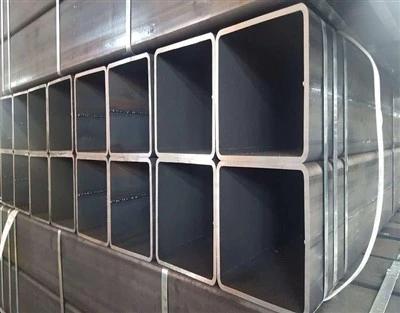
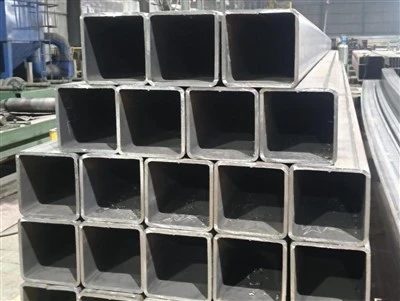
Tianjin Brisk Metalwork Co., Ltd. is one of the leading manufacturers and suppliers of en 10217-1 welded steel pipe for pressure purposes in China. We have world-leading production equipment and strong manufacturing capabilities. Please feel free to buy bulk durable en 10217-1 welded steel pipe for pressure purposes from our factory.
Tianjin Brisk Steel is one of the EN 10217-1 Welded Steel Pipe for Pressure Purposes in China. Our products are mainly exported to the Middle East, Southeast Asia, Europe, New Zealand, and other regions.If you would like to learn more about our products, feel free to contact us and send your purchase list.


The TR1 vs. TR2 Decision, in Plain Terms
Both test categories under EN 10217-1 share the same base chemistry and strength requirements for a given grade (P195, P235, P265). The difference is what gets tested and certified, not what steel is used. TR2 adds mandatory impact (Charpy) testing at specified temperatures; TR1 does not require it.
That sounds like a minor documentation difference until a project actually needs it. We've seen buyers order TR1 pipe on price, only to discover during commissioning or third-party inspection that their end client's specification, insurer, or the applicable Pressure Equipment Directive requirements actually called for demonstrated impact toughness - at which point TR1 pipe, even though it's the same base chemistry, doesn't have the certified test data to support the claim. The fix at that stage is a re-order, not a retest, because impact testing has to be built into the original production and certification process.
Our recommendation, and the question we ask at quotation stage: what's the pipe's minimum service temperature, and does the end client's specification or the project's regulatory framework require demonstrated impact properties? If either answer is uncertain, TR2 is the safer default even at a modest cost premium, because it's far cheaper than a rejected shipment.
Manufacturing Process
- Steel coil/plate selection meeting the chemistry required for the specified grade (P195, P235, or P265)
- Forming - high-frequency electric resistance welding (ERW/HFW) for smaller diameters, or submerged arc welding (SAW) for larger-diameter pipe, depending on size range
- Weld seam inspection - visual and non-destructive testing of the longitudinal seam
- Heat treatment where required by grade or by project specification, to achieve the mechanical and toughness properties ordered
- Full-body ultrasonic or radiographic testing per the buyer's specified NDE package
- Hydrostatic testing at the pressure and duration required by the standard, recorded per length
- Dimensional inspection against ordered OD, wall thickness, and length tolerances
- Impact (Charpy) testing on TR2 orders, at the specified test temperature, with results recorded per heat/lot
- Marking and certification - manufacturer, standard, grade, dimensions marked per spec; mill certificate issued per EN 10204 3.1 or 3.2 as required
Where We See A1085 Specified in Practice
- Seismic-force-resisting HSS bracing where AISC 341 capacity design governs member and connection sizing
- Long-span or heavily loaded HSS columns where the 0.93-vs-1.0 design wall thickness factor makes a measurable difference in section capacity at the same nominal size
- Projects with tight connection tolerances, where more consistent corner radius geometry simplifies gusset plate and cap plate fit-up
- Architecturally exposed structural steel (AESS) work, where more consistent wall and corner dimensions reduce surface irregularity after fabrication
Manufacturing Process
- Coil selection to the chemistry required for the specified grade
- Cold roll-forming of the flat strip into the target tube profile
- High-frequency welding of the longitudinal seam
- In-line weld seam normalizing/heat treatment as required to meet toughness and ductility targets
- Sizing and corner forming to controlled, consistent corner radius
- Full-length wall thickness verification, not spot-checked, to confirm minimum wall meets nominal
- Straightening and cut-to-length
- Mechanical testing - tensile, yield, and yield-to-tensile ratio calculation per heat/lot
- Marking and certification, with mill test report showing actual wall thickness and yield/tensile results
Documentation We See Buyers Ask For Most
- EN 10204 3.1 mill certificates as standard on most orders
- 3.2 certification (third-party witnessed testing) on projects where an independent inspection body or the end client requires it
- PED (Pressure Equipment Directive) declaration of conformity, where the finished piping system falls under EU pressure equipment regulations
- Charpy test records at the specified temperature, for TR2 orders - confirm the required test temperature at inquiry, since -10°C and 0°C testing are both referenced in the standard depending on the grade and option selected
FAQ
Q: If I'm not sure whether my project needs TR1 or TR2, what should I check first?
A: Start with the piping's minimum design/service temperature and whether your project falls under a regulatory framework (such as the EU Pressure Equipment Directive) that mandates demonstrated impact properties at that temperature. If you're unsure, share your project's design temperature and application with us and we can help confirm which category applies.
Q: Can TR1 pipe be upgraded to TR2 after production?
A: No - impact testing has to be part of the original production and certification process, tied to the specific heat and test lot. Pipe already certified as TR1 cannot be retroactively recertified as TR2 without re-manufacture and retesting from a qualified lot.
Q: What's the difference between 3.1 and 3.2 certification?
A: A 3.1 certificate is issued and validated by the manufacturer's own qualified inspection function. A 3.2 certificate additionally requires validation by an independent third-party inspector (or the purchaser's authorized representative), witnessing the testing. 3.2 typically adds cost and lead time - confirm with your project spec whether it's actually required before defaulting to it.
Q: Does EN 10217-1 cover pipe for elevated-temperature service?
A: No - EN 10217-1 covers pipe with specified room-temperature properties. Elevated-temperature pressure service is covered separately under EN 10217-2 (welded, elevated temperature) or the seamless EN 10216 series, depending on manufacturing method. Let us know your service temperature and we can confirm the correct standard.


Hot Tags: en 10217-1 welded steel pipe for pressure purposes, China en 10217-1 welded steel pipe for pressure purposes manufacturers, suppliers, factory, EN 10210 S355J2H HOLLOW SECTIONS, hollow section design, hollow section prediction, hollow section product design, hollow section troughs, strong hollow section