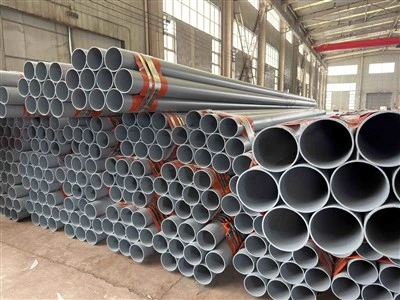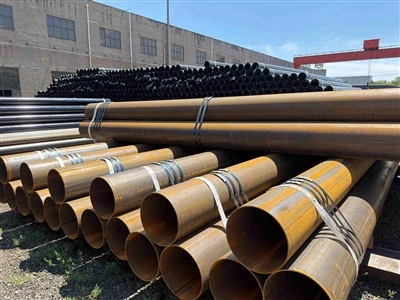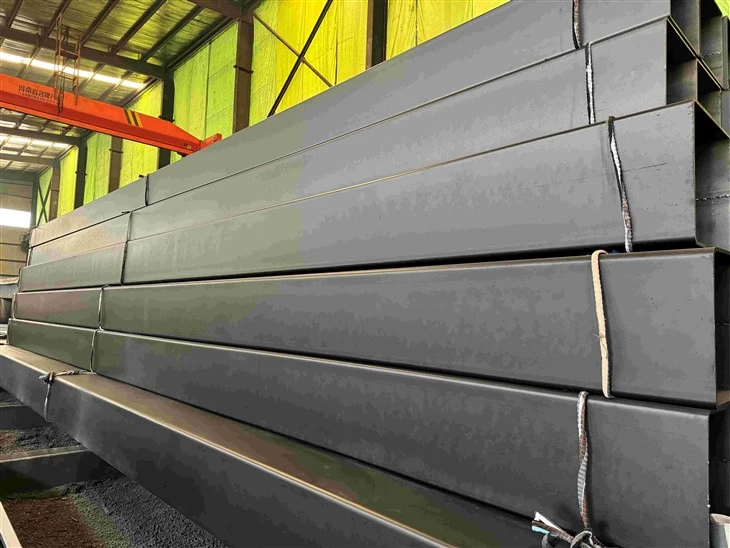


Tianjin Brisk Metalwork Co., Ltd. is one of the leading manufacturers and suppliers of hfw black square tube in China. We have world-leading production equipment and strong manufacturing capabilities. Please feel free to buy bulk durable hfw black square tube from our factory.
Tianjin Brisk Steel is one of the HFW Black Square Tube in China. Our products are mainly exported to the Middle East, Southeast Asia, Europe, New Zealand, and other regions.If you would like to learn more about our products, feel free to contact us and send your purchase list.


Quick Specs
| Item | Specification |
|---|---|
| Process | High-Frequency Welded (HFW), induction or contact type |
| Shape | Square (SHS) |
| Size range | 15x15mm – 200x200mm |
| Wall thickness | 0.8mm – 8mm |
| Standard | ASTM A500, EN 10219 |
| Grade | Q195–Q345, S235–S355, Gr. A/B/C |
| Length | 5.8m / 6m / 12m, or cut to order |
| Surface | Black, mill scale, no coating applied |
| Package | Bundled, strapped, tagged |
What "HFW" Actually Means - And Why the Buyer Rarely Sees It Written Down
Most square tube listings just say "ERW" and stop there. HFW is a specific welding method inside the ERW family, and the difference matters more than the shorthand suggests.
Standard ERW historically referred to low-frequency (50–450 Hz) or DC resistance welding, where the coil edges are heated over a wider zone before being pressed together. HFW instead uses induction coils running at roughly 200–400 kHz. The higher frequency concentrates heat into a much narrower band at the strip edges - the proximity effect pushes current density to the surface and edge of the material - so the weld happens fast, with a tight heat-affected zone (HAZ) and less grain coarsening on either side of the seam.
Two practical results follow from that:
- Line speed. HFW mills typically run 60–120 m/min versus 20–40 m/min for older low-frequency lines. That speed is part of why HFW square tube is priced competitively against seamless or hot-formed alternatives.
- Seam consistency. A narrower HAZ means less variation in hardness and toughness right at the weld line - relevant when the tube is about to be bent 90° four more times to make a square.
Almost none of this shows up in a spec sheet. It shows up in how consistently the tube performs after forming.
Why Squaring an HFW Tube Is a Different Problem Than Welding It
Square tube isn't welded square. It starts as round HFW tube, then goes through a second set of forming rolls that press it into a square profile before final sizing. That second step is where HFW-specific issues actually surface.
When round tube is squared, the material at what becomes the corner radius is stretched and thinned, while the flat faces see comparatively little deformation. If the weld seam happens to land at or near a corner during forming - rather than centered on a flat face - that seam sits exactly where the material is under the most forming stress and the most thinning. A seam with a slightly wider HAZ, or a mill running the forming rolls too aggressively for the wall thickness, can turn that into visible cracking or a seam that opens under load, well after the tube looked fine coming off the line.
This is a corner-radius-and-seam-position problem specific to squared HFW tube - it doesn't apply to round pipe, and it's separate from the general thin-wall forming risk that applies to any welded square section.
Case in point: A fence contractor received a batch of 40x40x2.0mm black square tube where roughly 8% of pieces developed hairline cracks at one corner during on-site post-hole driving. Inspection traced the cause to the mill rotating the seam position inconsistently between coils - on the cracked pieces, the seam had drifted onto the corner radius instead of staying centered on a face. The fix wasn't a different grade or thicker wall; it was requiring the supplier to hold seam position within a specified rotation tolerance during forming, which is a controllable mill setting, not a material limitation.
Why "Black" Here Isn't a Corrosion Decision
Black square tube means no coating was applied after forming - the surface is mill scale and residual oil, not bare rust-prone steel and not a protective layer either. On round HFW pipe, black finish often gets framed against galvanizing as a corrosion trade-off. For square tube specifically, black is more often chosen for a different reason: speed and downstream processing.
Fabricators who are going to weld, cut, drill, or paint the tube themselves generally prefer black stock - galvanizing has to be ground off before welding anyway, and painted or powder-coated finishes go over black tube more evenly than over a zinc layer. Black tube is also the faster stock item; galvanizing adds a processing step and typically a longer lead time.
That trade-off only holds for short-to-medium exposure before the tube is finished on-site. For anything staying outdoors or in a damp environment before final coating, black tube needs interim protection (indoor storage, oil film maintained, or fast turnaround to the paint line) - it is not a substitute for a corrosion-resistant finish.
Typical Applications
- Furniture and shelving frames (interior, painted after fabrication)
- Fence posts and gate frames (short lead-time projects, coated on-site)
- Agricultural equipment frames
- General workshop fabrication and machine bases
- Scaffolding components manufactured for immediate galvanizing or painting
Frequently Asked Questions (FAQ)
Q: Is HFW the same as ERW?
A: HFW is a type of ERW. "ERW" is the broader resistance-welding category; HFW specifically refers to the high-frequency induction or contact process most modern mills use. If a supplier just says "ERW" without specifying frequency, it's worth asking - most current production is HFW, but the distinction affects HAZ width and forming behavior.
Q: Does the weld seam position matter for square tube strength?
A: Under normal design loads, a properly formed seam centered on a flat face performs on par with the parent material. The risk is specifically when the seam drifts toward a corner during squaring, where forming stress is highest - that's a process-control issue, not an inherent seam weakness.
Q: Can black square tube be galvanized later?
A: Yes - black tube is commonly hot-dip galvanized after fabrication (post-galvanizing), and this is often preferred over pre-galvanized stock precisely because welding and cutting are done first.
Q: What wall thickness is realistic for small square sizes?
A: For sizes under 25x25mm, wall thickness is generally capped around 2.0–2.5mm due to corner-forming limits at that scale; thicker walls on very small sections increase corner cracking risk during squaring.


Hot Tags: hfw black square tube, China hfw black square tube manufacturers, suppliers, factory, cheap erw pipe, erw pipe demographic impact, erw pipe for drainage, erw pipe reuse, erw pipe sustainability, galvanized erw pipe