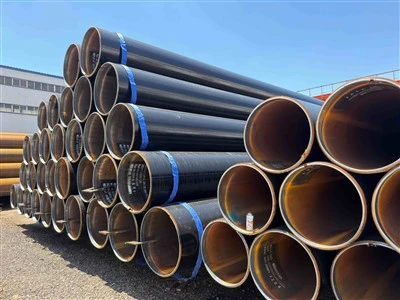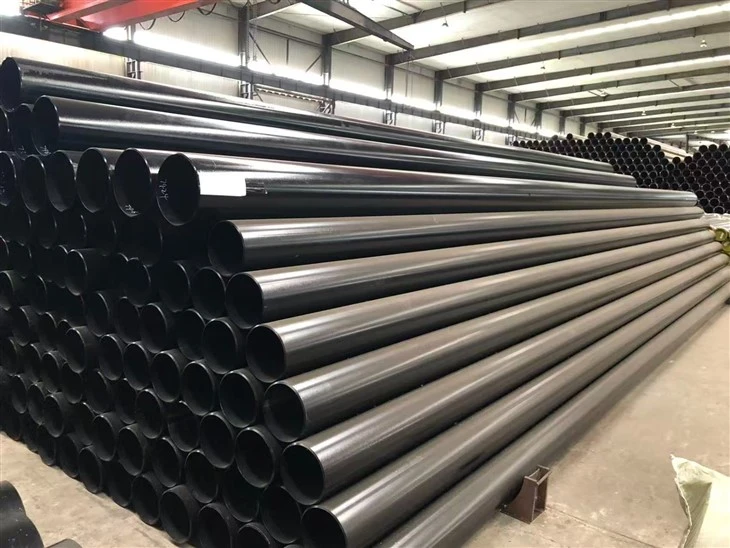
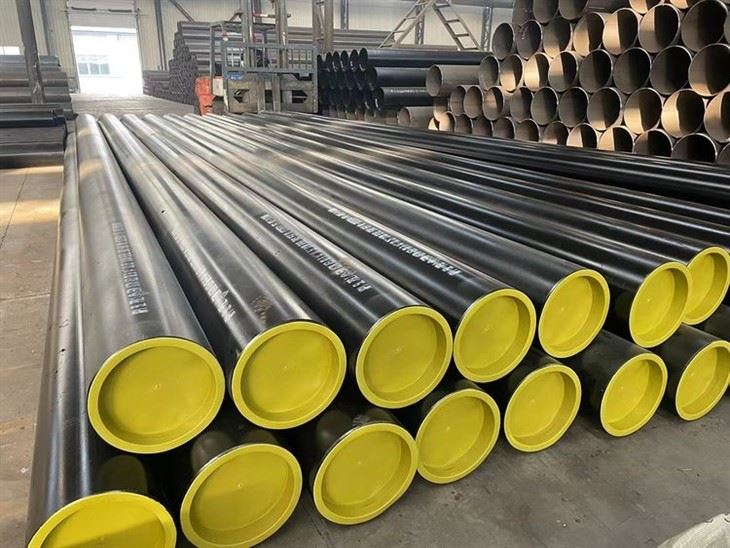
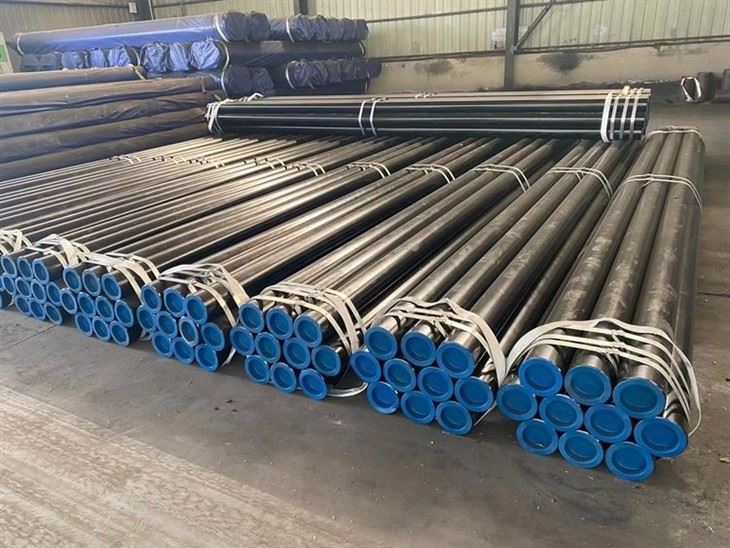
Tianjin Brisk Metalwork Co., Ltd. is one of the leading manufacturers and suppliers of astm a53 grade b erw steel pipe water supply in China. We have world-leading production equipment and strong manufacturing capabilities. Please feel free to buy bulk durable astm a53 grade b erw steel pipe water supply from our factory.
Tianjin Brisk Steel is one of the ASTM A53 Grade B ERW Steel Pipe Water Supply in China. Our products are mainly exported to the Middle East, Southeast Asia, Europe, New Zealand, and other regions.If you would like to learn more about our products, feel free to contact us and send your purchase list.


Grade A or Grade B - and why it's not just a strength question
A53 covers two grades, and for water supply service the choice is often made on the wrong basis. Grade A (30,000 psi minimum yield) and Grade B (35,000 psi minimum yield) are both routinely strong enough for the working pressures found in supply-side piping - most of these lines run well under either grade's rated capacity, so strength alone rarely forces a decision either way.
What actually separates them for water-contact service is chemistry, specifically the residual element limits:
| Element | Grade A max | Grade B max | Relevance to water supply |
|---|---|---|---|
| Carbon | 0.25% | 0.30% | Higher C in Grade B slightly raises hardenability - relevant if field-threading small-bore supply pipe |
| Manganese | 0.95% | 1.20% | Minor effect on weldability at these levels |
| Phosphorus | 0.05% | 0.05% | Same limit both grades - controls pitting-corrosion susceptibility |
| Sulfur | 0.045% | 0.045% | Same limit both grades - controls pitting-corrosion susceptibility |
The corrosion-relevant limits (P and S) are identical across both grades - so from a pure water-contact durability standpoint, Grade A and Grade B perform the same. Grade B is specified more often for water supply anyway, mostly because mills stock it more consistently across the full size range and because most supply-side specs default to it for consistency with transmission-side pipe on the same project, not because of a corrosion or safety advantage. If your spec doesn't call out a grade and cost matters at small diameters, it's worth asking your engineer whether Grade A is acceptable before defaulting to B.
What "meets ASTM A53" does not tell you about drinking water safety
This is the gap that causes the most rework on water supply orders: A53 is a mechanical and dimensional standard. It says nothing about whether a pipe or its lining is safe for contact with water intended for human consumption. That determination comes from a separate certification - NSF/ANSI/CAN 61 (Drinking Water System Components - Health Effects) in North America, or an equivalent regional potable-water contact standard elsewhere.
In practice this plays out as follows:
- Bare steel pipe is not itself NSF/ANSI 61 listed as a finished product category the way plastic pipe or fittings are - the relevant certification applies to the wetted-surface material, which on a lined pipe is the lining, not the base steel.
- Cement mortar lining and NSF/ANSI 61-listed epoxy linings are the two linings we supply that carry documented potable-water contact approval; the certification travels with the lining product and batch, and we provide that documentation separately from the pipe's own mill test report.
- A galvanized interior is sometimes assumed to be "clean enough" for drinking water by default - it is not automatically NSF/ANSI 61 listed, and some water authorities restrict or prohibit galvanized interior surfaces on potable lines specifically because of zinc leaching and lead-solder-era plumbing concerns. Check your local water authority's rules before specifying galvanized interior for a potable line.
If your project specification requires NSF/ANSI 61 compliance and doesn't separately call out the lining certification, that is worth flagging to your engineer before the order is placed - it is very easy for "steel pipe, ASTM A53" to be read as covering the whole requirement when it only covers the base pipe.
Where water supply pipe actually goes
Supply-side A53 pipe tends to run smaller and terminate closer to the end user than transmission pipe does:
| Application | Typical size range | Lining/coating note |
|---|---|---|
| Building water service entry | DN20-DN100 | Galvanized (where locally permitted) or epoxy-lined |
| High-rise domestic water riser | DN50-DN200 | Epoxy-lined, NSF/ANSI 61 where potable |
| Campus/community distribution loop | DN100-DN300 | Cement mortar or epoxy lining, exterior FBE if buried |
| Fire standpipe supply (non-potable) | DN50-DN200 | Black or painted, no lining requirement |
| Irrigation supply branch | DN50-DN250 | Bare or FBE, no potable lining needed |
Sizing tends to top out well before the point where ERW's process range becomes a constraint, which is a different conversation than the ERW-vs-LSAW diameter tradeoff that comes up on transmission-main orders.
Case example
A campus facilities department ordered A53 Grade A pipe for a new domestic water riser system, specifying galvanized finish because that was what the existing building's risers used. The state's plumbing code, reviewed during permitting, restricted galvanized interior surfaces on new potable installations above a certain size due to a state-level lead-and-copper rule update the facilities team hadn't tracked. The order was revised to Grade B pipe with NSF/ANSI 61-listed epoxy lining before fabrication started - a straightforward swap once flagged, but one that would have failed inspection if caught after installation instead of at the order stage. We now ask directly whether a supply order is potable and, if so, which jurisdiction's plumbing code applies, before confirming finish.
Frequently Asked Questions (FAQ)
Q: Is ASTM A53 pipe itself certified safe for drinking water?
A: No. A53 is a mechanical and dimensional specification with no provision for potable-water contact safety. That certification (NSF/ANSI/CAN 61 or an equivalent regional standard) applies to the lining or coating in contact with the water, not to the base A53 pipe specification itself.
Q: Do I need Grade B, or is Grade A sufficient for a water supply line?
A: For most supply-side working pressures, either grade is mechanically adequate, and the corrosion-relevant chemistry limits (phosphorus and sulfur) are identical between the two grades. Grade B is more commonly stocked and more often specified by default; Grade A can be a reasonable cost-saving option if your engineer confirms it meets the project spec.
Q: What's the difference between "water supply" and "water transmission" pipe in practice?
A: There's no separate ASTM standard for each - both are typically A53 or, at larger diameters, AWWA-standard pipe. The distinction is functional: transmission pipe moves water in bulk between a source, treatment plant, and distribution network, usually at larger diameter with surge-pressure design as a central concern. Supply pipe carries water the last distance to the point of use - buildings, campuses, individual connections - usually at smaller diameter with contact-safety certification as the central concern.
Q: Can galvanized A53 pipe be used for a potable water line?
A: Only where the local plumbing code permits it, and increasingly it is restricted for new potable installations because galvanized interior surfaces are not automatically NSF/ANSI 61 listed and can raise concerns around zinc and legacy lead-solder joints. Confirm with your local code before specifying galvanized for anything carrying drinking water.


Hot Tags: astm a53 grade b erw steel pipe water supply, China astm a53 grade b erw steel pipe water supply manufacturers, suppliers, factory, erw pipe business opportunity, erw pipe for fencing, erw pipe painting process, erw pipe suppliers, erw pipe vulnerability, standard erw pipe