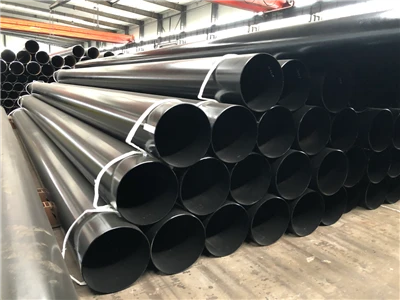
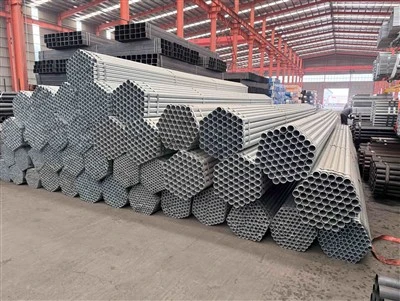
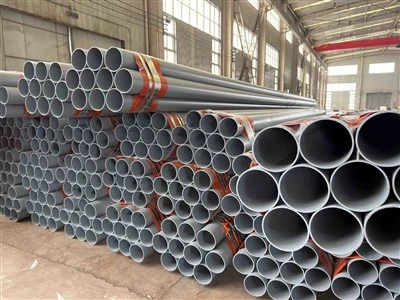
Tianjin Brisk Metalwork Co., Ltd. is one of the leading manufacturers and suppliers of astm a53 fluid pipeline pipe: ms pipe & gi pipe in China. We have world-leading production equipment and strong manufacturing capabilities. Please feel free to buy bulk durable astm a53 fluid pipeline pipe: ms pipe & gi pipe from our factory.
Tianjin Brisk Steel is one of the JIS G3101 SS400 ERW Structural Pipe in China. Our products are mainly exported to the Middle East, Southeast Asia, Europe, New Zealand, and other regions.If you would like to learn more about our products, feel free to contact us and send your purchase list.


Quick Spec Overview
| Item | MS Pipe (Black) | GI Pipe (Galvanized) |
|---|---|---|
| Standard | ASTM A53/A53M | ASTM A53/A53M |
| Type | E (ERW), S (Seamless), F (Furnace Butt-Welded) | E (ERW), S (Seamless) |
| Grade | A or B | A or B |
| Size Range | NPS 1/8" - NPS 26" (DN6 - DN650) | NPS 1/8" - NPS 24" (DN6 - DN600) |
| Wall Thickness | Sch 10 - Sch 160, STD/XS/XXS | Sch 10 - Sch 80 (common range) |
| Finish | Mill oil / bare black | Hot-dip zinc coating per A53 |
| End | Plain, beveled, or threaded | Plain, beveled, or threaded |
| Typical Fluid Use | Fuel, oil, steam, gas, hot water | Cold water, compressed air, general utility fluid |
MS Pipe (mild steel, black finish) and GI Pipe (galvanized iron, zinc-coated finish) are the two most commonly ordered finish options for ASTM A53 pipe used in fluid pipeline service. Both are made from the same base pipe under the same standard - the difference is the surface treatment, and that difference has real consequences for which fluid each one should actually carry.
Same Standard, Different Job
A53 covers both finishes under one specification, which is exactly why buyers get confused: "ASTM A53" alone does not tell you whether you are ordering MS or GI pipe - that has to be specified separately on the purchase order, along with Type and Grade. We have covered the terminology and standard-mapping question in depth in a separate article; here we focus on the part that actually affects your pipeline design: which finish belongs on which fluid service, and why.
Matching MS or GI to the Fluid You're Actually Moving
This is the decision most buyers skip past, and it is the one that causes the most field problems.
Cold water and general utility service. GI pipe is the standard choice here. The zinc coating provides sacrificial protection against internal and external corrosion in typical ambient-temperature water, and it is what most buyers mean by "GI pipe" in the first place.
Hot water and steam above roughly 60 degC (140 degF). This is where GI pipe stops being the automatic choice. Zinc's corrosion protection breaks down faster at elevated temperature - the reaction rate between zinc and water accelerates, and above a certain threshold the coating can actually reverse its protective behavior relative to the base steel. Most engineering guidance for hot water and steam service points toward MS (black) pipe with an appropriate internal lining or coating, rather than relying on galvanizing to do a job it is not well suited for at that temperature.
Compressed air. Both finishes appear in the field. GI has historically been popular for slowing internal rust, but zinc flaking off the inside of aging galvanized air lines is a known nuisance in compressed air systems, particularly where moisture collects. Many industrial buyers now specify black pipe with a properly sized air dryer and moisture trap instead of relying on the coating.
Fuel and oil lines. MS (black) pipe is the standard here. Zinc coatings have a documented compatibility concern with certain fuel chemistries, and most fuel-handling codes and equipment manufacturers do not recommend galvanized pipe for this service. If you are quoting a fuel line project and a galvanized option comes back cheaper, that is worth double-checking against your project's code requirements before ordering.
Corrosive or chemically aggressive fluids. Neither finish is a chemical-resistance solution by itself. A53's zinc coating and its bare black finish are both selected for general corrosion resistance in ordinary service, not for handling acids, caustics, or aggressive chemical mixtures - that calls for a dedicated internal lining, which we can quote separately if your fluid falls into this category.
What Stays the Same Between MS and GI
Choosing the finish does not change the underlying pipe:
- Same base steel chemistry and mechanical properties - Grade A or B under A53 applies identically to black and galvanized pipe
- Same wall thickness and schedule options - selecting GI does not require a different wall thickness calculation than MS at the same pressure and diameter
- Same weld type options - Type E (ERW) and Type S (seamless) are both available in either finish; Type F (furnace butt-welded) is produced black only and is not galvanized under this standard
- Same dimensional tolerances - NPS/OD/schedule tables apply the same way regardless of finish
This matters at the ordering stage: if your engineer specified A53 Grade B Type E for a project and you only change the finish note from black to galvanized (or the reverse), the pressure rating, schedule, and mechanical certification stay valid - you are not re-specifying the pipe, only its surface treatment.
Why Buyers Work With Us for MS and GI Fluid Pipe
- One mill produces both finishes on the same base pipe, so switching from MS to GI (or the reverse) mid-project does not mean sourcing from a different supplier
- Type E, Type S, and Type F available in black; Type E and Type S available galvanized, per A53
- Zinc coating applied and verified to A53's own coating-weight requirement, not a generic galvanizing spec
- Full mill test certificates covering chemistry, mechanical properties, and coating weight where applicable
- Guidance on finish selection for your specific fluid and temperature before you place the order, not after
Frequently Asked Questions (FAQ)
Q: Is GI pipe automatically better than MS pipe for a fluid pipeline?
A: No. GI pipe adds corrosion protection suited to cold water and general ambient-temperature service. For hot water, steam, fuel, and some chemical services, black (MS) pipe with the correct lining or coating is usually the more appropriate choice, not a downgrade.
Q: Can I order the same pipe in both MS and GI finish for one project?
A: Yes. Since both finishes share the same base steel, wall thickness, and Type/Grade options under A53, it is common to specify GI for the cold-water branches of a system and MS for the hot-water, steam, or fuel branches of the same project.
Q: Does galvanizing change the pressure rating of the pipe?
A: No. Pressure rating is a function of wall thickness, diameter, and grade - the same calculation applies whether the pipe is black or galvanized. The zinc coating affects corrosion life, not mechanical pressure capacity.
Q: What sizes and wall thicknesses do you stock or produce for MS and GI pipe?
A: NPS 1/8" through NPS 26" in black, and NPS 1/8" through NPS 24" in galvanized, across Sch 10 through Sch 160 depending on Type and size. Send us your NPS, schedule, and finish requirement and we will confirm availability and lead time.


Hot Tags: astm a53 fluid pipeline pipe: ms pipe & gi pipe, China astm a53 fluid pipeline pipe: ms pipe & gi pipe manufacturers, suppliers, factory, erw pipe extrusion process, erw pipe international trade, erw pipe mitigation, erw pipe order, erw pipe trade regulations, erw pipe upgradability