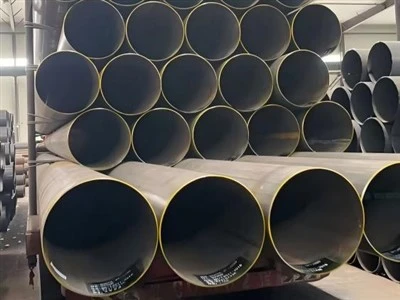
As a seasoned supplier of Electric Resistance Welded (ERW) pipes, I've witnessed firsthand the diverse applications and environments these pipes are exposed to. Coatings play a crucial role in enhancing the performance and longevity of ERW pipes, protecting them from corrosion, abrasion, and other forms of damage. In this blog, I'll explore the types of coatings commonly used on ERW pipes and their benefits.
1. Epoxy Coatings
Epoxy coatings are one of the most popular choices for ERW pipes, especially in applications where corrosion resistance is a primary concern. These coatings are known for their excellent adhesion, chemical resistance, and durability. Epoxy coatings can be applied in various forms, including powder coatings and liquid coatings.
Powder Epoxy Coatings
Powder epoxy coatings are applied electrostatically to the surface of the ERW pipe. The powder particles are charged and attracted to the grounded pipe, creating a uniform coating. Once applied, the pipe is heated to a specific temperature, causing the powder to melt and flow, forming a smooth and continuous film.
Powder epoxy coatings offer several advantages. They provide a high level of corrosion protection, even in harsh environments. They are also resistant to abrasion, chemicals, and UV radiation. Additionally, powder epoxy coatings are environmentally friendly, as they do not contain solvents or volatile organic compounds (VOCs).
Liquid Epoxy Coatings
Liquid epoxy coatings are applied using a brush, roller, or spray gun. They are typically two-component systems, consisting of a resin and a hardener. When mixed together, the resin and hardener react to form a cross-linked polymer network, providing excellent adhesion and corrosion resistance.
Liquid epoxy coatings are versatile and can be applied to a variety of surfaces, including steel, concrete, and wood. They are also suitable for both indoor and outdoor applications. However, liquid epoxy coatings require careful surface preparation and application to ensure proper adhesion and performance.
2. Polyethylene Coatings
Polyethylene coatings are another common choice for ERW pipes, particularly in applications where protection against moisture and mechanical damage is required. These coatings are made from high-density polyethylene (HDPE) or low-density polyethylene (LDPE) and are applied to the pipe surface using an extrusion process.
HDPE Coatings
HDPE coatings offer excellent chemical resistance, moisture resistance, and impact resistance. They are also resistant to UV radiation and can withstand a wide range of temperatures. HDPE coatings are commonly used in buried pipelines, where they provide long-term protection against corrosion and soil stress.
LDPE Coatings
LDPE coatings are more flexible than HDPE coatings and offer better resistance to cracking and peeling. They are commonly used in applications where the pipe is subject to bending or flexing, such as in offshore pipelines or in areas with high seismic activity.
3. FBE Coatings
Fusion Bonded Epoxy (FBE) coatings are a type of powder coating that is widely used in the oil and gas industry. These coatings are applied to the pipe surface using an electrostatic spray process and are then cured at high temperatures to form a hard, durable coating.
FBE coatings offer excellent corrosion protection, even in the most aggressive environments. They are also resistant to abrasion, chemicals, and UV radiation. Additionally, FBE coatings provide a smooth surface finish, which reduces friction and improves the flow of fluids through the pipe.
4. Zinc Coatings
Zinc coatings, also known as galvanizing, are a traditional method of protecting ERW pipes from corrosion. These coatings are applied by immersing the pipe in a bath of molten zinc, which forms a metallurgical bond with the steel surface.
Hot-Dip Galvanizing
Hot-dip galvanizing is the most common method of applying zinc coatings to ERW pipes. It provides a thick, uniform coating of zinc that offers excellent corrosion protection. Hot-dip galvanized pipes are suitable for a variety of applications, including construction, agriculture, and transportation.
Electrogalvanizing
Electrogalvanizing is a process in which a thin layer of zinc is deposited on the pipe surface using an electric current. This method is less expensive than hot-dip galvanizing but provides a lower level of corrosion protection. Electrogalvanized pipes are commonly used in applications where appearance is more important than long-term corrosion resistance, such as in decorative applications.
5. Bituminous Coatings
Bituminous coatings are made from asphalt or coal tar and are applied to the pipe surface using a brush, roller, or spray gun. These coatings provide excellent waterproofing and corrosion protection, especially in underground or underwater applications.
Bituminous coatings are also resistant to chemicals, abrasion, and UV radiation. However, they are not suitable for use in high-temperature environments, as they can soften and flow at elevated temperatures.
6. Ceramic Coatings
Ceramic coatings are a relatively new type of coating for ERW pipes, but they are gaining popularity due to their excellent performance characteristics. These coatings are made from ceramic materials, such as alumina, zirconia, or silicon carbide, and are applied to the pipe surface using a thermal spray process.
Ceramic coatings offer high levels of hardness, wear resistance, and corrosion resistance. They are also resistant to high temperatures and thermal shock. Ceramic coatings are commonly used in applications where the pipe is exposed to extreme conditions, such as in the oil and gas industry, power generation, and aerospace.
Conclusion
Choosing the right coating for your ERW pipes is essential to ensure their long-term performance and durability. The type of coating you choose will depend on several factors, including the application, the environment, and the budget. As a supplier of ERW pipes, I can help you select the most suitable coating for your specific needs.
If you're interested in learning more about our ASTM A672 EFW Pipes, ASTM A53 ERW Pipe, or EN39 SCAFFOLD TUBE, please don't hesitate to contact us for a detailed discussion and to start the procurement process. Our team of experts is ready to assist you in finding the best solutions for your projects.


References
- NACE International. (2016). Coating Selection Guide for Pipeline Systems.
- ASTM International. (2021). Standard Specification for Electric-Fusion-Welded Steel Pipe (NPS 1/8–26).
- ISO 21809-1:2019. Petroleum and natural gas industries — External coatings for buried or submerged pipelines used in pipeline transportation systems — Part 1: Polyolefin coatings (3-layer polyethylene and 3-layer polypropylene).