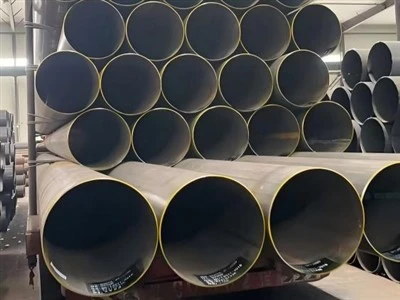
As an ERW pipe supplier, I've had my fair share of questions about the tests conducted on ERW pipes. You see, ERW pipes are used in a wide range of applications, from construction to oil and gas, so it's super important that they meet certain quality standards. In this blog, I'll walk you through the main tests we carry out to ensure our pipes are top-notch.
Visual Inspection
The first and probably the most basic test is the visual inspection. It's exactly what it sounds like - we just take a good look at the pipes. We check for any obvious defects such as cracks, dents, or surface irregularities. This is a crucial step because even a small flaw can lead to big problems down the line. For example, a crack could cause the pipe to leak, which is a major no - no, especially in applications like transporting gas or water.
During the visual inspection, we also look at the dimensions of the pipe. The diameter, wall thickness, and length need to be within the specified tolerances. If the pipe is too thick or too thin, it might not perform as expected. So, we use measuring tools like calipers and micrometers to make sure everything is just right.
Ultrasonic Testing (UT)
Ultrasonic testing is another important test. It's a non - destructive testing method that uses high - frequency sound waves to detect internal flaws in the pipes. The way it works is that a transducer sends ultrasonic waves into the pipe. When these waves hit a defect, like a crack or an inclusion, they are reflected back and detected by the transducer.
The advantage of UT is that it can detect flaws that are not visible to the naked eye. It can find internal defects deep within the pipe wall. This is really useful because sometimes, problems can develop inside the pipe without any external signs. For instance, in an oil pipeline, an internal crack could lead to a major leak, and UT can help us catch these issues before they become a disaster.
Magnetic Particle Testing (MT)
Magnetic particle testing is mainly used to detect surface and near - surface defects in ferromagnetic materials, which most ERW pipes are made of. In this test, we magnetize the pipe and then apply iron particles to the surface. If there's a defect, the magnetic field is disrupted, and the iron particles will gather at the site of the defect, making it visible.
MT is a quick and effective way to find surface cracks. It's especially useful for pipes that will be exposed to harsh environments, like those used in offshore oil platforms. Any surface crack could be a starting point for corrosion, so detecting and fixing them early is essential.
Hydrostatic Testing
Hydrostatic testing is a test that involves filling the pipe with water and pressurizing it to a specified level. This test is used to check the pipe's ability to withstand pressure without leaking or bursting. We usually keep the pressure on for a certain period of time, typically around 5 minutes, to ensure the pipe can handle the stress.
This test is crucial for pipes that will be used in high - pressure applications, such as in the oil and gas industry. If a pipe fails the hydrostatic test, it means there's a problem with its integrity, and it can't be used in those high - pressure situations.
Chemical Analysis
Chemical analysis is done to determine the composition of the steel used in the ERW pipes. We take samples from the pipes and analyze them in a laboratory. The analysis looks at elements like carbon, manganese, sulfur, and phosphorus. The right balance of these elements is important for the pipe's strength, ductility, and corrosion resistance.
For example, if the carbon content is too high, the pipe might be brittle. On the other hand, if the sulfur content is too high, it can reduce the pipe's weldability. So, by doing chemical analysis, we can make sure the steel meets the required standards.
Tensile Testing
Tensile testing is used to measure the strength and ductility of the pipe. In this test, we take a sample of the pipe and pull it until it breaks. During the test, we measure the force required to break the sample and the amount of elongation it undergoes.
The results of the tensile test tell us a lot about the pipe's performance. A high tensile strength means the pipe can withstand a lot of stress without breaking. Good ductility means the pipe can deform without cracking under stress. These properties are essential for pipes used in various applications, especially those that need to withstand heavy loads or dynamic forces.
Hardness Testing
Hardness testing is used to determine the hardness of the pipe. There are different methods of hardness testing, such as the Brinell, Rockwell, and Vickers methods. Each method has its own advantages and is suitable for different types of materials and applications.
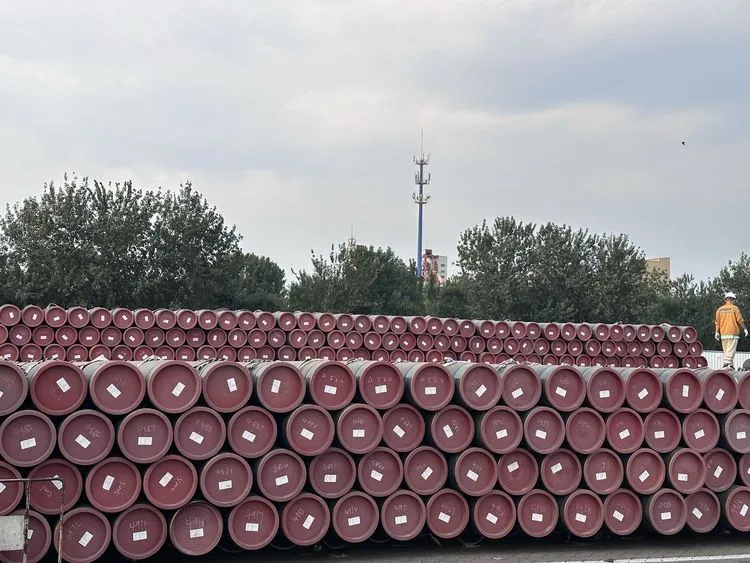

The hardness of the pipe is important because it affects its wear resistance and ability to withstand impact. For example, pipes used in mining or construction might need to be hard to resist abrasion. By testing the hardness, we can make sure the pipes are suitable for their intended use.
Weld Inspection
Since ERW pipes are made by welding a steel strip into a pipe, the quality of the weld is crucial. We use various methods to inspect the weld, including visual inspection, ultrasonic testing, and radiographic testing.
Visual inspection is used to check the appearance of the weld, looking for any signs of porosity, lack of fusion, or other defects. Ultrasonic testing and radiographic testing can detect internal defects in the weld, such as cracks or inclusions. A good weld is essential for the overall strength and integrity of the pipe.
Coating Inspection
Many ERW pipes are coated to protect them from corrosion. Coating inspection is done to ensure the coating is applied correctly and meets the required standards. We check the thickness of the coating, its adhesion to the pipe surface, and its resistance to damage.
A proper coating can significantly extend the lifespan of the pipe, especially in corrosive environments. For example, pipes used in marine applications or in areas with high humidity need a good coating to prevent rusting.
If you're in the market for high - quality ERW pipes, we've got you covered. We offer a wide range of ERW pipes, including ASTM A672 EFW Pipes, EN 39 HOT DIP GALVANIZED SCAFFOLDING PIPE, and ERW Steel Pipe. All our pipes go through rigorous testing to ensure they meet the highest quality standards. If you're interested in purchasing our pipes, feel free to reach out to us for a quote and start a procurement discussion.
References
- "Piping Handbook" by Nayyar, Pramod.
- "Non - Destructive Testing Handbook" by American Society for Nondestructive Testing.