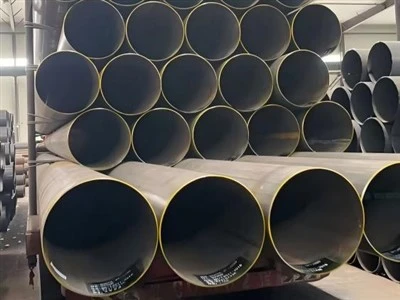
As a seasoned supplier of hollow sections, I've witnessed firsthand the critical role these products play in a multitude of industries. One of the most frequently asked questions I encounter is about the abrasion resistance of hollow sections. Abrasion resistance is a crucial factor, especially in applications where the hollow sections are exposed to harsh environments, constant friction, or abrasive materials.
Understanding Abrasion and Its Impact on Hollow Sections
Abrasion is the process of wearing away a material's surface due to mechanical action, such as rubbing, scraping, or erosion by particles. In the context of hollow sections, abrasion can lead to reduced wall thickness, structural integrity issues, and ultimately, premature failure of the component. This is particularly concerning in industries like mining, construction, and transportation, where hollow sections are often used in heavy - duty applications.
The resistance of hollow sections to abrasion depends on several factors. The material composition is perhaps the most fundamental. For example, hollow sections made from high - strength steels generally offer better abrasion resistance compared to those made from mild steels. High - strength steels contain alloying elements such as chromium, nickel, and molybdenum, which enhance the material's hardness and toughness. These properties allow the steel to withstand the forces exerted during abrasion without significant wear.
Another important factor is the manufacturing process. Hot - formed welded and seamless hollow sections, like those described in ASTM A618/A618M - 21 Hot - Formed Welded And Seamless Hollow Sections, often have a more uniform microstructure compared to cold - formed sections. A uniform microstructure can contribute to better abrasion resistance as it provides consistent mechanical properties throughout the section.
Material Selection for Abrasion Resistance
When it comes to selecting the right material for hollow sections with high abrasion resistance, there are several options available.
High - strength Low - Alloy (HSLA) Steels: These steels are designed to provide a good balance of strength, ductility, and abrasion resistance. They are often used in applications where weight reduction is also a consideration, such as in the automotive and aerospace industries. HSLA steels can be further heat - treated to enhance their abrasion resistance properties.
Abrasion - Resistant (AR) Steels: AR steels are specifically engineered to withstand high levels of abrasion. They have a high carbon content and are often quenched and tempered to achieve a very hard surface. AR steels are commonly used in mining equipment, earth - moving machinery, and conveyor systems. For instance, in a mining operation, hollow sections made from AR steel can be used to construct chutes and hoppers that are constantly exposed to abrasive ore particles.
Stainless Steels: Stainless steels offer excellent corrosion resistance in addition to good abrasion resistance. They contain chromium, which forms a passive oxide layer on the surface, protecting the steel from corrosion and also providing some level of abrasion resistance. Stainless steel hollow sections are widely used in food processing, chemical, and marine industries.
Testing and Standards for Abrasion Resistance
To ensure that hollow sections meet the required abrasion resistance standards, various testing methods are employed. One of the most common methods is the pin - on - disk test, where a pin is pressed against a rotating disk made of the test material. The amount of wear on the pin and the disk is measured, and the abrasion resistance is calculated based on the volume of material removed.
In Australia and New Zealand, the AS/NZS 1163 C450 HOLLOW SECTION standard provides specifications for structural steel hollow sections. This standard includes requirements for mechanical properties, including abrasion resistance in some cases. In the oil and gas industry, the API 5L PSL1 X56 Line Pipe standard is used for line pipes, which also need to have a certain level of abrasion resistance to withstand the flow of abrasive fluids and particles.


Applications of Abrasion - Resistant Hollow Sections
The applications of abrasion - resistant hollow sections are vast and diverse.
Mining Industry: In mining, hollow sections are used in a variety of equipment, such as crushers, screens, and conveyors. These components are constantly exposed to abrasive rocks, ores, and minerals. Abrasion - resistant hollow sections ensure the longevity and reliability of this equipment, reducing downtime and maintenance costs.
Construction Industry: In construction, hollow sections are used in building frames, scaffolding, and bridges. In harsh environments, such as coastal areas or industrial sites, abrasion - resistant hollow sections can protect the structure from the effects of wind - blown sand, dust, and chemical pollutants.
Transportation Industry: In the transportation industry, hollow sections are used in the construction of trailers, railway cars, and shipbuilding. Abrasion - resistant hollow sections can withstand the wear and tear caused by the movement of goods, as well as the impact of road debris and sea water.
Enhancing Abrasion Resistance
In addition to selecting the right material and manufacturing process, there are other ways to enhance the abrasion resistance of hollow sections.
Surface Treatments: Applying a surface treatment such as coating or plating can significantly improve the abrasion resistance of hollow sections. For example, a ceramic coating can provide a hard, wear - resistant surface that protects the underlying steel. Galvanizing, which involves coating the steel with a layer of zinc, can also enhance both corrosion and abrasion resistance.
Design Optimization: The design of the hollow section can also affect its abrasion resistance. For example, using a thicker wall thickness can provide more material to withstand abrasion. Additionally, designing the section to minimize sharp edges and corners can reduce the stress concentration points, which are more prone to abrasion.
Conclusion
In conclusion, the resistance of hollow sections to abrasion is a complex but crucial aspect of their performance. By understanding the factors that influence abrasion resistance, such as material composition, manufacturing process, and surface treatments, we can select the right hollow sections for specific applications. As a supplier of hollow sections, I am committed to providing high - quality products that meet the diverse needs of our customers. Whether you are in the mining, construction, or transportation industry, we have the expertise and the products to help you achieve optimal abrasion resistance.
If you are interested in learning more about our abrasion - resistant hollow sections or would like to discuss your specific requirements, I encourage you to reach out to us. We are ready to engage in a detailed discussion and provide you with the best solutions for your projects.
References
- ASTM International. (2021). ASTM A618/A618M - 21 Standard Specification for Hot - Formed Welded and Seamless Carbon and Alloy Steel Structural Tubing.
- Standards Australia and Standards New Zealand. (n.d.). AS/NZS 1163 C450 Structural steel hollow sections.
- American Petroleum Institute. (n.d.). API 5L PSL1 X56 Line Pipe Specification.