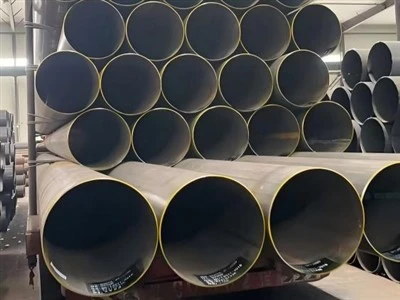
Hey there! I'm a supplier of seamless steel pipes, and I often get asked about the maximum pressure these pipes can handle. It's a super important question, especially for folks in industries like oil and gas, construction, and manufacturing. So, let's dig into this topic and figure out what determines the max pressure a seamless steel pipe can withstand.
Understanding Seamless Steel Pipes
First off, let's talk a bit about seamless steel pipes. Unlike welded pipes, seamless pipes are made from a solid billet that's heated and pierced to create a hollow tube. This process gives seamless pipes a uniform structure without any weld seams, which makes them stronger and more reliable, especially when it comes to handling high pressures.
We offer a wide range of seamless steel pipes, including API5l Seamless Pipe, Boiler Steel Pipe, and St52 Seamless Mechanical Tube. Each type has its own unique properties and is designed for specific applications.
Factors Affecting the Maximum Pressure
The maximum pressure a seamless steel pipe can handle depends on several factors. Let's take a look at some of the most important ones.
1. Pipe Material
The material of the pipe plays a huge role in determining its pressure - handling capacity. Different steel grades have different strength properties. For example, high - strength alloy steels can withstand much higher pressures than mild steels. The chemical composition of the steel, including elements like carbon, manganese, and chromium, affects its strength, toughness, and corrosion resistance. When you're choosing a pipe for a high - pressure application, it's crucial to select the right material based on the specific requirements of your project.
2. Pipe Wall Thickness
Another key factor is the wall thickness of the pipe. Generally, the thicker the wall, the higher the pressure the pipe can withstand. This is because a thicker wall provides more material to resist the internal pressure. However, increasing the wall thickness also increases the weight and cost of the pipe, so it's a balance between strength and practicality.
3. Pipe Diameter
The diameter of the pipe also matters. Smaller - diameter pipes can usually handle higher pressures than larger - diameter pipes with the same wall thickness. This is because the stress on the pipe wall is distributed over a smaller area in a smaller - diameter pipe.
4. Temperature
Temperature can have a significant impact on the pressure - handling capacity of a seamless steel pipe. As the temperature increases, the strength of the steel decreases. So, in high - temperature applications, the pipe may not be able to handle as much pressure as it can at room temperature. It's important to consider the operating temperature when calculating the maximum pressure a pipe can withstand.
Calculating the Maximum Pressure
There are several formulas and standards available for calculating the maximum pressure a seamless steel pipe can handle. One of the most commonly used formulas is the Barlow's formula:
[P=\frac{2St}{D}]
Where:
- (P) is the internal pressure (in psi or MPa)
- (S) is the allowable stress of the pipe material (in psi or MPa)
- (t) is the wall thickness of the pipe (in inches or mm)
- (D) is the outside diameter of the pipe (in inches or mm)
However, it's important to note that this is a simplified formula, and in real - world applications, other factors like corrosion, fatigue, and safety factors need to be taken into account.
Industry Standards and Regulations
In addition to using formulas, there are also industry standards and regulations that govern the design and use of seamless steel pipes in high - pressure applications. For example, the American Society of Mechanical Engineers (ASME) has a set of standards for pressure piping systems. These standards specify the requirements for pipe materials, dimensions, fabrication, and testing to ensure the safety and reliability of the pipes.
Compliance with these standards is not only important for safety but also for legal reasons. If you're using seamless steel pipes in a high - pressure application, make sure you're following the relevant industry standards.
Real - World Applications
Seamless steel pipes are used in a wide variety of high - pressure applications. In the oil and gas industry, they're used for transporting oil and gas from wells to refineries. These pipes need to be able to handle high pressures and harsh environments. In the power generation industry, Boiler Steel Pipe is used in boilers to carry high - pressure steam. And in the manufacturing industry, seamless pipes are used in hydraulic systems and other high - pressure equipment.
Ensuring Safety
When working with high - pressure seamless steel pipes, safety is of the utmost importance. Here are some tips to ensure the safe use of these pipes:
- Proper Installation: Make sure the pipes are installed correctly, following all the manufacturer's instructions and industry standards.
- Regular Inspection: Conduct regular inspections to check for signs of corrosion, wear, and damage.
- Pressure Relief Devices: Install pressure relief devices to prevent over - pressurization of the pipes.
Why Choose Our Seamless Steel Pipes
As a supplier of seamless steel pipes, we take pride in offering high - quality products. Our pipes are made from top - grade materials and are manufactured using the latest technology. We have a strict quality control system in place to ensure that every pipe meets or exceeds the industry standards.


Whether you need API5l Seamless Pipe for oil and gas applications, Boiler Steel Pipe for power generation, or St52 Seamless Mechanical Tube for mechanical applications, we've got you covered.
Let's Talk
If you're in the market for seamless steel pipes and have questions about the maximum pressure they can handle or any other aspect of our products, don't hesitate to reach out. We're here to help you find the right pipes for your specific needs. Whether it's a small - scale project or a large - scale industrial application, we can provide you with the best solutions. Contact us today to start the conversation and let's work together to make your project a success.
References
- ASME Boiler and Pressure Vessel Code
- API 5L Specification for Line Pipe
- Material Science and Engineering textbooks related to steel properties and pressure calculations.