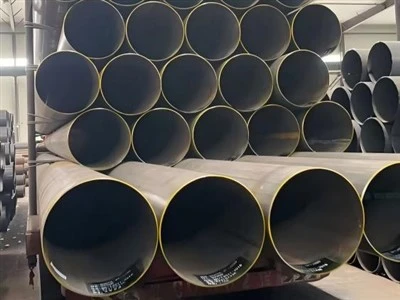
As a supplier of API5L seamless line pipes, I've encountered numerous inquiries regarding the eddy current testing requirements for these pipes. Eddy current testing (ECT) is a non - destructive testing (NDT) method widely used in the industry to detect surface and near - surface flaws in conductive materials, such as the steel used in API5L seamless line pipes. In this blog, I'll delve into the specific eddy current testing requirements for API5L seamless line pipes.
Understanding API5L Seamless Line Pipes
API5L is a specification developed by the American Petroleum Institute (API) for line pipes used in the transportation of oil, gas, and other fluids. Seamless line pipes are made from a solid round steel billet that is heated and pierced to form a hollow tube. They are known for their high strength, durability, and resistance to corrosion, making them ideal for use in harsh environments.
There are two product specification levels (PSL) in API5L: PSL1 and PSL2. PSL2 represents a higher quality standard than PSL1, with more stringent requirements for chemical composition, mechanical properties, and testing. For example, API 5L PSL2 GR.B Line Pipe is a popular choice for many oil and gas projects due to its superior performance.
The Role of Eddy Current Testing
Eddy current testing is based on the principle of electromagnetic induction. When an alternating current is passed through a coil placed near a conductive material, it generates a magnetic field. This magnetic field induces eddy currents in the material. Any flaws or changes in the material's properties will disrupt the flow of these eddy currents, which can be detected by measuring the changes in the electrical impedance of the coil.
For API5L seamless line pipes, eddy current testing is primarily used to detect surface and near - surface defects such as cracks, laminations, and pits. These defects can significantly reduce the pipe's strength and integrity, making it more susceptible to failure during operation. By detecting these defects early, eddy current testing helps ensure the quality and safety of the pipes.


Eddy Current Testing Requirements for API5L Seamless Line Pipes
1. Standard Compliance
API5L itself does not provide detailed eddy current testing procedures. However, the testing should comply with relevant industry standards such as ASTM E215. ASTM E215 provides guidelines for eddy current examination of seamless aluminum and wrought steel tubing. Although it is for tubing, the basic principles can be applied to API5L seamless line pipes.
The standard specifies the equipment requirements, calibration procedures, and acceptance criteria for eddy current testing. For example, the testing equipment should be capable of detecting flaws of a certain size and depth, and it should be calibrated regularly using reference standards.
2. Equipment and Calibration
The eddy current testing equipment used for API5L seamless line pipes should be appropriate for the pipe's size, material, and the type of defects to be detected. The equipment typically consists of a testing probe, a signal generator, and a display unit.
Calibration is a crucial step in eddy current testing. It ensures that the equipment is accurate and reliable. A reference standard, usually a piece of pipe with artificial defects of known size and shape, is used for calibration. The equipment is adjusted so that it can detect these artificial defects with a high degree of sensitivity.
3. Testing Procedure
The testing procedure for API5L seamless line pipes usually involves the following steps:
- Surface Preparation: The pipe surface should be clean and free of any contaminants such as dirt, oil, or rust. These contaminants can interfere with the eddy current signal and lead to false indications.
- Probe Placement: The eddy current probe is placed in contact with the pipe surface. The probe should be moved along the length and circumference of the pipe at a constant speed to ensure complete coverage.
- Signal Analysis: As the probe moves, the eddy current signal is continuously monitored. Any changes in the signal that exceed the pre - set threshold are considered potential defects. The location and size of the defects are recorded for further evaluation.
4. Acceptance Criteria
The acceptance criteria for eddy current testing of API5L seamless line pipes are based on the severity and size of the detected defects. Minor defects that do not affect the pipe's performance may be acceptable, while major defects such as large cracks or deep laminations may result in the rejection of the pipe.
The specific acceptance criteria may vary depending on the project requirements and the end - user's specifications. For example, in some high - pressure applications, the tolerance for defects may be much lower than in low - pressure applications.
Benefits of Eddy Current Testing for API5L Seamless Line Pipes
1. High Sensitivity
Eddy current testing is highly sensitive to surface and near - surface defects. It can detect defects as small as a few millimeters in size, which may not be visible to the naked eye. This high sensitivity allows for the early detection of potential problems, reducing the risk of pipe failure.
2. Non - Destructive
As a non - destructive testing method, eddy current testing does not damage the pipe during the testing process. This means that the pipes can still be used after testing, saving time and cost compared to destructive testing methods.
3. Fast and Efficient
Eddy current testing can be performed quickly, especially when automated testing systems are used. This allows for high - volume testing, which is essential for large - scale pipe production.
Limitations of Eddy Current Testing
While eddy current testing has many advantages, it also has some limitations. For example, it is mainly effective for detecting surface and near - surface defects. It may not be able to detect defects that are located deep inside the pipe. Additionally, the test results can be affected by factors such as the pipe's surface roughness, electrical conductivity, and magnetic properties.
Conclusion
Eddy current testing is an important quality control measure for API5L seamless line pipes. By detecting surface and near - surface defects, it helps ensure the pipes' quality, safety, and performance. As a supplier of API5L seamless line pipes, we are committed to meeting the highest eddy current testing requirements to provide our customers with reliable and high - quality products.
If you are in the market for API5L seamless line pipes or have any questions about eddy current testing requirements, please feel free to contact us for a detailed discussion and to start a procurement negotiation. We look forward to working with you to meet your project needs.
References
- American Petroleum Institute. API Specification 5L: Specification for Line Pipe.
- ASTM International. ASTM E215: Standard Practice for Eddy Current Examination of Seamless Aluminum and Wrought Steel Tubing.