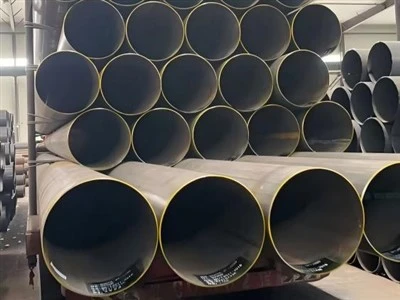
As a trusted supplier of EN 10219 hollow sections, I've witnessed firsthand the widespread use of these products in various industries. One of the key factors that engineers and designers need to consider when working with these sections is their thermal expansion properties. In this blog post, I'll delve into the thermal expansion characteristics of EN 10219 hollow sections, providing you with the knowledge you need to make informed decisions in your projects.
Understanding Thermal Expansion
Thermal expansion is a fundamental property of materials that describes how they change in size or volume in response to temperature variations. When a material is heated, its atoms vibrate more vigorously, causing the material to expand. Conversely, when it is cooled, the atoms slow down, and the material contracts. This expansion and contraction can have significant implications for the performance and integrity of structures and components made from these materials.
The thermal expansion of a material is typically quantified by its coefficient of thermal expansion (CTE), which is defined as the fractional change in length or volume per unit change in temperature. The CTE is usually expressed in units of per degree Celsius (°C⁻¹) or per degree Fahrenheit (°F⁻¹). Different materials have different CTE values, which depend on their chemical composition, crystal structure, and other factors.
Thermal Expansion Properties of EN 10219 Hollow Sections
EN 10219 is a European standard that specifies the technical delivery conditions for cold - formed welded structural hollow sections of non - alloy and fine grain steels. These hollow sections are widely used in construction, mechanical engineering, and other industries due to their excellent strength - to - weight ratio, corrosion resistance, and ease of fabrication.
The thermal expansion properties of EN 10219 hollow sections are primarily determined by the steel grade used in their manufacture. Most EN 10219 hollow sections are made from non - alloy or fine - grain steels, which typically have a CTE in the range of approximately 10×10⁻⁶ to 13×10⁻⁶ °C⁻¹. This means that for every 1°C increase in temperature, a 1 - meter length of the hollow section will expand by about 0.01 to 0.013 millimeters.
The CTE can vary slightly depending on the specific steel grade, as well as the manufacturing process and heat treatment of the hollow sections. For example, fine - grain steels may have a slightly different CTE compared to non - alloy steels due to their different microstructures. Additionally, any heat treatment processes such as annealing or quenching can also affect the CTE of the material.
Implications in Engineering Applications
In engineering applications, the thermal expansion of EN 10219 hollow sections needs to be carefully considered to ensure the structural integrity and performance of the final product. Here are some of the key implications:
Structural Design
When designing structures using EN 10219 hollow sections, engineers must account for the potential expansion and contraction of the sections due to temperature changes. This may involve providing expansion joints or allowing for sufficient clearance between components to accommodate the dimensional changes. Failure to do so can result in excessive stress, deformation, or even structural failure, especially in large - scale structures or those exposed to significant temperature variations.
Connection Design
The design of connections between EN 10219 hollow sections is also affected by thermal expansion. If the connections are too rigid, they may restrict the natural expansion and contraction of the sections, leading to high stresses at the connection points. Therefore, flexible connection designs may be required to allow for relative movement between the sections while maintaining their structural integrity.
Thermal Insulation
In some applications, thermal insulation may be used to reduce the temperature variations experienced by EN 10219 hollow sections. By minimizing the temperature changes, the magnitude of thermal expansion can be reduced, which can simplify the design and improve the long - term performance of the structure.
Comparison with Other Materials
It's interesting to compare the thermal expansion properties of EN 10219 hollow sections with other commonly used materials in the construction and engineering industries.
Aluminum
Aluminum has a relatively high CTE, typically in the range of 23×10⁻⁶ to 24×10⁻⁶ °C⁻¹. This means that aluminum expands and contracts more than steel for the same temperature change. When designing structures that combine aluminum and EN 10219 hollow sections, the difference in CTE needs to be carefully considered to avoid compatibility issues.
Concrete
Concrete has a CTE in the range of about 7×10⁻⁶ to 12×10⁻⁶ °C⁻¹, which is somewhat similar to that of EN 10219 hollow sections. However, the behavior of concrete under thermal loading is more complex due to its porous nature and the presence of aggregates. In composite structures that use both concrete and EN 10219 hollow sections, the interaction between the two materials during thermal expansion and contraction needs to be analyzed to ensure the overall performance of the structure.
Real - World Examples
To illustrate the importance of considering thermal expansion properties of EN 10219 hollow sections, let's look at some real - world examples.
In a large - scale industrial building, EN 10219 hollow sections are often used for the structural framework. During the summer months, the temperature inside the building can rise significantly, causing the hollow sections to expand. If the design does not account for this expansion, the framework may experience excessive stress, leading to cracking or deformation of the sections. By incorporating expansion joints and flexible connections, the building can better withstand the thermal changes and maintain its structural integrity.
In a bridge construction project, EN 10219 hollow sections may be used for the support structures. The bridge is exposed to a wide range of temperatures throughout the year, from cold winters to hot summers. The thermal expansion of the hollow sections needs to be carefully considered in the design to ensure that the bridge can safely accommodate the dimensional changes without compromising its load - carrying capacity.
Conclusion
In conclusion, the thermal expansion properties of EN 10219 hollow sections are an important factor to consider in engineering applications. Understanding the coefficient of thermal expansion and its implications for structural design, connection design, and material compatibility is crucial for ensuring the long - term performance and safety of structures made from these sections.


As a supplier of EN 10219 hollow sections, I can provide you with high - quality products that meet the relevant standards and specifications. We also offer a range of related products such as API5L X52M PSL1/PSL 2 LSAW Steel Pipe, Steel Hollow Section, and EN 10210 S355J2H Square Hollow Sections.
If you are involved in a project that requires the use of EN 10219 hollow sections or any of our other products, I encourage you to reach out to me for more information and to discuss your specific requirements. We can work together to ensure that you get the right products for your project and that all aspects of thermal expansion and other technical considerations are properly addressed.
References
- EN 10219:2006, Cold - formed welded structural hollow sections of non - alloy and fine grain steels - Technical delivery conditions.
- ASM Handbook Volume 2: Properties and Selection: Nonferrous Alloys and Special - Purpose Materials.
- "Thermal Expansion of Metals" by R. W. Powell, published in the Journal of Applied Physics.